An alpha-glucosidase inhibitor for type 2 diabetes
Miglitol
A type 2 diabetes medicine that slows carbohydrate digestion, taken with the first bite of each meal.
What is Miglitol?
Miglitol is a medicine for type 2 diabetes from the alpha-glucosidase inhibitor group. It works in the gut by slowing the digestion of carbohydrates, so blood sugar rises more gently after meals. It is taken by mouth with the first bite of each main meal. Its most common side effects are wind (flatulence), bloating and diarrhoea, caused by undigested carbohydrate reaching the lower gut. An important safety point is that if low blood sugar happens (usually with other diabetes medicines), it must be treated with glucose rather than ordinary sugar.
Education and reference only. This is a plain-language guide to Miglitol — it deliberately contains no doses. Doses depend on the person, the brand and the reason for treatment, and belong with your prescriber. Always check the BNF, the product labelling (SmPC) and follow medical advice.
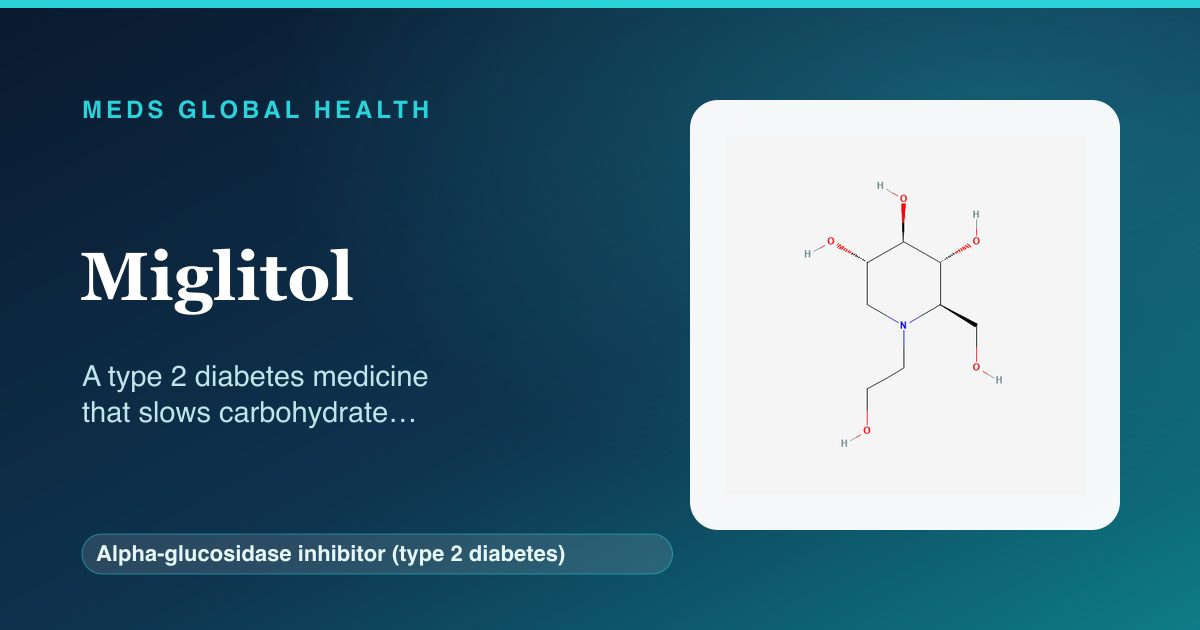
What it is
Miglitol is a tablet used to help control blood sugar in type 2 diabetes. It belongs to a group called alpha-glucosidase inhibitors, which work in the gut rather than elsewhere in the body. It is taken with meals to blunt the rise in blood sugar that normally follows eating carbohydrates. It is used less often in the UK than medicines such as metformin, partly because of its digestive side effects, but it can be a useful option for some people, especially those whose main problem is high blood sugar after meals. It is generally used alongside diet and other diabetes care.
How it works
Miglitol blocks enzymes in the small intestine called alpha-glucosidases, which normally break down complex carbohydrates into simple sugars that can be absorbed. By slowing this breakdown, miglitol delays and reduces the absorption of sugar after a meal, so the spike in blood sugar following eating is smaller and more gradual. Because it acts on carbohydrate in food, it has to be taken right at the start of a meal to work. The carbohydrate that is not digested in the small intestine passes further down the gut, where bacteria ferment it, which is what causes the typical wind and bloating.
Company & origin
A medicine for type 2 diabetes that slows the digestion of carbohydrates in the gut, used less commonly in the UK than other diabetes treatments.
What it treats
Conditions Miglitol is used for
Practical use
How to take Miglitol
General, dose-free guidance — always follow your prescriber's and the leaflet's specific instructions.
- Take it by mouth with the first bite of each main meal, as it only works on carbohydrate in food.
- Expect wind, bloating or diarrhoea at first; these often ease as your body adjusts.
- If you also take insulin or a sulfonylurea and have a hypo, treat it with glucose (tablets or gel), not ordinary sugar.
- Do not take it between meals or for a snack with no carbohydrate, as it will not help then.
- Keep up your usual diet, exercise and other diabetes care alongside it.
Weighing it up
Advantages & disadvantages of Miglitol
Advantages
- Reduces the rise in blood sugar after meals by slowing carbohydrate digestion.
- Acts mainly in the gut and on its own rarely causes low blood sugar.
- Can be a useful option for people whose main problem is high blood sugar after eating.
Disadvantages
- Commonly causes wind, bloating and diarrhoea, which some people find hard to tolerate.
- Must be taken with the first bite of every meal to work, which takes routine.
- Hypos (when on other diabetes medicines) must be treated with glucose, not ordinary sugar.
Practical use
Good to know
The most useful things to know about miglitol are how to take it and what to expect. It only works on the carbohydrate in a meal, so it must be taken with the very first bite of food; taken at any other time it does little. Its commonest side effects are wind, bloating and diarrhoea, because undigested carbohydrate is fermented in the gut; these often ease over time, and starting at a low amount and building up helps. A very important safety point is about low blood sugar: miglitol on its own rarely causes it, but if you also take medicines such as insulin or sulfonylureas that can, you must treat a hypo with glucose (for example glucose tablets or gel) rather than ordinary table sugar or sucrose, because miglitol slows the breakdown of ordinary sugar so it would act too slowly.
Who should not take it / use with caution
- People who have had a serious allergic reaction to it should not take it.
- People with inflammatory bowel disease, bowel blockage or other significant gut conditions, where it can make things worse.
- People with severe kidney problems, in whom it is generally avoided.
Monitoring
- Checking blood sugar control, including readings after meals where appropriate.
- Reviewing how well the digestive side effects are tolerated.
- Checking liver blood tests during treatment if advised.
Side effects
- Wind (flatulence), bloating and abdominal discomfort.
- Diarrhoea, especially when first starting or when the amount is increased.
- Low blood sugar if taken with insulin or sulfonylureas (treat with glucose, not ordinary sugar).
- Less commonly, changes in liver blood tests, which may be checked.
Key interactions
- It can add to the risk of low blood sugar when taken with insulin or sulfonylureas.
- It may reduce the absorption of some other medicines and of digestive enzyme supplements.
- Tell your prescriber about all your medicines so timing and choices can be managed.
Available as: Tablets taken by mouth.
Answers
Miglitol: frequently asked questions
What is miglitol used for?
It is used to help control blood sugar in type 2 diabetes by slowing the digestion of carbohydrates, so blood sugar rises more gently after meals.
When should I take it?
Take it with the first bite of each main meal, because it only works on the carbohydrate in that meal; taken at other times it does little.
Why does it cause wind and bloating?
Carbohydrate that is not digested higher up passes into the lower gut, where bacteria ferment it, producing wind and bloating; this often eases with time.
How do I treat a hypo while taking it?
If you have a hypo (usually when also on insulin or a sulfonylurea), treat it with glucose such as glucose tablets or gel, not ordinary sugar, because miglitol slows the breakdown of ordinary sugar.
Does it cause low blood sugar on its own?
On its own it rarely causes low blood sugar; the risk comes mainly when it is combined with insulin or sulfonylureas.
Authoritative sources
- BNF
- NICE CKS
Building a medicines information resource?
We create evidence-led, dose-free drug and formulary references for teams.