An oral medicine for leishmaniasis
Miltefosine
An oral medicine used to treat leishmaniasis, a parasitic infection, taken under specialist care.
What is Miltefosine?
Miltefosine is a specialist medicine taken by mouth to treat leishmaniasis, a parasitic infection spread by sandfly bites that can affect the skin or the internal organs and is usually caught in tropical or subtropical countries. The most important safety point is that it can harm an unborn baby, so reliable contraception is essential during treatment and for a period afterwards in anyone who could become pregnant. It commonly causes stomach upset and can affect the kidneys and liver, so these are monitored. It is prescribed and supervised by a specialist infection team.
Education and reference only. This is a plain-language guide to Miltefosine — it deliberately contains no doses. Doses depend on the person, the brand and the reason for treatment, and belong with your prescriber. Always check the BNF, the product labelling (SmPC) and follow medical advice.
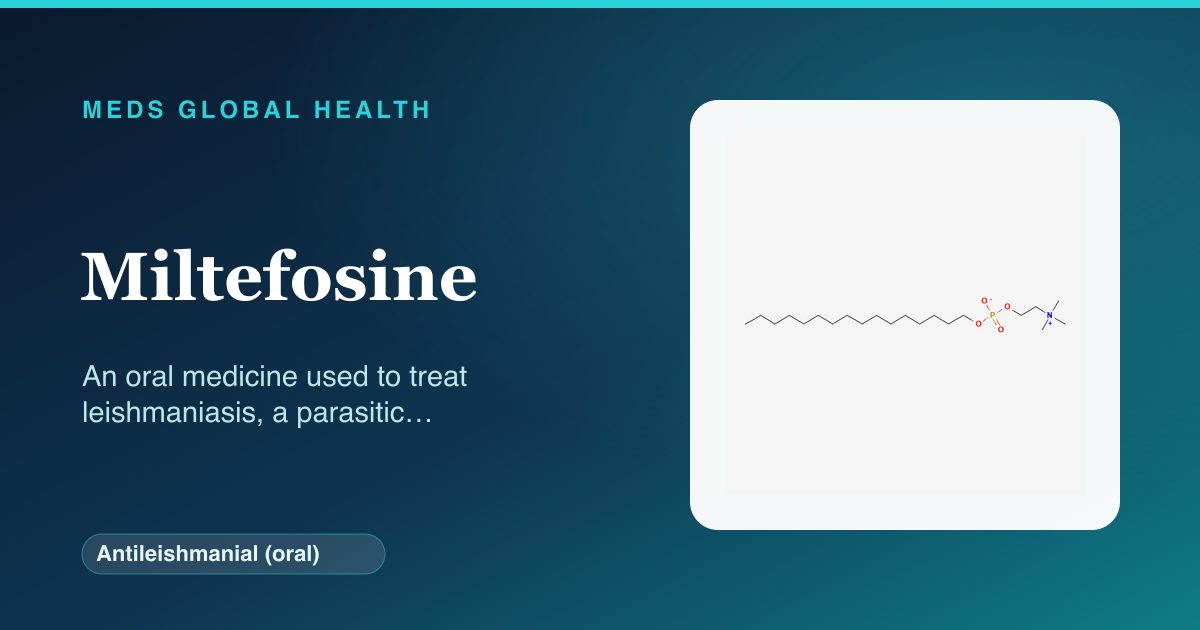
What it is
Miltefosine is a medicine used to treat leishmaniasis, an infection caused by a tiny parasite passed on through the bite of an infected sandfly. The infection can affect the skin, causing sores, or, in its more serious form, the internal organs such as the spleen, liver and bone marrow. Unlike older treatments that are given by injection, miltefosine is taken by mouth as a capsule, which is one of its advantages. It is a specialist medicine, prescribed and overseen by infection or tropical-medicine teams, with careful attention to pregnancy and to kidney and liver health.
How it works
Miltefosine acts against the leishmania parasite by interfering with the building blocks and processes the parasite needs to survive, which kills it and clears the infection. Because it is absorbed when taken by mouth and stays in the body for a while, it can keep working against the parasite over a course of treatment. The same long stay in the body is part of why contraception is needed not just during treatment but for a time afterwards, to protect against harm to a pregnancy. The full course must be completed so the infection is properly cleared.
Company & origin
A specialist medicine used in the UK to treat leishmaniasis, a parasitic infection usually caught abroad.
Practical use
How to take Miltefosine
General, dose-free guidance — always follow your prescriber's and the leaflet's specific instructions.
- Take the capsules by mouth as prescribed, usually with food to reduce stomach upset, and complete the full course.
- Use reliable contraception throughout treatment and for the period afterwards your specialist advises, if you could become pregnant.
- Attend your blood tests so your kidneys and liver can be monitored during the course.
- Tell your team straight away if you might be pregnant or if your contraception fails.
- Report ongoing vomiting or diarrhoea, as this can affect how well the medicine works and your hydration.
Weighing it up
Advantages & disadvantages of Miltefosine
Advantages
- An effective treatment for leishmaniasis that can be taken by mouth rather than by injection.
- Avoids the need for hospital injections used with some older treatments.
- Works against both skin and internal forms of the infection in appropriate cases.
Disadvantages
- Harmful in pregnancy, requiring reliable contraception during and after treatment.
- Commonly causes stomach upset such as nausea, vomiting and diarrhoea.
- Can affect the kidneys and liver, so monitoring blood tests are needed.
Practical use
Good to know
The dominant safety issue with miltefosine is its harmfulness in pregnancy: it can damage an unborn baby, so anyone who could become pregnant must use reliable contraception throughout the course and for a period after it finishes, as advised by the specialist. A pregnancy test is usually done before starting. Stomach upset, with nausea, vomiting or diarrhoea, is common, and taking it with food can help. The medicine can also affect the kidneys and the liver, so blood tests are used to monitor these during treatment. It is important to complete the full course even once you feel better, so the infection is fully cleared. Tell your team about all your medicines and any kidney or liver problems before starting.
Who should not take it / use with caution
- It must not be used in pregnancy because it can harm an unborn baby, and pregnancy should be avoided during and after treatment.
- People who have had a serious allergic reaction to miltefosine should not take it.
- It is used with care in people with kidney or liver problems, under specialist supervision.
Monitoring
- A pregnancy test before starting and confirmation of reliable contraception.
- Regular kidney and liver blood tests during the course.
- Reviewing how well the infection is responding to treatment.
Side effects
- Nausea, vomiting, diarrhoea or loss of appetite, often eased by taking it with food.
- Changes in kidney or liver blood tests, which is why these are monitored.
- Dizziness, headache or itching in some people.
Key interactions
- Tell your team about all your medicines, as some may add to effects on the kidneys or stomach.
- Ongoing vomiting or diarrhoea can reduce how much medicine is absorbed, so report these.
- Discuss any other treatments for the infection so the plan is coordinated by your specialist.
Available as: Capsules taken by mouth.
Answers
Miltefosine: frequently asked questions
What is miltefosine used for?
It is a medicine taken by mouth to treat leishmaniasis, a parasitic infection spread by sandfly bites that can affect the skin or the internal organs.
Why do I need contraception with it?
Miltefosine can harm an unborn baby, so reliable contraception is essential during treatment and for a period afterwards if you could become pregnant.
Why does it upset my stomach?
Nausea, vomiting and diarrhoea are common with miltefosine; taking it with food can help, and you should report ongoing vomiting or diarrhoea.
Why do I need blood tests?
The medicine can affect the kidneys and liver, so regular blood tests are used to check these during the course of treatment.
Can I stop once my sores heal?
No. You should complete the full course even once you feel better, so the infection is properly cleared, unless your specialist advises otherwise.
Authoritative sources
- BNF
- NICE CKS
Building a medicines information resource?
We create evidence-led, dose-free drug and formulary references for teams.