A prostaglandin medicine
Misoprostol
A prostaglandin medicine used to protect the stomach from anti-inflammatory ulcers and, separately, in obstetric and gynaecological care.
What is Misoprostol?
Misoprostol is a prostaglandin medicine with two very different uses. It protects the stomach lining against ulcers caused by anti-inflammatory painkillers (NSAIDs), and it is also used in obstetrics and gynaecology — in the management of miscarriage, to induce labour, and to help stop heavy bleeding after birth. It often causes cramps and diarrhoea. Crucially, it makes the womb contract, so it must not be used in pregnancy when the aim is to continue the pregnancy, except under medical direction for a specific reason.
Education and reference only. This is a plain-language guide to Misoprostol — it deliberately contains no doses. Doses depend on the person, the brand and the reason for treatment, and belong with your prescriber. Always check the BNF, the product labelling (SmPC) and follow medical advice.
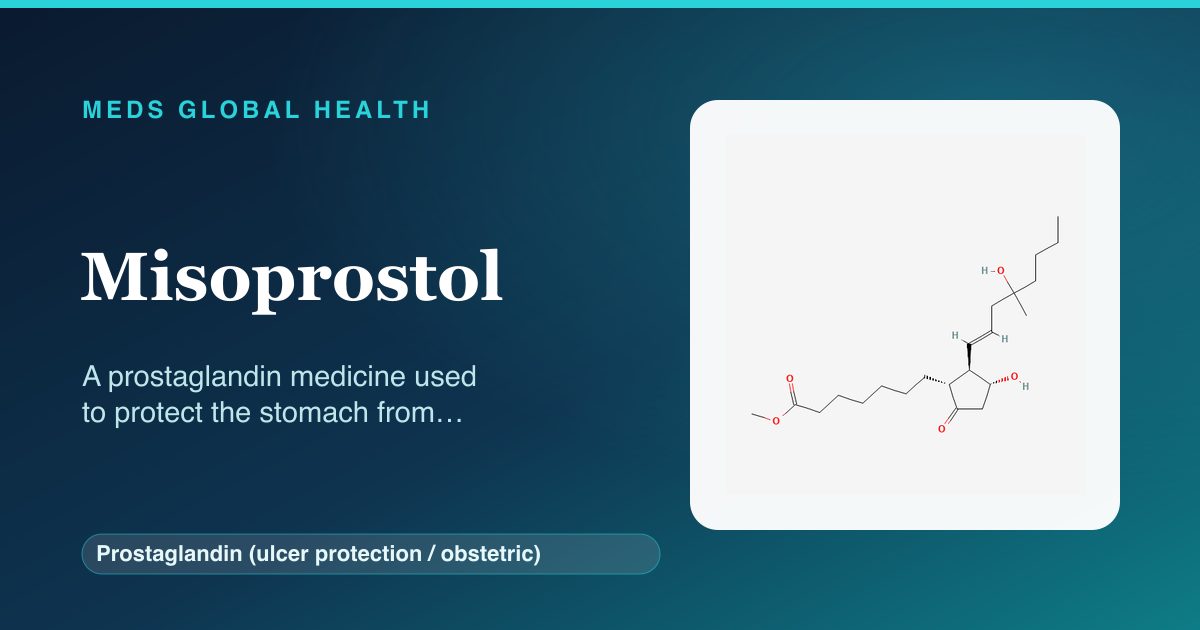
What it is
Misoprostol is a man-made prostaglandin, a type of substance that affects the stomach lining and the muscle of the womb. In one role it protects the stomach against ulcers in people who must take anti-inflammatory painkillers. In a separate role, maternity and gynaecology teams use it to help manage miscarriage, to ripen the cervix and induce labour, and to control heavy bleeding after birth. It is taken as a tablet by mouth or used by other routes in hospital care.
How it works
As a prostaglandin, misoprostol increases the stomach's protective mucus and reduces acid, which helps prevent ulcers from anti-inflammatory medicines. In the womb, the same prostaglandin action softens the cervix and makes the muscle contract, which is why it is used in obstetric care to help the womb empty or to firm up after birth and reduce bleeding. The cramps and diarrhoea it commonly causes come from this prostaglandin effect on muscle and the gut.
Company & origin
A prostaglandin medicine used in the UK both to protect the stomach against ulcers caused by anti-inflammatory painkillers and, separately, in obstetric and gynaecological care.
What it treats
Conditions Misoprostol is used for
Practical use
How to take Misoprostol
General, dose-free guidance — always follow your prescriber's and the leaflet's specific instructions.
- For stomach protection, take it as prescribed, usually with or after food, which can reduce diarrhoea.
- If you could become pregnant and are taking it for the stomach, use reliable contraception, as it can harm a pregnancy and cause contractions.
- For obstetric or gynaecological use, follow exactly the route, timing and instructions your maternity or gynaecology team gives you.
- Expect cramping and, in obstetric use, bleeding; you will be told what is normal and what is not.
- Keep emergency contact details and seek urgent help for very heavy bleeding, severe pain, a high temperature or feeling very unwell.
Weighing it up
Advantages & disadvantages of Misoprostol
Advantages
- Effectively protects the stomach against ulcers in people who must take anti-inflammatory painkillers.
- Provides a well-established, flexible option in obstetric and gynaecological care under supervision.
- Can be used by more than one route, which is useful in different clinical situations.
Disadvantages
- Commonly causes cramps and diarrhoea, which some people find hard to tolerate.
- Must not be used in a pregnancy that is meant to continue, as it causes contractions.
- Its obstetric uses require supervised care, monitoring and clear aftercare advice.
Practical use
Good to know
The most important safety point is that misoprostol causes the womb to contract, so it must not be used to prevent ulcers in anyone who is pregnant and wishes to continue the pregnancy; women who could become pregnant are advised about reliable contraception if using it for the stomach. Cramps and diarrhoea are common with all uses and can be marked. In obstetric and gynaecological use it is always given within supervised care, with clear advice on what to expect — bleeding, cramping and the passing of tissue — and on warning signs that need urgent help. When used for the stomach, taking it with food can ease diarrhoea. The obstetric uses are described here factually and without judgement, and are decisions made with a clinician.
Who should not take it / use with caution
- People who are pregnant and wish to continue the pregnancy should not take it for stomach protection.
- It is avoided, or used only with special care, where strong womb contractions could be unsafe — for example in women who have had certain previous womb surgery, such as a caesarean.
- Anyone with a known allergy to prostaglandins or for whom a clinician judges it unsuitable.
Monitoring
- In obstetric use, monitoring of contractions and the baby's wellbeing as appropriate to the setting.
- Watching for very heavy bleeding or signs of infection, with clear advice on seeking help.
- For stomach use, reviewing tolerability of diarrhoea and the continued need for protection.
Side effects
- Diarrhoea and abdominal cramps are common, especially when starting it.
- Nausea, headache, dizziness or, in obstetric use, bleeding can occur.
- Rarely, very strong contractions or heavy bleeding in obstetric use, needing urgent attention.
Key interactions
- Antacids containing magnesium can worsen the diarrhoea it causes, so a different antacid may be preferred.
- When used in labour, it is not combined carelessly with other medicines that strengthen contractions, to avoid over-stimulation.
- Tell your prescriber about all your medicines, as some affect how it is used.
Available as: Tablets taken by mouth, and other routes used within hospital and specialist care.
Answers
Misoprostol: frequently asked questions
Why is the same medicine used for ulcers and in pregnancy care?
Misoprostol is a prostaglandin that both protects the stomach lining and makes the womb contract. These two actions are used for two very different purposes.
Can I take it if I might be pregnant?
Not for stomach protection if you wish to continue a pregnancy, because it causes contractions and can harm a pregnancy. Reliable contraception is advised in that situation.
Why does it give me diarrhoea and cramps?
These come from its prostaglandin effect on the gut and muscle. Taking it with food can help when it is used for the stomach; in obstetric use, cramping is expected.
Is the obstetric use done at home?
It is always part of supervised care, with instructions, support and clear warning signs. Some steps may be at home as directed, but always within a planned, supported pathway.
When should I seek urgent help?
Seek urgent help for very heavy bleeding, severe pain, a high temperature or feeling very unwell, and keep the emergency contact details you are given.
Authoritative sources
- BNF
- NICE CKS
Building a medicines information resource?
We create evidence-led, dose-free drug and formulary references for teams.