A pyruvate-kinase activator for inherited haemolytic anaemia
Mitapivat
A specialist medicine for pyruvate-kinase-deficiency haemolytic anaemia, an inherited cause of red-cell breakdown.
What is Mitapivat?
Mitapivat is a specialist medicine used to treat pyruvate-kinase-deficiency haemolytic anaemia, an inherited condition in which red blood cells break down too easily, leading to anaemia. It works by boosting the activity of pyruvate kinase, an enzyme red cells need for energy, which helps them survive longer. It is taken by mouth. It can raise blood urate (which can cause gout) and liver enzymes, and can affect hormones, so monitoring is needed. If it is stopped, the amount must be tapered down gradually rather than stopped suddenly.
Education and reference only. This is a plain-language guide to Mitapivat — it deliberately contains no doses. Doses depend on the person, the brand and the reason for treatment, and belong with your prescriber. Always check the BNF, the product labelling (SmPC) and follow medical advice.
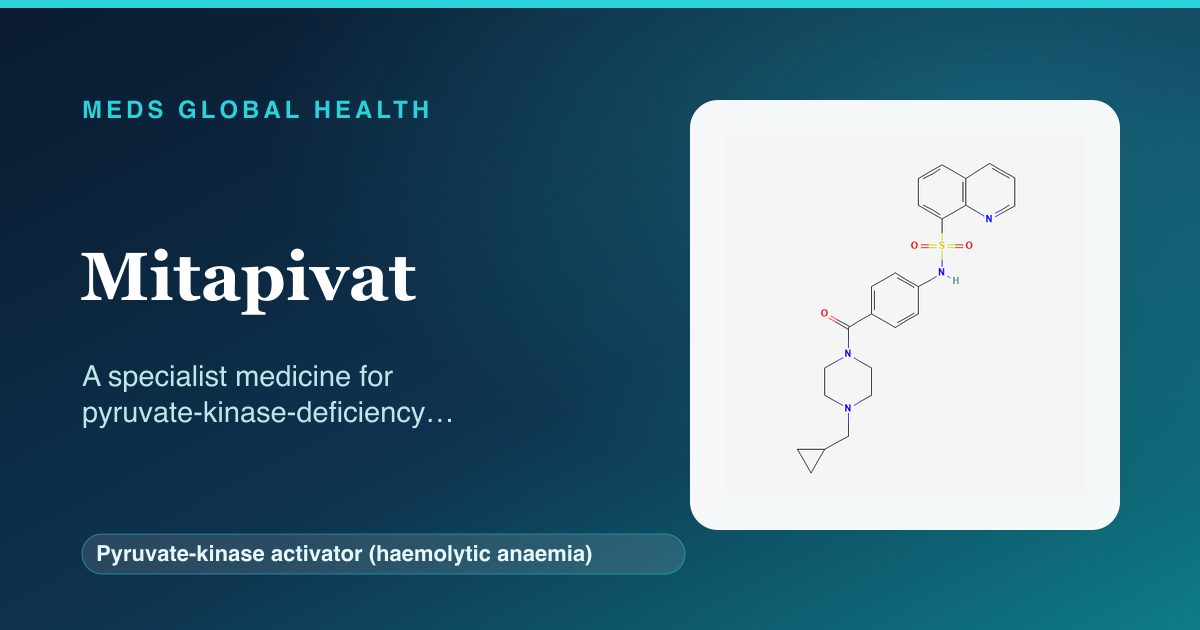
What it is
Mitapivat is a medicine used to treat an inherited blood disorder called pyruvate-kinase-deficiency haemolytic anaemia. In this condition, red blood cells lack enough working pyruvate kinase, an enzyme they rely on for energy, so they are fragile and break down too quickly, causing anaemia, tiredness and sometimes jaundice and the need for blood transfusions. Mitapivat is a pyruvate-kinase activator, meaning it switches on or boosts this enzyme so red cells work better and last longer. It is taken by mouth and is prescribed and supervised by a specialist blood (haematology) service.
How it works
Red blood cells need energy to keep their shape and survive in the bloodstream, and they get much of this energy through a pathway that depends on the enzyme pyruvate kinase. In pyruvate-kinase deficiency, this enzyme does not work well enough, so red cells run short of energy and break apart early. Mitapivat binds to pyruvate kinase and increases its activity, restoring more normal energy production inside the red cells. This helps the cells last longer, which raises the level of haemoglobin and reduces the anaemia and the need for transfusions. Because it works on this ongoing process, it is taken regularly.
Company & origin
A specialist medicine used in the UK to treat the inherited blood condition pyruvate-kinase-deficiency haemolytic anaemia.
Practical use
How to take Mitapivat
General, dose-free guidance — always follow your prescriber's and the leaflet's specific instructions.
- Take it by mouth as prescribed by your haematology specialist.
- Do not stop it suddenly; if it needs to be stopped, the amount is reduced gradually under specialist guidance.
- Attend your blood tests, which check your blood count, urate level and liver function.
- Tell your team about any joint pain or swelling, which could be gout from raised urate.
- Discuss fertility, contraception and any hormonal effects with your specialist, as it can affect hormones.
Weighing it up
Advantages & disadvantages of Mitapivat
Advantages
- Treats the underlying enzyme problem in pyruvate-kinase-deficiency haemolytic anaemia, helping red cells survive longer.
- Can raise haemoglobin and reduce the need for blood transfusions.
- Taken by mouth.
Disadvantages
- Can raise blood urate (risking gout) and liver enzymes, needing monitoring.
- Can affect hormones, which the specialist team will discuss.
- Must be tapered when stopping and needs specialist supervision with regular blood tests.
Practical use
Good to know
There are several important things to understand about mitapivat. First, it must not be stopped suddenly: if treatment is to be stopped, the amount is tapered down gradually under specialist guidance, because abrupt stopping can cause a sharp worsening of the anaemia. Second, it can raise the level of urate in the blood, which can trigger gout, and it can raise liver enzymes, so blood tests are used to keep an eye on these. Third, it can affect hormones, including sex hormones, which the specialist team will discuss, particularly in relation to fertility and other effects. It is a specialist treatment for a rare condition, so it is closely supervised by a haematology service, with regular blood tests and reviews to make sure it is working and to watch for these effects.
Who should not take it / use with caution
- People who have had a serious allergic reaction to it should not take it.
- It is used with care in people with liver problems, under specialist guidance.
- It is used with caution in pregnancy and breastfeeding, where the specialist weighs the benefits and risks.
Monitoring
- Regular blood counts to check haemoglobin and how well the anaemia is responding.
- Checking urate levels and liver function during treatment.
- Reviewing hormonal effects and overall tolerance over time.
Side effects
- Raised blood urate, which can cause gout.
- Raised liver enzymes on blood tests.
- Hormonal effects, including changes in sex hormones.
- A sharp worsening of anaemia if the medicine is stopped suddenly rather than tapered.
Key interactions
- It can interact with medicines that affect the same liver pathways, so a full medicines list is important.
- Hormonal medicines, including some contraceptives, may be affected, so discuss these with your team.
- Tell your specialist about everything you take, including supplements, so interactions can be managed.
Available as: Tablets taken by mouth.
Answers
Mitapivat: frequently asked questions
What is mitapivat used for?
It is used to treat pyruvate-kinase-deficiency haemolytic anaemia, an inherited condition where red blood cells break down too easily, by boosting the enzyme red cells need for energy.
Why must it not be stopped suddenly?
Stopping it abruptly can cause a sharp worsening of the anaemia, so if it needs to be stopped the amount is tapered down gradually under specialist guidance.
Can it cause gout?
It can raise the level of urate in the blood, which can trigger gout, so blood tests are used to monitor this and you should report any joint pain or swelling.
Does it affect hormones?
Yes, it can affect hormones, including sex hormones, so your specialist team will discuss this with you, including any effect on fertility and contraception.
Will I still need transfusions?
By helping red cells survive longer and raising haemoglobin, it can reduce the need for transfusions in many people, but your specialist will assess how well it works for you.
Authoritative sources
- BNF
- NICE CKS
Building a medicines information resource?
We create evidence-led, dose-free drug and formulary references for teams.