A centrally acting blood-pressure medicine
Moxonidine
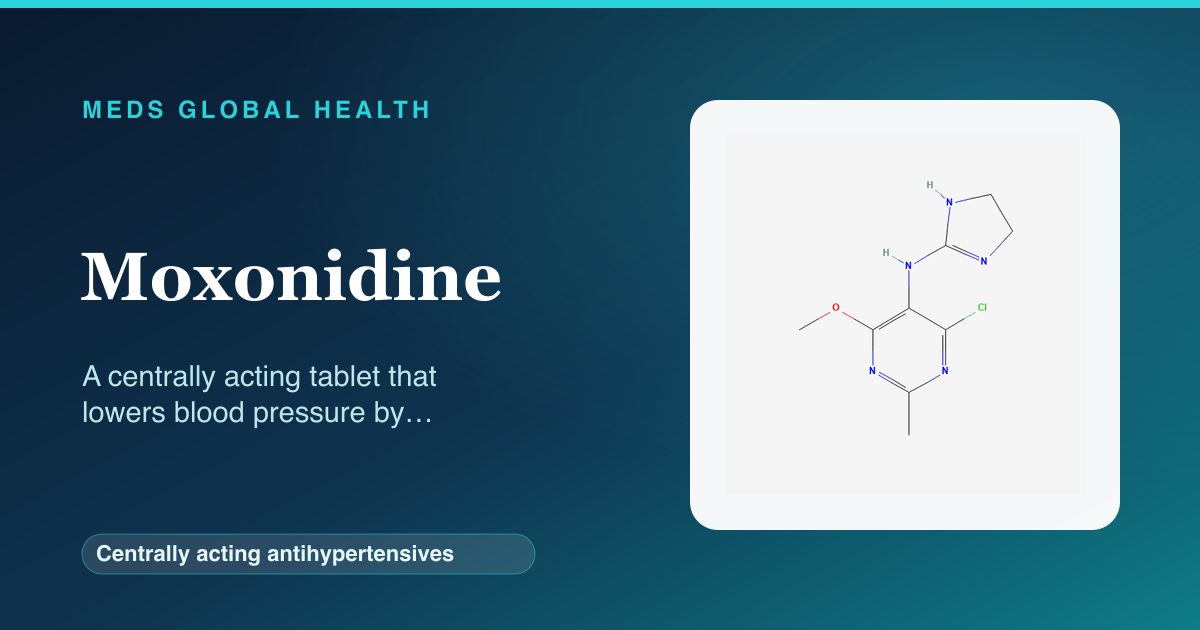
A centrally acting tablet that lowers blood pressure by calming nerve signals from the brain, usually used as an add-on option.
What is Moxonidine?
Moxonidine is a centrally acting blood-pressure medicine. It works in the brain to reduce the nerve signals that tighten blood vessels and raise blood pressure. In the UK it is usually reserved for people whose blood pressure is not controlled by, or who cannot take, the standard first-line medicines.
Education and reference only. This is a plain-language guide to Moxonidine — it deliberately contains no doses. Doses depend on the person, the brand and the reason for treatment, and belong with your prescriber. Always check the BNF, the product labelling (SmPC) and follow medical advice.
What it is
Moxonidine is a tablet used to lower high blood pressure. It works differently from common blood-pressure medicines such as ACE inhibitors, calcium-channel blockers and water tablets. Because of this, it is usually used as an add-on or alternative when the standard options have not worked well enough or are unsuitable.
How it works
Moxonidine acts on receptors in the part of the brain that controls the sympathetic ("fight or flight") nervous system. By reducing these nerve signals, it allows blood vessels to relax and lowers the resistance the heart has to pump against, so blood pressure falls. This central action is why it is grouped with medicines such as clonidine.
Company & origin
Originated / developed by: Solvay (originator).
A centrally acting (imidazoline) antihypertensive introduced in the 1990s, used when other blood-pressure medicines are unsuitable or insufficient.
What it treats
Conditions Moxonidine is used for
Practical use
How to take Moxonidine
General, dose-free guidance — always follow your prescriber's and the leaflet's specific instructions.
- Take it at the same time each day, with or without food.
- Swallow the tablet whole with a drink of water.
- Do not stop it suddenly — speak to your team, who will usually reduce it gradually.
- Be careful with alcohol, which can add to drowsiness and dizziness.
- If you miss a dose, take it when you remember unless it is nearly time for the next one — do not double up.
Weighing it up
Advantages & disadvantages of Moxonidine
Advantages
- Offers a different way to lower blood pressure when standard medicines are unsuitable.
- Tends to cause fewer side effects than the older medicine clonidine.
- Can be combined with other blood-pressure medicines for better control.
Disadvantages
- Commonly causes dry mouth and tiredness, especially early on.
- Must not be stopped abruptly because of rebound high blood pressure.
- Generally an add-on rather than a first-choice treatment, so used less often.
Practical use
Good to know
Moxonidine should not be stopped suddenly, because abruptly stopping it can cause blood pressure to rebound sharply; if it needs to be stopped, the dose is usually reduced gradually. Dry mouth and tiredness are common, especially in the first weeks, and often settle. It can add to the drowsiness of alcohol and some other medicines. Because it is cleared by the kidneys, extra care is needed if you have kidney problems.
Who should not take it / use with caution
- People with certain slow or abnormal heart rhythms, or severe heart failure.
- People with significant kidney impairment, in whom extra caution is needed.
- Used with caution alongside other sedating medicines and with significant liver disease.
Monitoring
- Blood pressure to check the response.
- Kidney function, especially in older people or those with kidney disease.
- Heart rate and any new dizziness or drowsiness.
Side effects
- Dry mouth, which is very common, especially in the first weeks.
- Tiredness, drowsiness or headache.
- Dizziness, particularly when standing up, and sometimes disturbed sleep.
Key interactions
- Other blood-pressure medicines and diuretics add to its lowering effect.
- Alcohol, sedatives and other sedating medicines can increase drowsiness.
- Tricyclic antidepressants may reduce how well it works.
Available as: Tablets.
Answers
Moxonidine: frequently asked questions
Why has moxonidine been chosen instead of a more common tablet?
It works through a different mechanism, so it is useful when the usual first-line medicines have not lowered your blood pressure enough or cannot be used. It is often added to other treatments rather than used on its own.
Why must I not stop moxonidine suddenly?
Stopping it abruptly can cause blood pressure to rebound to a high level. If it needs to come off, your team will usually reduce the dose gradually over time to avoid this.
Why do I have such a dry mouth?
Dry mouth is one of the most common effects of moxonidine and often eases after the first few weeks. Sipping water, sugar-free sweets or gum can help; tell your pharmacist if it is troublesome.
Can I drink alcohol with moxonidine?
Alcohol can add to the drowsiness and dizziness moxonidine may cause, so it is sensible to be cautious, especially when you first start. Avoid driving if you feel affected.
Will moxonidine make me feel sleepy?
It can cause tiredness or drowsiness, particularly early on. See how it affects you before driving or operating machinery, and let your team know if it does not settle.
The wider class
About Centrally acting antihypertensives
Moxonidine belongs to the centrally acting antihypertensives class. For how the class as a whole works, its shared safety principles and monitoring, see the full guide.
Browse by body system
Authoritative sources
- BNF
- NICE CKS
Building a medicines information resource?
We create evidence-led, dose-free drug and formulary references for teams.