A once-daily tablet for opioid-induced constipation
Naldemedine
A once-daily tablet that treats constipation caused by opioid painkillers without reducing their pain relief.
What is Naldemedine?
Naldemedine is a once-daily tablet used to treat opioid-induced constipation, the constipation caused by strong painkillers known as opioids. It works by blocking the effect of opioids in the gut, where they slow the bowel, while leaving their pain-relieving effect on the brain largely untouched, so it relieves constipation without reducing pain control. The most common side effects are tummy pain and diarrhoea. A rare but serious risk is a tear in the bowel wall, and some people get opioid-withdrawal-type symptoms, so it is used with care.
Education and reference only. This is a plain-language guide to Naldemedine — it deliberately contains no doses. Doses depend on the person, the brand and the reason for treatment, and belong with your prescriber. Always check the BNF, the product labelling (SmPC) and follow medical advice.
What it is
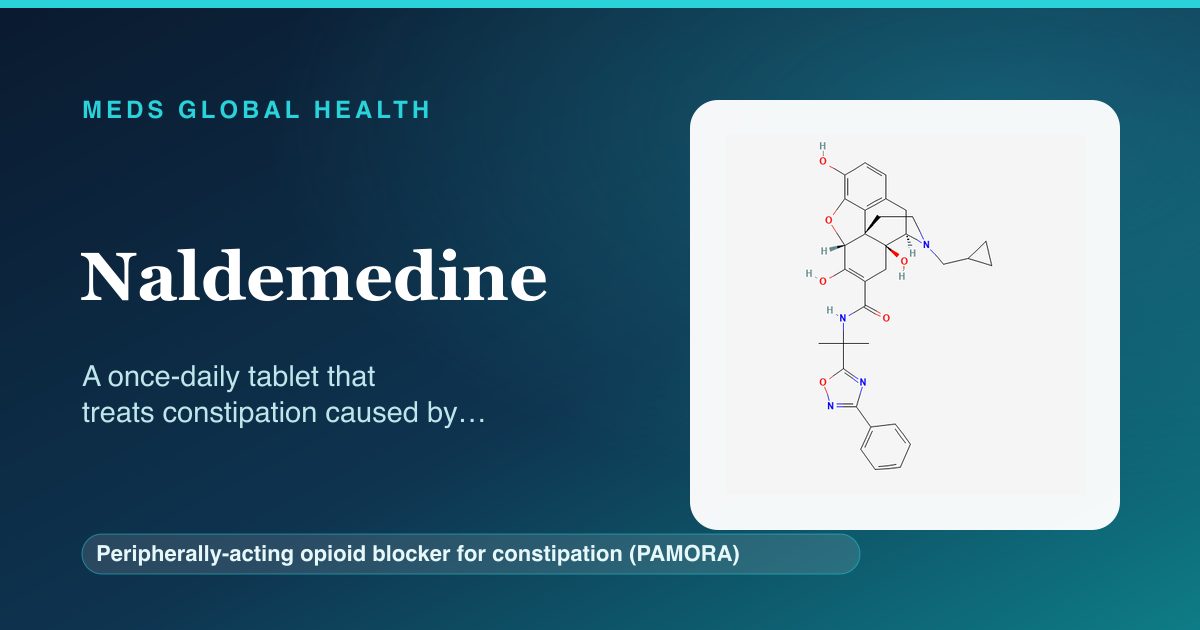
Naldemedine is a medicine used to treat opioid-induced constipation, a common and often distressing problem in people taking strong painkillers called opioids. Opioids relieve pain by acting in the brain, but they also slow down the bowel, which causes constipation that ordinary laxatives may not fully fix. Naldemedine belongs to a group of medicines that block opioids mainly in the gut, so it tackles the cause of this particular constipation. It is taken by mouth as a once-daily tablet, usually when laxatives alone have not worked well enough.
How it works
Opioid painkillers act on opioid receptors throughout the body. In the brain they relieve pain, but in the gut they slow movement and dry out the stool, causing constipation. Naldemedine blocks these opioid receptors in the gut wall, so the bowel can move more normally again, but it is designed not to cross into the brain in any meaningful amount, so it does not undo the pain relief. Because it works on the underlying cause of opioid-induced constipation rather than just softening stool, it is taken every day to keep the bowel working while opioid treatment continues.
Company & origin
A medicine used in the UK to treat constipation caused by strong painkillers, taken as a once-daily tablet.
Practical use
How to take Naldemedine
General, dose-free guidance — always follow your prescriber's and the leaflet's specific instructions.
- Take one tablet by mouth once a day, with or without food, at about the same time each day.
- Keep taking it while you are on your opioid painkiller, as it is meant to be used alongside ongoing treatment.
- Stop it and seek urgent help if you get severe, sudden or worsening tummy pain, as this can signal a bowel tear.
- Tell your prescriber if you get sweating, cramps, a fast heartbeat or feel anxious, as these can be withdrawal-type symptoms.
- Tell your team about all your other medicines, as some can change how well naldemedine works.
Weighing it up
Advantages & disadvantages of Naldemedine
Advantages
- Relieves opioid-induced constipation by working on its underlying cause in the gut.
- Does not reduce the pain relief from opioids, because it works mainly outside the brain.
- A simple once-daily tablet that can be taken with or without food.
Disadvantages
- Commonly causes tummy pain and diarrhoea.
- Carries a rare but serious risk of a tear in the bowel wall.
- Can cause opioid-withdrawal-type symptoms in some people.
Practical use
Good to know
The key idea behind naldemedine is that it relieves the constipation opioids cause without taking away the pain relief, because it works mainly in the gut and not the brain. The most common side effects are tummy pain and diarrhoea, which can sometimes be a sign it is working but should be reported if severe or persistent. A rare but serious risk is a tear (perforation) in the bowel wall, so anyone with severe, sudden or worsening tummy pain should stop the tablet and seek urgent medical help. Because it blocks opioids in the gut, some people get opioid-withdrawal-type symptoms such as sweating, tummy cramps, a fast heartbeat or feeling anxious, particularly if their gut is more sensitive to opioids. It should not be used if there is, or might be, a blockage in the gut. Tell your prescriber about all your medicines, as some can change how naldemedine works.
Who should not take it / use with caution
- People who have, or are suspected to have, a blockage in the gut must not take it.
- People who have had a serious allergic reaction to naldemedine should not take it.
- It is used with caution in people with certain bowel conditions that raise the risk of a tear, and in pregnancy under specialist advice.
Monitoring
- Reviewing how well the constipation improves and whether the dose suits you.
- Watching for severe tummy pain that could signal a bowel tear.
- Checking for withdrawal-type symptoms, especially when treatment first starts.
Side effects
- Tummy pain and diarrhoea, which are the most common effects.
- Nausea or opioid-withdrawal-type symptoms such as sweating, cramps or a fast heartbeat in some people.
- Rarely but seriously, a tear in the bowel wall, which needs urgent medical attention.
Key interactions
- Some medicines that affect the liver's processing of drugs can raise or lower naldemedine levels, so tell your team what you take.
- Using it with other opioid-blocking medicines is not recommended, as effects can add up.
- Certain medicines may make withdrawal-type symptoms more likely, so a full medicines list helps.
Available as: Tablets taken by mouth.
Answers
Naldemedine: frequently asked questions
What is naldemedine used for?
It is used to treat constipation caused by strong opioid painkillers, by blocking the effect of opioids in the gut so the bowel can move more normally.
Will it stop my pain relief working?
No. It is designed to work mainly in the gut and not the brain, so it relieves the constipation without reducing the pain relief from your opioid.
What are the most common side effects?
Tummy pain and diarrhoea are the most common; let your prescriber know if they are severe or do not settle.
When should I seek urgent help?
Stop the tablet and get urgent medical help if you have severe, sudden or worsening tummy pain, as this can rarely signal a tear in the bowel.
Why might I feel sweaty or anxious after starting it?
Because it blocks opioids in the gut, some people get withdrawal-type symptoms such as sweating, cramps or a fast heartbeat; tell your team if this happens.
The wider class
About Peripherally-acting opioid blocker for constipation (PAMORA)
Naldemedine belongs to the peripherally-acting opioid blocker for constipation (pamora) class. For how the class as a whole works, its shared safety principles and monitoring, see the full guide.
Browse by body system
Authoritative sources
- BNF
- NICE CKS
Building a medicines information resource?
We create evidence-led, dose-free drug and formulary references for teams.