A prandial glucose regulator
Nateglinide
A short-acting tablet that controls blood sugar after meals in type 2 diabetes, taken before eating.
What is Nateglinide?
Nateglinide is a tablet for type 2 diabetes that prompts a quick release of insulin to deal with the sugar from a meal. Like repaglinide, it acts fast and wears off quickly, so it is taken just before each main meal and skipped if a meal is skipped. In the UK it is usually used together with metformin rather than on its own. It can cause low blood sugar, so it helps to know the warning signs.
Education and reference only. This is a plain-language guide to Nateglinide — it deliberately contains no doses. Doses depend on the person, the brand and the reason for treatment, and belong with your prescriber. Always check the BNF, the product labelling (SmPC) and follow medical advice.
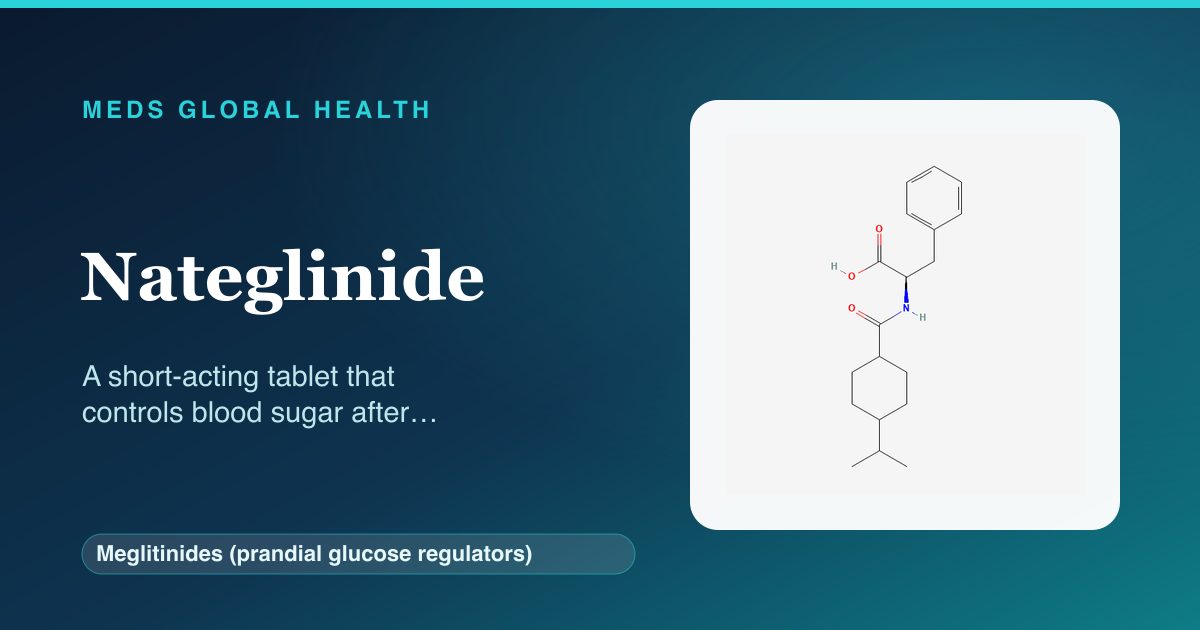
What it is
Nateglinide is an oral diabetes medicine in the meglitinide group, also called prandial glucose regulators. It stimulates the pancreas to release insulin in response to eating, smoothing out the rise in blood sugar after a meal. It works quickly and for a short time, so it is taken with meals. In the UK it is most often used in combination with metformin when metformin alone is not enough.
How it works
Nateglinide acts on the pancreas to bring forward and boost the release of insulin when food is eaten, helping to control the post-meal rise in blood sugar. Its rapid onset and short duration mean the effect is closely matched to the meal, so doses are taken just before eating. As the medicine clears quickly, the insulin effect fades between meals, which is why a missed meal means a missed dose.
Company & origin
A fast-acting tablet used in the UK to help control blood sugar after meals in type 2 diabetes, usually alongside metformin.
What it treats
Conditions Nateglinide is used for
Practical use
How to take Nateglinide
General, dose-free guidance — always follow your prescriber's and the leaflet's specific instructions.
- Take a dose shortly before each main meal, usually just before you start eating.
- If you skip a meal, skip that dose, as taking it without food can cause low blood sugar.
- It is usually taken together with metformin, so continue both as prescribed.
- Learn the signs of a hypo (shakiness, sweating, hunger, confusion) and carry a fast-acting sugar source.
- If you miss a dose, do not double up; take the next one with your next main meal.
- Tell your prescriber about other medicines and alcohol, which can change its effect on blood sugar.
Weighing it up
Advantages & disadvantages of Nateglinide
Advantages
- Its quick, meal-by-meal action helps control the rise in blood sugar after eating.
- Flexible timing can suit people whose mealtimes vary from day to day.
- Works well in combination with metformin when that alone is not enough.
Disadvantages
- Can cause low blood sugar, particularly if a meal is delayed, smaller than usual or missed.
- Must be taken with each main meal, meaning several doses a day.
- In the UK it is mainly used with metformin rather than on its own.
Practical use
Good to know
As with repaglinide, the practical rule is to take a dose before each main meal you eat and to skip the dose if you skip the meal, to avoid blood sugar dropping too low. It is mainly licensed for use alongside metformin, so it is usually one part of a combination. Because it stimulates insulin, hypos can happen, so recognising early signs — shakiness, sweating, hunger, confusion — and carrying something sugary is useful. Its meal-linked timing can suit people with variable mealtimes. Alcohol and some other medicines can change its effect on blood sugar.
Who should not take it / use with caution
- People with type 1 diabetes or diabetic ketoacidosis should not use it.
- It is generally avoided in severe liver problems and used with caution in kidney problems.
- It is not suitable for those who cannot reliably link doses to meals.
Monitoring
- Regular blood sugar checks and longer-term HbA1c tests to gauge diabetes control.
- Watching for and managing episodes of low blood sugar.
- Reviewing liver and kidney function where relevant, alongside the wider treatment plan.
Side effects
- Low blood sugar (hypo) with shakiness, sweating, hunger or confusion is the main concern.
- Stomach upset, such as nausea or diarrhoea, in some people.
- Weight gain and, rarely, allergic skin reactions or changes in liver tests.
Key interactions
- Some medicines (such as certain antifungals) and alcohol can increase the risk of hypos.
- Steroids, some water tablets and other medicines can raise blood sugar and reduce its effect.
- Beta-blockers can mask the warning signs of a hypo, so extra care is needed.
Available as: Tablets taken by mouth before meals.
Answers
Nateglinide: frequently asked questions
When do I take nateglinide?
Take it just before each main meal. It works quickly to handle the sugar from food, so its timing is tied to eating rather than fixed times.
What should I do if I miss a meal?
Skip that dose as well. Taking it without food can make your blood sugar drop too low, so each dose goes with a meal you actually eat.
Is it used on its own?
In the UK it is usually taken together with metformin rather than alone, as part of a combination to control type 2 diabetes.
Can it cause a hypo?
Yes. Because it makes your body release insulin, it can cause low blood sugar, especially if a meal is delayed or missed, so know the signs and carry a sugary snack.
How is it different from repaglinide?
Both are fast-acting, meal-time diabetes tablets in the same group; they differ in detail and licensing, with nateglinide mainly used alongside metformin.
Authoritative sources
- BNF
- NICE CKS
Building a medicines information resource?
We create evidence-led, dose-free drug and formulary references for teams.