Mast-cell-stabiliser eye drops for allergic eyes
Nedocromil
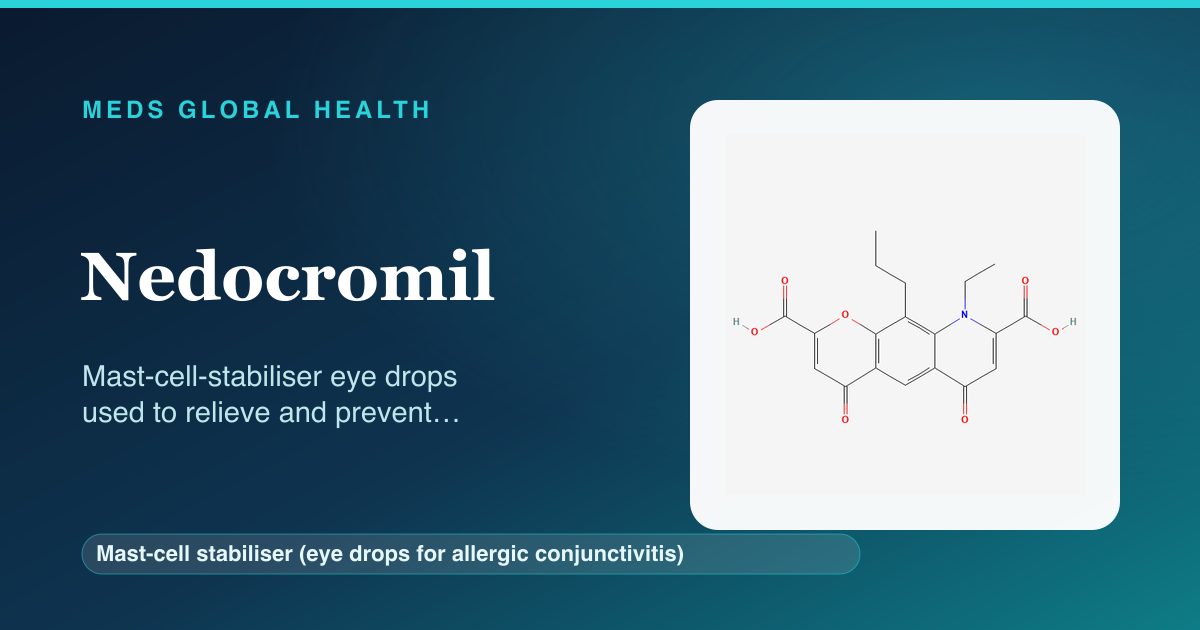
Mast-cell-stabiliser eye drops used to relieve and prevent allergic conjunctivitis, the itchy, watery eyes of allergy.
What is Nedocromil?
Nedocromil is a mast-cell stabiliser used as eye drops to treat allergic conjunctivitis, the red, itchy, watery eyes caused by allergies such as hay fever. It works by calming the cells in the eye that release the chemicals responsible for allergy symptoms, so it helps prevent symptoms as well as ease them, and works best when used regularly. It is generally well tolerated; the most common effects are brief stinging when the drops go in and an unusual taste afterwards. It is used in the eye rather than taken by mouth.
Education and reference only. This is a plain-language guide to Nedocromil — it deliberately contains no doses. Doses depend on the person, the brand and the reason for treatment, and belong with your prescriber. Always check the BNF, the product labelling (SmPC) and follow medical advice.
What it is
Nedocromil is a mast-cell-stabiliser medicine given as eye drops. It is used for allergic conjunctivitis, the eye allergy that causes red, itchy, gritty, watery eyes, often as part of hay fever or other allergies. Rather than simply masking symptoms once they start, it works to settle the underlying allergy reaction in the surface of the eye, which means it is most useful when used regularly during the allergy season. It is a local treatment placed directly in the eye, so it acts where it is needed with little reaching the rest of the body.
How it works
Allergy symptoms in the eye come from special cells called mast cells, which release chemicals such as histamine when they meet something you are allergic to, causing itching, redness and watering. Nedocromil stabilises these mast cells so they release fewer of these chemicals, which both eases current symptoms and helps stop new ones developing. Because this calming effect builds up with regular use, the drops work best when used consistently rather than only when symptoms flare. Used directly in the eye, it concentrates its effect where the allergy is happening.
Company & origin
A medicine used in the UK as eye drops to control allergic eye symptoms such as itchy, watery eyes.
Practical use
How to take Nedocromil
General, dose-free guidance — always follow your prescriber's and the leaflet's specific instructions.
- Put the drops in the affected eye or eyes as directed, and use them regularly for the best, preventive effect.
- Keep using them through the allergy season rather than only when symptoms flare, as the effect builds with regular use.
- Wash your hands first and avoid touching the dropper tip to your eye to keep the drops clean.
- Expect a brief sting and an unusual taste afterwards; these are common and settle quickly.
- Ask for advice if you wear contact lenses, as the drops and lenses may need to be kept apart.
Weighing it up
Advantages & disadvantages of Nedocromil
Advantages
- Eases and helps prevent the itchy, watery, red eyes of allergic conjunctivitis.
- Works at the source of the allergy in the eye with little reaching the rest of the body.
- Generally well tolerated as a regular treatment through the allergy season.
Disadvantages
- Commonly causes brief stinging when the drops go in and an unusual taste afterwards.
- Works best with regular use, so it is less suited to occasional, on-the-spot relief.
- May not be enough on its own for more severe eye allergy.
Practical use
Good to know
The main thing to know about nedocromil eye drops is that they work best as a regular, preventive treatment: because they calm the cells that drive eye allergy over time, using them consistently through the allergy season gives better control than only reaching for them when your eyes are already streaming. The most common effects are a brief stinging or burning when the drops go in, which quickly settles, and an unusual or bitter taste afterwards, which happens because some drops drain down into the throat. If you wear contact lenses, ask for advice, as eye drops and lenses may need to be kept apart. Tell your prescriber if your symptoms do not improve, as a different or additional treatment may be needed.
Who should not take it / use with caution
- People who have had a serious allergic reaction to nedocromil should not use it.
- Contact-lens wearers should seek advice, as the drops and lenses may need to be kept apart.
- It is used with care, on advice, in pregnancy and breastfeeding, though only small amounts reach the body.
Monitoring
- Reviewing how well your eye symptoms are controlled with regular use.
- Checking the drops are being used correctly and consistently.
- Considering a different or additional treatment if symptoms do not improve.
Side effects
- A brief stinging or burning when the drops go in, which quickly settles.
- An unusual or bitter taste afterwards as drops drain into the throat.
- Occasionally, mild eye irritation, redness or watering.
Key interactions
- There are few well-established interactions, as little of the medicine reaches the rest of the body.
- If you use other eye drops, leave a short gap between them so each works properly.
- Tell your prescriber about other eye treatments you use, so they can be coordinated.
Available as: Eye drops.
Answers
Nedocromil: frequently asked questions
What is nedocromil used for?
It is used as eye drops to treat allergic conjunctivitis, the red, itchy, watery eyes caused by allergies such as hay fever.
Why should I use it regularly?
Nedocromil works by calming the cells that drive eye allergy over time, so using it consistently through the allergy season gives better control than occasional use.
Why do my eyes sting when I use it?
A brief stinging or burning when the drops go in is the most common effect and quickly settles on its own.
Why do I get a strange taste?
An unusual or bitter taste afterwards happens because some of the drops drain from the eye down into the throat; it is harmless.
Can I wear contact lenses with it?
Ask your prescriber or pharmacist for advice, as eye drops and contact lenses may need to be kept apart while you use them.
The wider class
About Mast-cell stabiliser (eye drops for allergic conjunctivitis)
Nedocromil belongs to the mast-cell stabiliser (eye drops for allergic conjunctivitis) class. For how the class as a whole works, its shared safety principles and monitoring, see the full guide.
Browse by body system
Authoritative sources
- BNF
- NICE CKS
Building a medicines information resource?
We create evidence-led, dose-free drug and formulary references for teams.