A non-opioid, non-NSAID painkiller
Nefopam
A non-opioid, non-NSAID painkiller used for moderate pain when other painkillers are unsuitable.
What is Nefopam?
Nefopam is a prescription painkiller for moderate pain. It is neither an opioid (such as codeine or morphine) nor an anti-inflammatory painkiller (an NSAID like ibuprofen), which makes it a useful option when those are not suitable. It works on the way pain signals are handled in the nervous system. Common effects include feeling sick, a dry mouth and sweating, and it is taken as directed by your prescriber for the shortest time needed.
Education and reference only. This is a plain-language guide to Nefopam — it deliberately contains no doses. Doses depend on the person, the brand and the reason for treatment, and belong with your prescriber. Always check the BNF, the product labelling (SmPC) and follow medical advice.
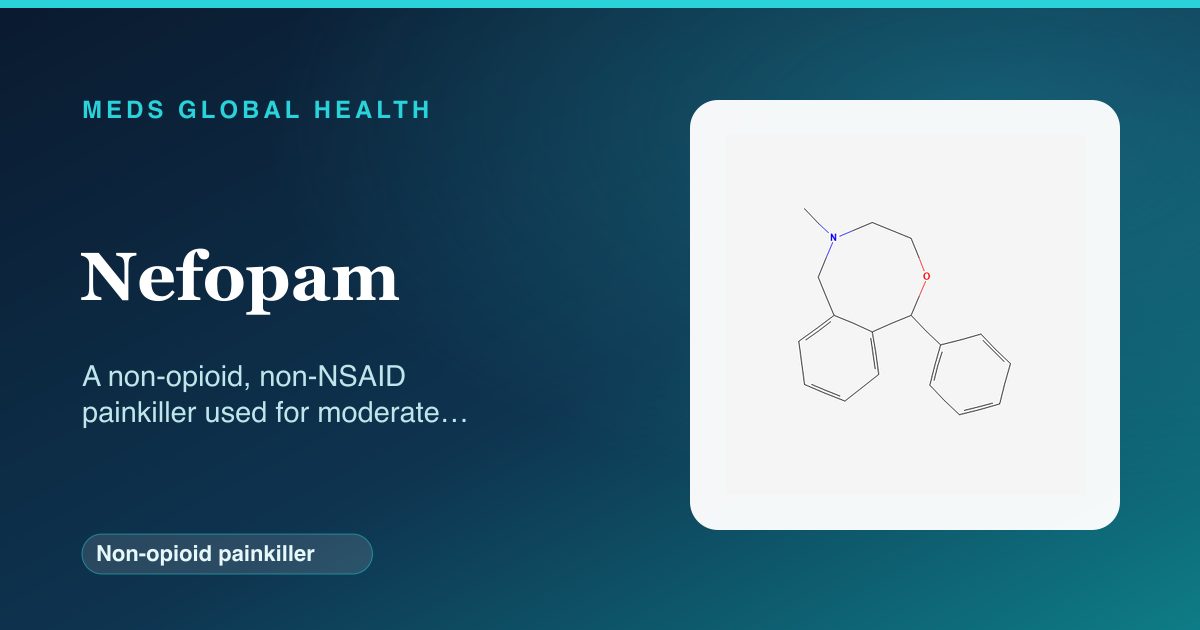
What it is
Nefopam is a painkiller that does not belong to the two most familiar groups — it is not an opioid and not a non-steroidal anti-inflammatory (NSAID). This makes it a helpful alternative for moderate pain in people who cannot take opioids or anti-inflammatories, or in whom those have not worked well enough. It is available on prescription and is usually used for short-term pain.
How it works
Nefopam acts within the central nervous system to reduce the perception of pain. It is thought to work by influencing the way certain chemical messengers involved in pain signalling are handled in the brain and spinal cord. Unlike opioids it does not act mainly on opioid receptors, and unlike NSAIDs it does not work chiefly by reducing inflammation — which is why it offers a different option for pain relief.
Company & origin
A prescription painkiller used in the UK for moderate pain, often when other painkillers are unsuitable or have not worked well.
Practical use
How to take Nefopam
General, dose-free guidance — always follow your prescriber's and the leaflet's specific instructions.
- Take it exactly as directed by your prescriber, using it for the shortest time needed.
- It can be taken with or without food; taking it with food may help if it makes you feel sick.
- If it tends to disturb your sleep, ask your prescriber about the best timing during the day.
- Do not be alarmed if your urine turns pink — this is a harmless, recognised effect.
- If your pain is not controlled or side effects trouble you, go back to your prescriber rather than adjusting it yourself.
Weighing it up
Advantages & disadvantages of Nefopam
Advantages
- Is neither an opioid nor an anti-inflammatory, so it suits people who cannot take those.
- Does not carry the dependence risk associated with opioid painkillers.
- Offers a different way of relieving moderate pain when usual painkillers have not worked.
Disadvantages
- Commonly causes feeling sick, a dry mouth and sweating.
- Can be stimulating and may cause restlessness, light-headedness or disturbed sleep.
- Is available only on prescription and is not suitable for everyone, including some people with heart or seizure conditions.
Practical use
Good to know
Nefopam can cause feeling sick, a dry mouth and sweating, and it may make some people feel light-headed or restless. It can colour the urine pink, which is harmless. Because it can be stimulating, some people find it disturbs sleep if taken late in the day. It is taken as directed, at the lowest effective amount for the shortest time, and your prescriber will choose it when opioids or anti-inflammatory painkillers are not the best fit for you.
Who should not take it / use with caution
- People who have had convulsions (fits), as nefopam may not be suitable.
- People with certain heart conditions, urinary retention, glaucoma, or who are taking medicines that interact with it — your prescriber will check.
- Older or frail people, in whom it is used with extra care because of side effects such as confusion or dizziness.
Monitoring
- Checking your pain is improving and that nefopam remains the right choice for you.
- Watching for troublesome side effects such as nausea, restlessness or a fast heartbeat.
- Reviewing other medicines for interactions, particularly those affecting the heart or nervous system.
Side effects
- Feeling sick, dry mouth and sweating are among the most common effects.
- Light-headedness, restlessness, a faster heartbeat or difficulty sleeping can occur.
- Urine may turn pink, which is harmless; report any severe or unusual reactions to your prescriber.
Key interactions
- Medicines that can affect heart rhythm or that have anticholinergic effects (such as some antidepressants) — your prescriber checks for these.
- Other medicines that can lower the seizure threshold, because of the small risk of convulsions.
- Medicines that cause drowsiness or affect the nervous system — combinations should be reviewed.
Available as: Tablets taken by mouth; an injectable form is also used in some settings.
Answers
Nefopam: frequently asked questions
What is nefopam used for?
Nefopam is used to relieve moderate pain, often when opioid painkillers or anti-inflammatory painkillers are unsuitable or have not worked well enough.
Is nefopam an opioid?
No. Nefopam is neither an opioid (like codeine or morphine) nor an anti-inflammatory painkiller (an NSAID like ibuprofen). It works in a different way on pain signalling in the nervous system, which is why it is a useful alternative.
Why has my urine turned pink on nefopam?
Nefopam can give urine a harmless pink colouration. This is a recognised effect and is not a sign of a problem, but mention it to your prescriber if you are unsure.
Can nefopam be addictive?
Nefopam does not carry the dependence risk associated with opioid painkillers. Even so, it is taken as directed for the shortest time needed, and you should review ongoing pain with your prescriber.
What are the most common side effects of nefopam?
Feeling sick, a dry mouth and sweating are among the most common. Some people also feel light-headed, restless or find it disturbs their sleep. Tell your prescriber if side effects trouble you.
Authoritative sources
- BNF
- NICE CKS
Building a medicines information resource?
We create evidence-led, dose-free drug and formulary references for teams.