An anti-inflammatory (NSAID) eye drop
Nepafenac
An anti-inflammatory (NSAID) eye drop used around cataract surgery to reduce inflammation and pain.
What is Nepafenac?
Nepafenac is an anti-inflammatory eye drop, of the type called an NSAID, used around the time of cataract surgery to reduce inflammation and pain in the eye. The most important safety point is that, especially with prolonged use, NSAID eye drops can cause problems with the cornea (the clear front of the eye), including thinning or, rarely, breakdown of the surface, so they are used for the period your eye specialist advises and no longer. Mild stinging is common, and it should be avoided by people who are allergic to aspirin or other NSAIDs.
Education and reference only. This is a plain-language guide to Nepafenac — it deliberately contains no doses. Doses depend on the person, the brand and the reason for treatment, and belong with your prescriber. Always check the BNF, the product labelling (SmPC) and follow medical advice.
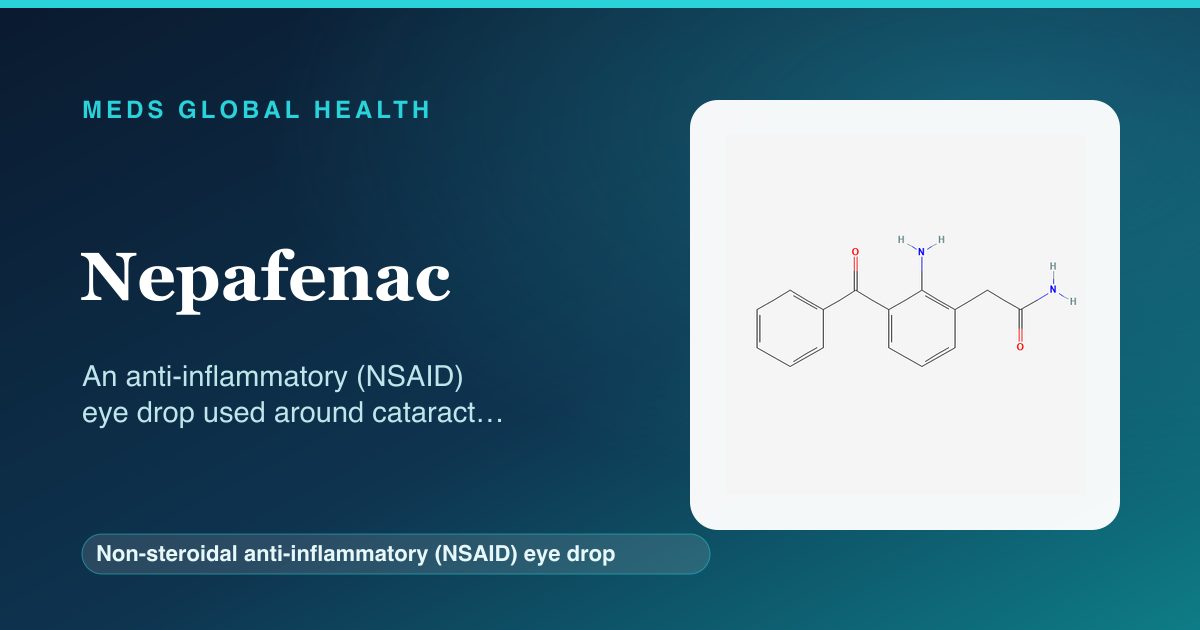
What it is
Nepafenac is an eye drop belonging to the group of medicines called non-steroidal anti-inflammatory drugs, or NSAIDs. It is used around the time of cataract surgery to reduce inflammation and pain in the eye and to help recovery after the operation. It is applied directly into the eye as drops for a set period before and after surgery, as directed by the eye specialist. It is a prescription medicine used as part of the care plan for cataract surgery rather than for general everyday eye irritation.
How it works
Nepafenac works by blocking the production of certain natural chemicals in the eye that cause inflammation, swelling and pain. After cataract surgery, the eye naturally becomes inflamed as it heals, and reducing this inflammation helps with comfort and recovery and lowers the chance of certain complications. Because it is applied directly as a drop, it acts mainly where it is needed, in the front of the eye, while keeping the amount absorbed into the rest of the body low.
Company & origin
An anti-inflammatory eye drop used in the UK around the time of cataract surgery to reduce inflammation and pain.
Practical use
How to take Nepafenac
General, dose-free guidance — always follow your prescriber's and the leaflet's specific instructions.
- Use the drops in the affected eye exactly as directed, for the period your eye specialist advises and no longer.
- Wash your hands first and avoid touching the dropper tip to your eye or anything else.
- If you use other eye drops, leave a few minutes between them as advised.
- Avoid it if you are allergic to aspirin or other anti-inflammatory medicines (NSAIDs).
- Report any worsening eye pain, redness or blurred vision promptly, as this needs review.
Weighing it up
Advantages & disadvantages of Nepafenac
Advantages
- Reduces inflammation and pain in the eye around the time of cataract surgery.
- Applied directly as a drop, so most of the effect is where it is needed.
- Helps comfort and recovery as part of the cataract surgery care plan.
Disadvantages
- Can cause corneal problems, including thinning or, rarely, breakdown, especially with prolonged use.
- Commonly causes mild stinging or brief blurred vision after use.
- Should be avoided by people allergic to aspirin or other NSAIDs.
Practical use
Good to know
The dominant safety point with nepafenac is the cornea, the clear front surface of the eye: NSAID eye drops, particularly when used for longer than recommended or in eyes that are already vulnerable, can cause the cornea to thin or, rarely, break down, so the drops are used only for the period your specialist advises. Mild stinging or blurred vision just after putting in the drop is common and usually brief. Anyone who has had an allergic reaction to aspirin or other NSAIDs should avoid it, as the same allergy can apply. If the eye becomes more painful, red or your vision worsens during treatment, this should be reported promptly. As with all eye drops, good technique and not touching the dropper tip to the eye help avoid infection.
Who should not take it / use with caution
- People who are allergic to aspirin, nepafenac or other NSAIDs should not use it.
- It is used with caution, and for as short a time as possible, in eyes already at risk of corneal problems, such as in dry eye or some other conditions.
- It is used under the guidance of an eye specialist as part of cataract surgery care.
Monitoring
- Reviewing the eye during recovery from cataract surgery.
- Watching for corneal problems, especially with longer use or in vulnerable eyes.
- Checking that the drops are stopped at the right time as healing progresses.
Side effects
- Mild stinging, irritation or brief blurred vision after putting in the drop.
- A feeling of something in the eye or watering.
- Less commonly but importantly, corneal problems such as thinning or, rarely, breakdown of the surface.
Key interactions
- Using it together with steroid eye drops may add to the risk of corneal problems, so this is monitored.
- Tell your eye specialist about other eye drops and medicines you use.
- Leave a few minutes between different eye drops as advised.
Available as: Eye drops applied directly into the eye.
Answers
Nepafenac: frequently asked questions
What is nepafenac used for?
It is an anti-inflammatory (NSAID) eye drop used around the time of cataract surgery to reduce inflammation and pain in the eye and help recovery.
Why should I not use it for longer than advised?
NSAID eye drops can cause the cornea, the clear front of the eye, to thin or, rarely, break down, particularly with prolonged use, so they are used only for the period your specialist advises.
Is stinging normal?
Mild stinging or brief blurred vision just after putting in the drop is common and usually settles quickly.
Can I use it if I am allergic to aspirin?
No. If you are allergic to aspirin or other NSAIDs you should avoid nepafenac, as the same allergy can apply.
What should I do if my eye gets worse?
Report any worsening eye pain, redness or blurred vision promptly, as this needs to be checked by your eye specialist.
Authoritative sources
- BNF
- NICE CKS
Building a medicines information resource?
We create evidence-led, dose-free drug and formulary references for teams.