A medicine for tapeworm infections
Niclosamide
A medicine that treats tapeworm infections by acting on the worm within the gut, generally well tolerated.
What is Niclosamide?
Niclosamide is a medicine used to treat tapeworm infections of the gut. It is taken by mouth and works directly on the tapeworm inside the bowel, killing it so the body can pass it out. Because it acts in the gut and very little is absorbed into the rest of the body, it is generally well tolerated, with only mild stomach effects such as nausea or tummy upset. The tablets are usually chewed thoroughly or crushed and taken with water. It is a straightforward, well-established treatment, sometimes obtained through specialist supply.
Education and reference only. This is a plain-language guide to Niclosamide — it deliberately contains no doses. Doses depend on the person, the brand and the reason for treatment, and belong with your prescriber. Always check the BNF, the product labelling (SmPC) and follow medical advice.
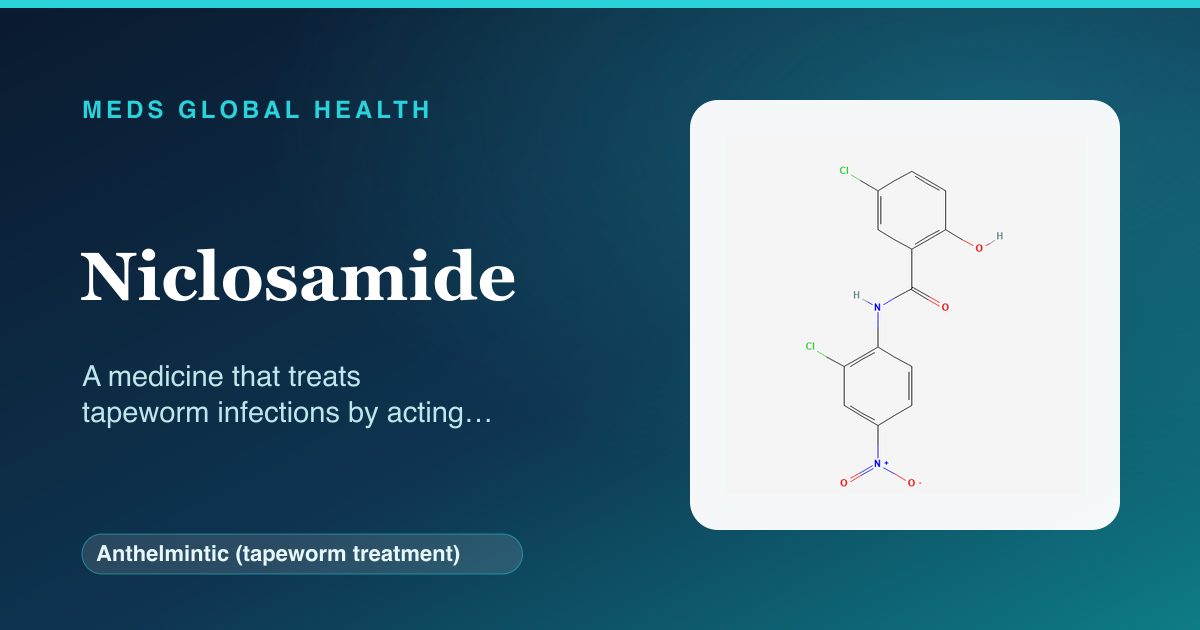
What it is
Niclosamide is an older, well-established medicine used to treat tapeworm infections, where a flat, ribbon-like worm lives in the gut. It is taken by mouth and is designed to act on the worm within the bowel itself rather than being absorbed into the body. Because of this, it tends to cause few problems beyond mild stomach effects. It is used for several types of tapeworm and is a simple treatment, although in the UK it is sometimes supplied through specialist or named-patient routes rather than being widely stocked.
How it works
Niclosamide works directly on the tapeworm in the gut by interfering with the way the worm produces the energy it needs to survive and to hold on to the gut wall. The worm is killed and loses its grip, and is then passed out of the body in the stool, sometimes in a partly digested form. Because the medicine stays largely in the gut and very little crosses into the bloodstream, its action is concentrated on the worm where it lives, which is also why it causes few effects elsewhere in the body. Good hygiene afterwards helps prevent reinfection.
Company & origin
An older medicine used in the UK to treat tapeworm infections of the gut.
Practical use
How to take Niclosamide
General, dose-free guidance — always follow your prescriber's and the leaflet's specific instructions.
- Chew the tablets thoroughly, or crush them and mix with a little water, rather than swallowing them whole.
- Take it as your prescriber directs, following any advice about timing around food.
- Wash your hands well and keep up good hygiene afterwards to help prevent reinfection.
- Follow any specific instructions for your type of tapeworm, including about clearing the bowel afterwards if advised.
- Tell your prescriber if symptoms continue, as a further course or tests may be needed.
Weighing it up
Advantages & disadvantages of Niclosamide
Advantages
- An effective, well-established treatment for tapeworm infections of the gut.
- Acts mainly in the gut with very little absorbed, so it is generally well tolerated.
- Taken by mouth as a simple, short treatment.
Disadvantages
- Can cause mild stomach effects such as nausea or tummy upset.
- Tablets need to be chewed thoroughly or crushed rather than swallowed whole.
- May not be widely stocked and is sometimes supplied through specialist routes.
Practical use
Good to know
The reassuring thing about niclosamide is that it acts mainly inside the gut and very little is absorbed into the body, so it is generally well tolerated, with side effects usually limited to mild nausea or stomach upset. For it to work properly, the tablets are usually chewed thoroughly, or crushed and mixed with a little water, rather than swallowed whole. Good hand-washing and hygiene are important, especially with certain tapeworms, to avoid spreading or catching the infection again, and household members may sometimes need checking. Your prescriber may give specific advice about timing around food and, for some tapeworms, about clearing the bowel afterwards. Let them know if symptoms continue, as a repeat course or further tests may be needed.
Who should not take it / use with caution
- People who have had a serious allergic reaction to niclosamide should not take it.
- It is used with care, on advice, in pregnancy and breastfeeding, though little is absorbed into the body.
- Specific advice is needed for young children and for certain tapeworms, so follow your prescriber's guidance.
Monitoring
- Checking that symptoms have cleared and that the worm has been passed.
- Watching for reinfection and advising on hygiene, especially with certain tapeworms.
- Considering checking household members where appropriate.
Side effects
- Mild nausea or stomach upset.
- Loss of appetite or a feeling of fullness in some people.
- Occasionally, itching or a mild rash.
Key interactions
- There are few well-established interactions, as very little of the medicine is absorbed.
- Tell your prescriber about all your medicines so your treatment can be coordinated.
- Follow any advice about food and timing, which can affect how the treatment is taken.
Available as: Tablets that are chewed or crushed and taken by mouth.
Answers
Niclosamide: frequently asked questions
What is niclosamide used for?
It is a medicine used to treat tapeworm infections of the gut, working directly on the worm in the bowel so it can be passed out of the body.
How do I take the tablets?
The tablets are usually chewed thoroughly, or crushed and mixed with a little water, rather than swallowed whole, so the medicine works properly.
Is it well tolerated?
Yes. Because it acts mainly in the gut and very little is absorbed, it is generally well tolerated, with side effects usually limited to mild stomach upset.
Why is hygiene important afterwards?
Good hand-washing and hygiene help prevent spreading or catching the infection again, which is especially important with certain tapeworms.
What if my symptoms do not clear?
Tell your prescriber if symptoms continue, as a repeat course or further tests may be needed to make sure the infection has gone.
Authoritative sources
- BNF
- NICE CKS
Building a medicines information resource?
We create evidence-led, dose-free drug and formulary references for teams.