A targeted cancer tablet
Nilotinib
A targeted cancer tablet for chronic myeloid leukaemia, taken on an empty stomach and monitored with heart tracing.
What is Nilotinib?
Nilotinib is a targeted cancer tablet, a tyrosine kinase inhibitor, used for chronic myeloid leukaemia (CML). It is started and monitored by a blood-cancer specialist but taken regularly at home. A key point is that it must be taken on an empty stomach, because food greatly raises its level and can be dangerous, and it can affect the heart's rhythm (QT prolongation) so you will have heart tracings (ECGs). It can also change blood sugar and cholesterol levels. It has many drug interactions and grapefruit must be avoided.
Education and reference only. This is a plain-language guide to Nilotinib — it deliberately contains no doses. Doses depend on the person, the brand and the reason for treatment, and belong with your prescriber. Always check the BNF, the product labelling (SmPC) and follow medical advice.
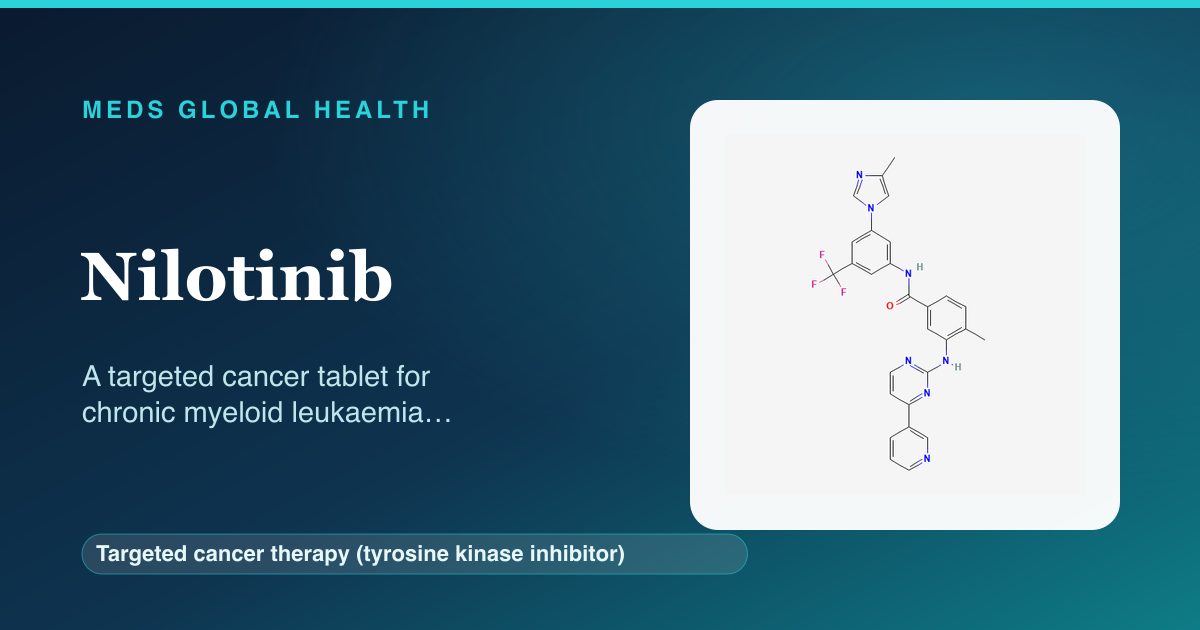
What it is
Nilotinib is a targeted cancer therapy in the tyrosine kinase inhibitor group, used to treat chronic myeloid leukaemia, including when an earlier treatment has not worked or is not tolerated. It is taken as a capsule at home, but is always started and supervised by a haematology team. Because of how the body absorbs it and its effect on the heart, the timing around food and regular heart checks are especially important.
How it works
Chronic myeloid leukaemia is driven by an overactive enzyme (a tyrosine kinase) that keeps telling the blood cells to multiply. Nilotinib blocks this faulty signal, slowing or stopping the leukaemia's growth. It is taken continuously, and the team uses regular blood tests to confirm the disease is responding. Heart tracings are also done because nilotinib can affect the electrical timing of the heartbeat.
Company & origin
Originated / developed by: Originally Novartis (now also generic).
A targeted cancer tablet used in the UK for chronic myeloid leukaemia, taken on an empty stomach.
Practical use
How to take Nilotinib
General, dose-free guidance — always follow your prescriber's and the leaflet's specific instructions.
- Take it on an empty stomach, with no food for around two hours before and at least an hour after each dose.
- Take it exactly as prescribed and do not change or stop it on your own, even if you feel well.
- Avoid grapefruit and grapefruit juice completely, as they can raise the level of the medicine dangerously.
- Check with your cancer team or pharmacist before starting any new medicine or supplement, as many interact and some affect the heart.
- Report palpitations, fainting, dizziness, signs of infection or unusual bleeding promptly.
Weighing it up
Advantages & disadvantages of Nilotinib
Advantages
- An effective targeted treatment for chronic myeloid leukaemia, including some cases where other options have failed.
- Taken at home as a capsule while overseen by a blood-cancer team.
- Works on a specific cancer driver, which can bring the leukaemia under good control.
Disadvantages
- Must be taken on an empty stomach, because food raises its level dangerously.
- Can affect the heart's rhythm (QT prolongation), needing regular ECGs and care with other medicines.
- Can change blood sugar and cholesterol and has many drug and grapefruit interactions.
Practical use
Good to know
The most important practical point with nilotinib is the food rule: it must be taken on an empty stomach, with no food for a couple of hours before and at least an hour after, because eating around the dose can raise its level dangerously. It can affect the heart's electrical rhythm (called QT prolongation), so you will have ECGs and your blood salts may be checked; tell your team about fainting, palpitations or dizziness. It can also raise blood sugar and cholesterol, which are monitored. It has many drug interactions and grapefruit must be avoided. Report signs of infection or unusual bleeding, do not stop it without advice, and avoid pregnancy.
Who should not take it / use with caution
- It must not be used in pregnancy, and effective contraception is needed because it can harm an unborn baby.
- It is avoided or used with great caution in people with certain heart-rhythm problems or low blood salts.
- People taking other medicines that affect the heart rhythm may need those changed or carefully managed.
Monitoring
- Regular blood tests to track the leukaemia response and check blood counts, liver, blood sugar and cholesterol.
- Heart tracings (ECGs) and blood-salt checks because it can affect heart rhythm.
- Reviewing for signs of infection, bleeding or other side effects at each visit.
Side effects
- Rash, headache, itching, nausea, tiredness and muscle or joint aches are common.
- Changes to heart rhythm (QT prolongation), and raised blood sugar and cholesterol, which are monitored.
- Low blood counts can cause infections, bleeding or anaemia, and less commonly there may be liver or pancreas changes.
Key interactions
- Processed by the same liver enzyme as many medicines, so some antibiotics, antifungals, epilepsy and heart drugs can change its level.
- Grapefruit and grapefruit juice can raise its level dangerously and must be avoided.
- Combining it with other medicines that affect the heart rhythm can increase the risk of dangerous heartbeats.
Available as: Capsules taken by mouth.
Answers
Nilotinib: frequently asked questions
Why must I take nilotinib on an empty stomach?
Food greatly increases how much nilotinib your body absorbs, which can raise its level dangerously, so you should take it with no food for about two hours before and at least an hour after.
Why do I need heart tracings (ECGs)?
Nilotinib can affect the electrical timing of the heartbeat (QT prolongation), so ECGs help check this is safe; tell your team about palpitations, fainting or dizziness.
Why are my blood sugar and cholesterol being checked?
Nilotinib can raise blood sugar and cholesterol levels, so these are monitored during treatment and managed if needed.
Can I drink grapefruit juice with it?
No. Grapefruit can raise the level of nilotinib in your body and increase the risk of side effects, including heart-rhythm problems, so it must be avoided.
Can I stop it once the leukaemia is controlled?
Any change must be decided with your specialist team; stopping on your own can let the leukaemia return.
Authoritative sources
- BNF
- NICE CKS
Building a medicines information resource?
We create evidence-led, dose-free drug and formulary references for teams.