A metabolic blocker for tyrosinaemia
Nitisinone
A specialist medicine for hereditary tyrosinaemia type 1 (and alkaptonuria), used with a strict low-protein diet.
What is Nitisinone?
Nitisinone is a specialist medicine for hereditary tyrosinaemia type 1, a rare inherited condition in which the body cannot fully break down a protein building block called tyrosine, so harmful by-products build up and can damage the liver and kidneys. It works by blocking an early step in this process, which stops the most toxic by-products forming. It must always be combined with a strict low-protein diet that limits tyrosine and phenylalanine, because tyrosine levels can rise on the medicine; if the diet is not followed, eye symptoms such as sore, light-sensitive eyes can occur. It is also used in alkaptonuria, and needs regular blood monitoring under a metabolic team.
Education and reference only. This is a plain-language guide to Nitisinone — it deliberately contains no doses. Doses depend on the person, the brand and the reason for treatment, and belong with your prescriber. Always check the BNF, the product labelling (SmPC) and follow medical advice.
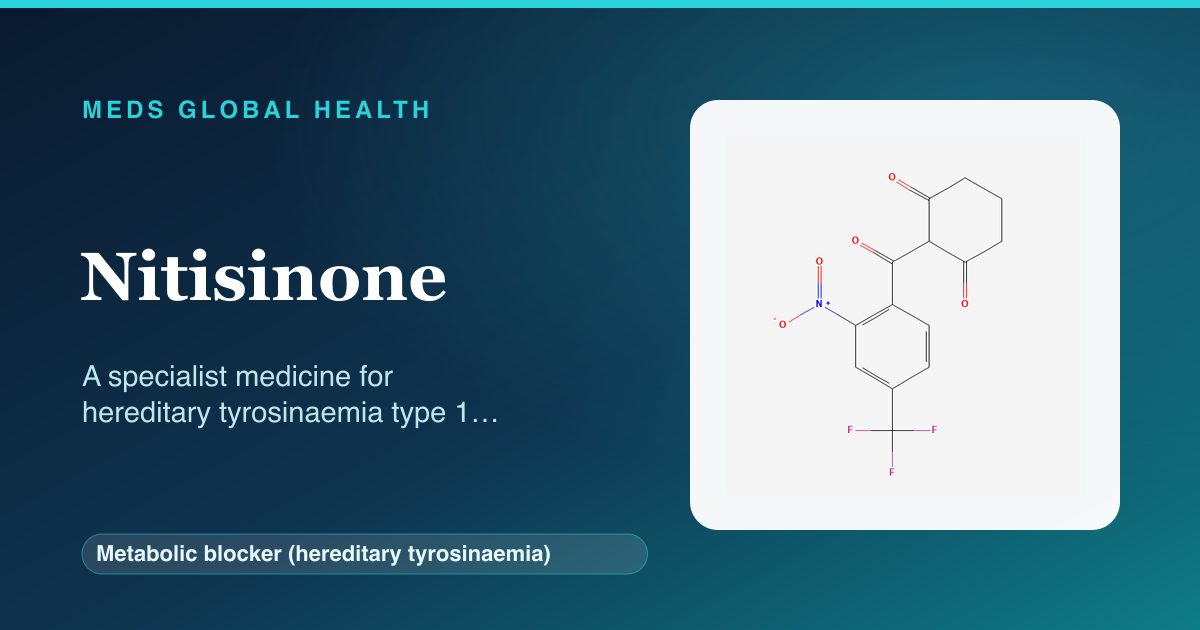
What it is
Nitisinone is a treatment for hereditary tyrosinaemia type 1, a rare inherited (genetic) condition in which a faulty enzyme means the amino acid tyrosine cannot be fully broken down, leading to a build-up of toxic by-products that can seriously harm the liver and kidneys. It is also used in alkaptonuria, another inherited condition affecting tyrosine handling. It is taken by mouth and is always used together with a special low-protein diet, under the care of a metabolic centre.
How it works
Nitisinone blocks an early enzyme in the pathway that breaks down tyrosine. By stopping this step, it prevents the formation of the most toxic downstream by-products that would otherwise damage the liver and kidneys in tyrosinaemia. However, blocking that step means tyrosine itself can build up, which is why a strict diet that limits tyrosine and phenylalanine is an essential partner to the medicine, keeping tyrosine levels from rising too high and causing eye problems.
Company & origin
Originated / developed by: Swedish Orphan Biovitrum (Sobi).
A specialist medicine used in the UK by metabolic centres to treat hereditary tyrosinaemia type 1, alongside a strict diet.
Practical use
How to take Nitisinone
General, dose-free guidance — always follow your prescriber's and the leaflet's specific instructions.
- Take it exactly as your metabolic team directs, and never stop or change it without their advice.
- Keep strictly to the low-protein diet that limits tyrosine and phenylalanine, as the medicine and diet must be used together.
- Report sore, red, gritty or light-sensitive eyes promptly, as these can be a sign tyrosine is too high.
- Attend all blood-test appointments so your tyrosine and liver can be monitored.
- Keep the capsules or liquid as advised by your pharmacist and follow the storage instructions.
Weighing it up
Advantages & disadvantages of Nitisinone
Advantages
- Greatly improves the outlook in hereditary tyrosinaemia type 1 by preventing the most toxic by-products.
- Taken by mouth and used together with diet to protect the liver and kidneys.
- Also used to help in alkaptonuria, another inherited tyrosine disorder.
Disadvantages
- Must always be combined with a strict low-protein diet, which takes ongoing effort.
- Can let tyrosine build up, causing eye symptoms if the diet is not followed.
- Needs lifelong treatment and regular blood monitoring under a specialist team.
Practical use
Good to know
The most important point is that nitisinone and the diet go together: the medicine stops the toxic by-products, but the strict low-protein diet (limiting tyrosine and phenylalanine) keeps tyrosine from building up. If the diet is not followed, tyrosine can rise and cause eye symptoms such as sore, gritty, red or light-sensitive eyes, which should be reported promptly. It is a lifelong treatment that needs regular blood tests to keep tyrosine in the right range and to watch the liver. It must never be stopped or have its diet relaxed without the metabolic team's advice. Children on it are followed closely as they grow, and the whole approach is co-ordinated by a specialist centre and metabolic dietitian.
Who should not take it / use with caution
- It should only be used under the care of a metabolic centre experienced in tyrosinaemia.
- It must not be used without the accompanying low-protein diet and monitoring.
- Use in pregnancy or breastfeeding is decided by the specialist team after weighing benefits and risks.
Monitoring
- Regular blood tests to keep tyrosine in the target range and to check the liver.
- Eye checks and prompt review of any eye symptoms.
- Growth and development monitoring in children, with the metabolic dietitian closely involved.
Side effects
- Eye symptoms such as sore, red or light-sensitive eyes, usually linked to tyrosine being too high.
- Changes in some blood cell counts, which is why blood is monitored.
- Skin reactions or itching in some people.
Key interactions
- Diet is central to how it works, so any change in protein intake matters.
- Tell your team about all other medicines, as treatment is overseen by a specialist centre.
- Some medicines handled by the same liver pathways may need review by your team.
Available as: Capsules and an oral liquid (suspension) taken by mouth.
Answers
Nitisinone: frequently asked questions
Why do I need a special diet as well as the medicine?
The medicine stops the most toxic by-products forming but can let tyrosine build up, so a strict low-protein diet that limits tyrosine and phenylalanine is essential to keep levels safe.
Why have my eyes become sore and sensitive to light?
Sore, red or light-sensitive eyes can be a sign that tyrosine is too high, often because of diet; report this promptly so your team can check your levels.
Can I ever stop the medicine or relax the diet?
No, not without your metabolic team's advice; the medicine and diet are lifelong and stopping or relaxing them can be harmful.
Is it used for anything other than tyrosinaemia?
Yes, it is also used in alkaptonuria, another inherited condition affecting how the body handles tyrosine.
Why do I need regular blood tests?
Blood tests keep your tyrosine in the right range and check your liver and blood counts, helping your team adjust treatment and diet.
Authoritative sources
- BNF
- NICE CKS
Building a medicines information resource?
We create evidence-led, dose-free drug and formulary references for teams.