A non-opioid medicine for a dry cough
Noscapine
A non-opioid cough suppressant used to ease a dry, tickly cough.
What is Noscapine?
Noscapine is a medicine used to ease a dry, tickly cough. Although it comes originally from the same plant as some opioids, it is not an opioid painkiller and does not relieve pain or cause the same risks; it simply calms the cough reflex. It is generally well tolerated, with few side effects when used as directed. It is best avoided in pregnancy. It is meant for a dry cough rather than a chesty one where bringing up phlegm is helpful.
Education and reference only. This is a plain-language guide to Noscapine — it deliberately contains no doses. Doses depend on the person, the brand and the reason for treatment, and belong with your prescriber. Always check the BNF, the product labelling (SmPC) and follow medical advice.
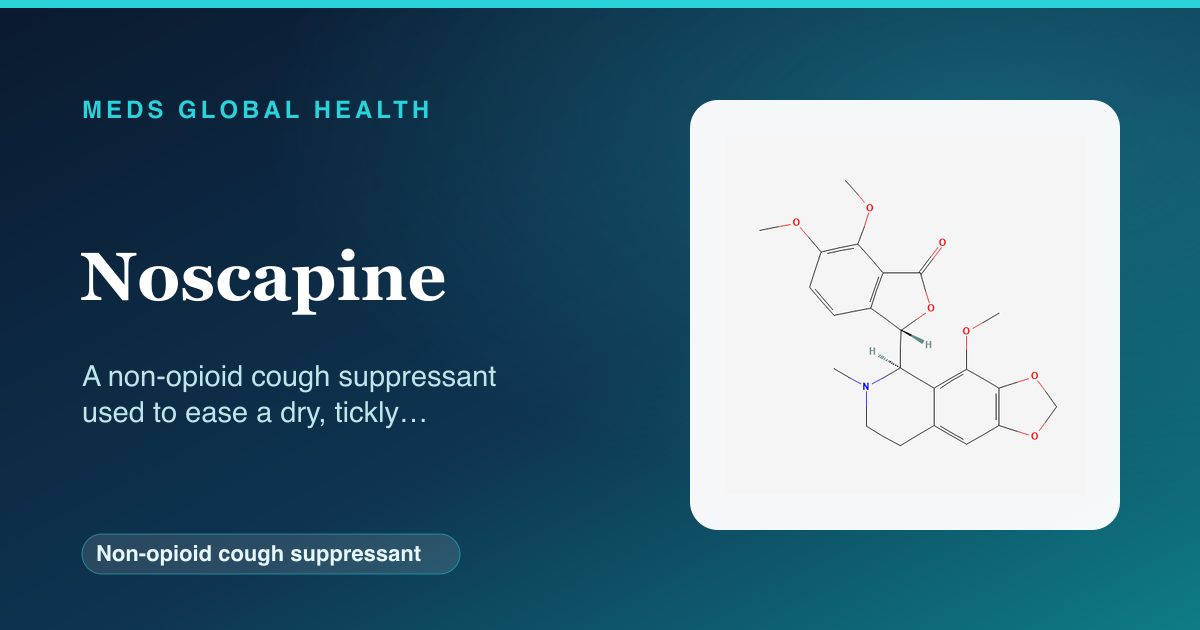
What it is
Noscapine is a cough-suppressing medicine used to relieve a dry, tickly cough that serves no useful purpose and keeps you awake or uncomfortable. It is a non-opioid medicine: although it is derived from the opium poppy, it does not work like opioid painkillers and is not used for pain or sedation. It works by calming the part of the brain that drives the cough reflex. It is found in some cough preparations and is generally regarded as a gentle, well-tolerated option for short-term relief of an unproductive cough.
How it works
Coughing is controlled by a cough centre in the brain that responds to irritation in the airways. Noscapine acts on this cough reflex to dampen it down, so a dry, tickly cough that is not bringing anything up happens less often. Because a dry cough does not clear mucus, suppressing it can give comfort and rest without losing anything useful. It does not loosen phlegm, so it is not the right choice for a chesty cough, where bringing up mucus is helpful. It is used for short-term relief rather than long-term treatment.
Company & origin
A long-established medicine used to ease a dry, tickly cough, available in some cough preparations in the UK.
Practical use
How to take Noscapine
General, dose-free guidance — always follow your prescriber's and the leaflet's specific instructions.
- Take it as directed for a dry, tickly cough, for short-term relief rather than long-term use.
- Do not use it for a chesty cough that is bringing up phlegm, where coughing is helpful.
- Avoid it in pregnancy, and check with a pharmacist or doctor if you are unsure whether it is suitable.
- See a doctor if the cough lasts more than about three weeks or comes with worrying symptoms.
- Follow the directions on the preparation and do not take more than recommended.
Weighing it up
Advantages & disadvantages of Noscapine
Advantages
- Eases a dry, tickly cough so you can rest more comfortably.
- Not an opioid painkiller, so it does not carry opioid-type risks or cause pain-relief effects.
- Generally well tolerated when used as directed for short-term relief.
Disadvantages
- Only suits a dry cough, not a chesty one where bringing up phlegm is helpful.
- Should be avoided in pregnancy.
- Treats the symptom rather than the cause, so a persistent cough still needs checking.
Practical use
Good to know
The helpful thing to know about noscapine is that, despite coming from the opium poppy, it is not an opioid painkiller: it does not relieve pain, is not addictive in the way opioids are, and is generally well tolerated. It is meant for a dry, tickly cough rather than a chesty, productive one, because suppressing a cough that is clearing phlegm is not usually helpful. It should be avoided in pregnancy. As with any cough that lasts more than about three weeks, brings up blood, or comes with breathlessness, chest pain, weight loss or fever, you should see a doctor rather than keep treating it yourself. Side effects are uncommon but can include mild drowsiness, headache or stomach upset.
Who should not take it / use with caution
- It should be avoided in pregnancy.
- People who have had a serious allergic reaction to noscapine should not take it.
- It is not suitable for a productive, chesty cough where coughing up mucus is helpful.
Monitoring
- Reviewing whether the cough is settling or whether it needs medical assessment.
- Watching for any worrying symptoms such as coughing up blood or breathlessness.
- Checking it remains suitable, particularly if other medicines are added.
Side effects
- Mild drowsiness in some people.
- Headache or stomach upset, which are uncommon.
- Rarely, an allergic-type reaction, which should be reported.
Key interactions
- It may interact with some blood-thinning medicines such as warfarin, so seek advice if you take one.
- Tell your pharmacist or doctor about all your medicines before using it.
- It is sensible to avoid combining several cough or sedating medicines without advice.
Available as: Liquids and tablets taken by mouth, often within cough preparations.
Answers
Noscapine: frequently asked questions
What is noscapine used for?
It is used to ease a dry, tickly cough by calming the cough reflex, giving short-term relief when the cough is not bringing anything up.
Is noscapine an opioid?
It comes from the opium poppy but is not an opioid painkiller; it does not relieve pain and does not carry the same opioid risks.
Can I use it for a chesty cough?
No. It suits a dry, tickly cough; for a chesty cough that brings up phlegm, suppressing the cough is not usually helpful.
Is it safe in pregnancy?
No, it is best avoided in pregnancy; check with a pharmacist or doctor for a suitable alternative.
When should I see a doctor about my cough?
See a doctor if the cough lasts more than about three weeks, brings up blood, or comes with breathlessness, chest pain, fever or weight loss.
Authoritative sources
- BNF
- NICE CKS
Building a medicines information resource?
We create evidence-led, dose-free drug and formulary references for teams.