A PARP inhibitor used in BRCA-related and other cancers
Olaparib
A targeted cancer tablet, often used in cancers linked to BRCA gene changes, taken to keep the cancer under control.
What is Olaparib?
Olaparib is a specialist targeted cancer medicine belonging to a group called PARP inhibitors. It is used in several cancers, particularly those linked to changes in the BRCA genes, including some ovarian, breast, prostate and pancreatic cancers, often as maintenance treatment after chemotherapy. It is taken by mouth as a daily tablet. Its most important effects are on the blood, especially causing anaemia (low red cells) and other low counts, so blood tests are done regularly. Less commonly it can cause lung inflammation (pneumonitis), and rarely a serious bone-marrow condition (MDS or leukaemia). It is harmful to a developing baby, so reliable contraception is important.
Education and reference only. This is a plain-language guide to Olaparib — it deliberately contains no doses. Doses depend on the person, the brand and the reason for treatment, and belong with your prescriber. Always check the BNF, the product labelling (SmPC) and follow medical advice.
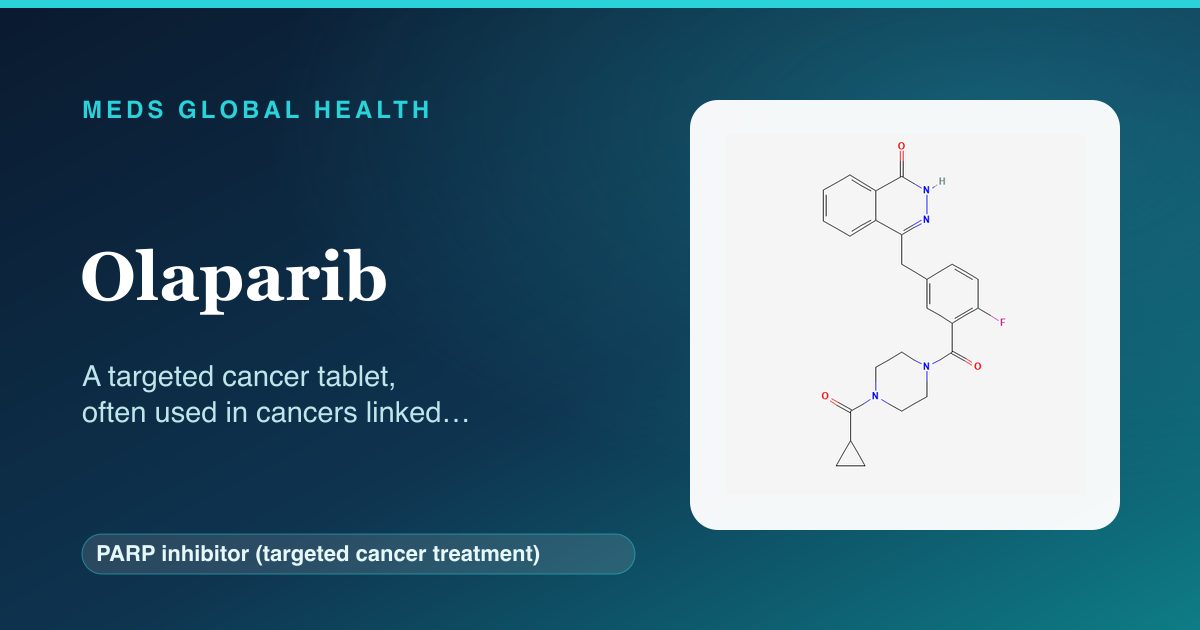
What it is
Olaparib is a targeted cancer treatment in a group of medicines called PARP inhibitors. It is used in several types of cancer, and works especially well in those linked to changes (mutations) in the BRCA genes, which normally help cells repair their DNA. These cancers include some ovarian, breast, prostate and pancreatic cancers, and olaparib is often used as maintenance treatment after chemotherapy to help keep the cancer under control. It is taken by mouth as tablets, usually twice a day. It is prescribed and closely monitored by a specialist cancer team, often after a test confirms a BRCA change.
How it works
Cells repair damage to their DNA using several tools. The BRCA genes are part of one important repair system, and PARP is part of another. In cancers with a faulty BRCA gene, one repair system is already broken; olaparib blocks PARP, the backup system, so the cancer cell can no longer repair its DNA and dies. Healthy cells, which still have working BRCA repair, cope much better. This is why olaparib is especially effective in BRCA-related cancers. Because it is taken every day, it keeps PARP blocked continuously, which is why it suits maintenance treatment.
Company & origin
A specialist targeted cancer medicine used in the UK for certain cancers, particularly those linked to BRCA gene changes, such as some ovarian, breast, prostate and pancreatic cancers.
Practical use
How to take Olaparib
General, dose-free guidance — always follow your prescriber's and the leaflet's specific instructions.
- Take the tablets by mouth, swallowing them whole, twice a day as prescribed, with or without food.
- Avoid grapefruit and grapefruit juice, which change how the medicine is handled in the body.
- Attend your blood tests, so blood counts can be watched and the dose adjusted if needed.
- Report any new or worsening cough or breathlessness promptly, as this can signal lung inflammation.
- Use reliable contraception during treatment and for the time your team advises, as it is harmful to a developing baby.
Weighing it up
Advantages & disadvantages of Olaparib
Advantages
- Works especially well in cancers linked to BRCA gene changes, where DNA repair is already impaired.
- Taken as tablets by mouth rather than as an infusion.
- Used across several cancer types, often to keep the cancer under control after chemotherapy.
Disadvantages
- Commonly causes anaemia and can lower other blood counts, needing regular checks.
- Less commonly can cause lung inflammation (pneumonitis), and rarely serious bone-marrow conditions.
- Suitability often depends on a BRCA test, which can have implications for the family.
Practical use
Good to know
The effect that matters most with olaparib is on the blood, particularly anaemia (low red cells) causing tiredness and breathlessness, but also low platelets and white cells, so blood counts are checked regularly and the dose may be adjusted. The link to BRCA gene changes is central: a test often guides whether olaparib is suitable, and a BRCA change can also have implications for family members, which the team can discuss. Two less common but important safety points are lung inflammation, called pneumonitis, where new or worsening cough or breathlessness should be reported promptly, and a rare but serious risk of bone-marrow conditions (MDS or leukaemia), which is part of why monitoring continues. The tablets are swallowed whole, with or without food, and grapefruit should be avoided. It is harmful to a developing baby, so reliable contraception is needed during treatment and for a time afterwards.
Who should not take it / use with caution
- People who have had a serious allergic reaction to olaparib should not take it.
- It is used with care in people with existing low blood counts, which are checked before and during treatment.
- It is not used in pregnancy or breastfeeding because it is harmful to a developing baby, and contraception is needed.
- It should only be used under a specialist cancer team with regular blood monitoring.
Monitoring
- Regular blood counts to watch for anaemia and low platelets or white cells.
- Watching for lung symptoms such as new cough or breathlessness.
- Long-term watching for bone-marrow problems, and scans to see how the cancer is responding.
Side effects
- Anaemia (low red cells) causing tiredness and breathlessness, and sometimes low platelets or white cells.
- Nausea, vomiting, loss of appetite, diarrhoea and tiredness.
- Less commonly, lung inflammation (pneumonitis), with new or worsening cough or breathlessness.
- Rarely but seriously, bone-marrow conditions such as MDS or a type of leukaemia.
Key interactions
- Medicines that change how the liver handles it can raise or lower its levels and effects.
- Grapefruit changes how the medicine is handled and should be avoided.
- It can add to the effects of other medicines that lower blood counts, so these are reviewed.
Available as: Tablets taken by mouth.
Answers
Olaparib: frequently asked questions
What is olaparib used for?
It is used to treat several cancers, particularly those linked to BRCA gene changes, including some ovarian, breast, prostate and pancreatic cancers, often as maintenance after chemotherapy.
Why does BRCA matter for this medicine?
Cancers with a faulty BRCA gene are already poor at repairing DNA; olaparib blocks the backup repair tool so these cancer cells die, which is why a BRCA test often guides its use.
Why do I feel so tired on it?
Olaparib commonly causes anaemia (low red blood cells), which leads to tiredness and breathlessness, so blood counts are checked regularly and the dose may be adjusted.
Should I report a new cough?
Yes. Less commonly olaparib can cause lung inflammation (pneumonitis), so any new or worsening cough or breathlessness should be reported to your team promptly.
Do I need contraception?
Yes. Olaparib is harmful to a developing baby, so reliable contraception is needed during treatment and for the time your team advises afterwards.
Authoritative sources
- BNF
- NICE CKS
Building a medicines information resource?
We create evidence-led, dose-free drug and formulary references for teams.