An oral once-daily GLP-1 medicine for type 2 diabetes and weight
Orforglipron
A newer once-daily tablet from the GLP-1 group, used for type 2 diabetes and weight management.
What is Orforglipron?
Orforglipron is a newer medicine in the GLP-1 receptor agonist group, used to help control type 2 diabetes and to support weight management. Unlike most GLP-1 medicines, which are injections, it is a non-peptide tablet taken once a day by mouth, which many people find more convenient. It works by helping control blood sugar and reducing appetite. The most common side effects are tummy related, such as nausea, vomiting and diarrhoea, especially early on. As with other GLP-1 medicines, there is caution around pancreatitis and gallbladder problems.
Education and reference only. This is a plain-language guide to Orforglipron — it deliberately contains no doses. Doses depend on the person, the brand and the reason for treatment, and belong with your prescriber. Always check the BNF, the product labelling (SmPC) and follow medical advice.
What it is
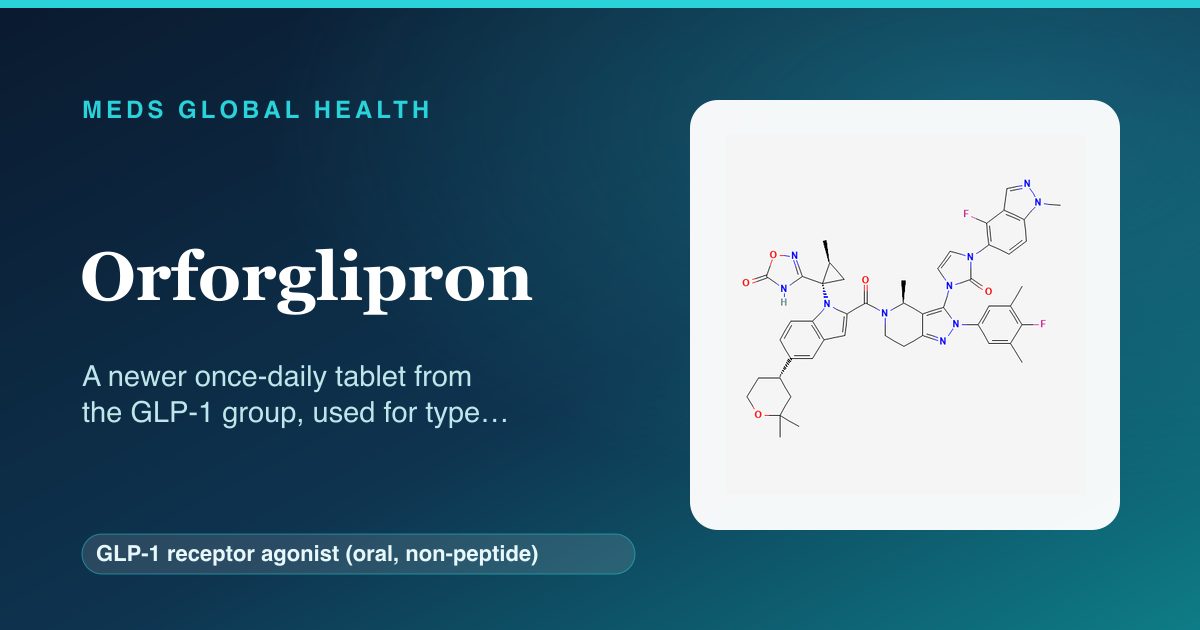
Orforglipron is a GLP-1 receptor agonist, a type of medicine that mimics a natural gut hormone involved in controlling blood sugar and appetite. Most medicines in this group are given by injection, but orforglipron is a 'non-peptide' molecule that can be taken as a once-daily tablet, making it a more convenient oral option. It is being developed and used to help manage type 2 diabetes and to support weight loss. It is one of the newer agents in this fast-growing group of medicines.
How it works
Orforglipron acts like the natural hormone GLP-1, which the gut releases after eating. It prompts the body to release insulin when blood sugar is high, reduces a hormone (glucagon) that raises blood sugar, slows the emptying of the stomach and reduces appetite by acting on the brain. Together these effects help lower blood sugar in type 2 diabetes and help people eat less, supporting weight loss. Because it is designed to be absorbed when swallowed, it can work as a daily tablet rather than an injection.
Company & origin
A newer oral GLP-1 receptor agonist being developed for type 2 diabetes and weight management, taken as a once-daily tablet.
What it treats
Conditions Orforglipron is used for
Practical use
How to take Orforglipron
General, dose-free guidance — always follow your prescriber's and the leaflet's specific instructions.
- Take it once a day by mouth as prescribed, following any advice about timing and food.
- Expect the dose to be built up slowly to reduce tummy side effects when starting.
- Eat smaller meals and go easy on very fatty foods to help with nausea, especially early on.
- Report severe, persistent tummy pain straight away, as it could signal a problem with the pancreas.
- Use it alongside healthy eating and physical activity, as it works best as part of an overall plan.
Weighing it up
Advantages & disadvantages of Orforglipron
Advantages
- Helps control blood sugar in type 2 diabetes and supports weight loss.
- Taken as a once-daily tablet rather than an injection, which many people prefer.
- Part of a well-studied group of medicines with effects on both blood sugar and appetite.
Disadvantages
- Commonly causes tummy side effects such as nausea, vomiting, diarrhoea or constipation, especially early on.
- Carries the group's cautions about pancreatitis and gallbladder problems.
- As a newer medicine, longer-term experience is still being gathered.
Practical use
Good to know
The most common side effects with orforglipron, like other GLP-1 medicines, are tummy related: nausea, vomiting, diarrhoea or constipation, especially when first starting or increasing the medicine; these usually ease over time, and the medicine is often built up slowly to help. Eating smaller meals and avoiding very fatty foods can help with the nausea. Two important safety points shared with this group are caution about pancreatitis (inflammation of the pancreas), so severe, persistent tummy pain should be reported, and a possible link to gallbladder problems such as gallstones, especially with rapid weight loss. As a newer medicine, longer-term experience is still being gathered. It is one of several options and should be used alongside healthy eating and activity.
Who should not take it / use with caution
- People who have had a serious allergic reaction to it should not take it.
- It is used with caution in people with a history of pancreatitis.
- It is generally avoided in pregnancy and breastfeeding, so discuss this with your prescriber.
Monitoring
- Checking blood sugar control, including HbA1c, in type 2 diabetes.
- Reviewing weight and how well any tummy side effects are settling.
- Watching for signs of pancreas or gallbladder problems.
Side effects
- Nausea, vomiting, diarrhoea or constipation, especially when starting or increasing the dose.
- Reduced appetite, tummy discomfort or wind.
- Less commonly, gallbladder problems such as gallstones, or, rarely, inflammation of the pancreas.
Key interactions
- Because it slows stomach emptying, it can affect how some other medicines are absorbed.
- When used with insulin or some other diabetes medicines, blood sugar can drop too low, so doses may need adjusting.
- Tell your prescriber about all your medicines so timing and doses can be managed.
Available as: Tablets taken by mouth once a day.
Answers
Orforglipron: frequently asked questions
What is orforglipron used for?
It is a GLP-1 medicine used to help control type 2 diabetes and to support weight management.
How is it different from other GLP-1 medicines?
Most GLP-1 medicines are injections, but orforglipron is a non-peptide molecule that can be taken as a once-daily tablet.
Why does it cause nausea?
Like other GLP-1 medicines it slows stomach emptying and reduces appetite, which can cause nausea, especially early on; building the dose up slowly helps.
What serious problems should I watch for?
Report severe, persistent tummy pain, which could signal inflammation of the pancreas, and tell your prescriber about any gallbladder symptoms.
Does it replace healthy eating and exercise?
No. It works best alongside healthy eating and physical activity as part of an overall plan for diabetes and weight.
The wider class
About GLP-1 receptor agonist (oral, non-peptide)
Orforglipron belongs to the glp-1 receptor agonist (oral, non-peptide) class. For how the class as a whole works, its shared safety principles and monitoring, see the full guide.
Browse by body system
Authoritative sources
- BNF
- NICE CKS
Building a medicines information resource?
We create evidence-led, dose-free drug and formulary references for teams.