A tablet that lowers cortisol in Cushing's disease
Osilodrostat
A specialist tablet used to lower high cortisol in Cushing's disease by blocking a key step in cortisol production.
What is Osilodrostat?
Osilodrostat is a specialist tablet used to control high levels of the hormone cortisol in Cushing's disease, a form of Cushing's syndrome caused by a pituitary tumour. It works by blocking a key enzyme the adrenal glands use to make cortisol, bringing the level down. The dose is adjusted gradually based on cortisol measurements. The main risks are lowering cortisol too much (adrenal insufficiency) and effects on the heart's rhythm (the QT interval), so cortisol levels and the heart are monitored, along with other adrenal hormones and blood salts.
Education and reference only. This is a plain-language guide to Osilodrostat — it deliberately contains no doses. Doses depend on the person, the brand and the reason for treatment, and belong with your prescriber. Always check the BNF, the product labelling (SmPC) and follow medical advice.
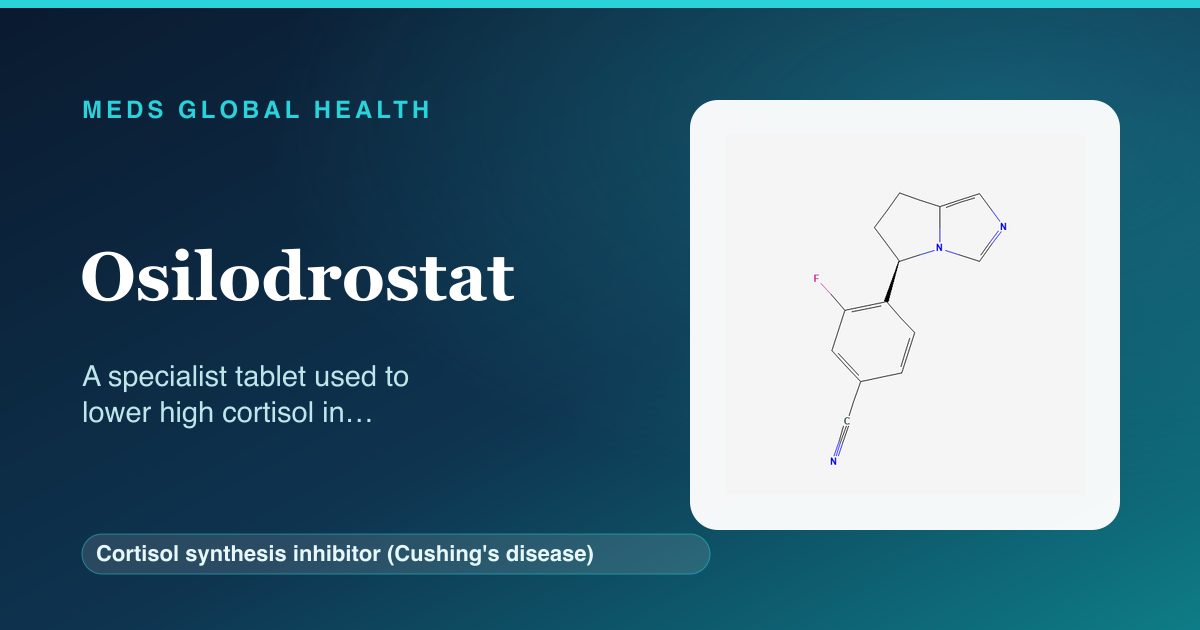
What it is
Osilodrostat is a medicine used to lower cortisol, a steroid hormone made by the adrenal glands, when it is too high in Cushing's disease. Cushing's disease is caused by a tumour in the pituitary gland that drives the adrenal glands to overproduce cortisol. Osilodrostat is taken by mouth as a tablet, usually after surgery has not fully worked or is not suitable, to bring cortisol back towards normal and relieve the harmful effects of having too much. It is prescribed and closely supervised by an endocrine specialist team, who adjust the dose carefully using regular blood tests.
How it works
The adrenal glands make cortisol through a series of enzyme steps. Osilodrostat blocks one of the key enzymes in this pathway, so the glands make less cortisol and the blood level comes down. The team starts low and increases gradually, checking cortisol levels to find the amount that controls the condition without overshooting. Because blocking this step can cause a build-up of substances earlier in the pathway, the body may make more of other adrenal hormones, which can affect things like blood pressure, blood salts and, in some people, hair growth or acne. This is part of why monitoring is important.
Company & origin
A specialist tablet used in the UK to lower high cortisol levels in Cushing's disease.
Practical use
How to take Osilodrostat
General, dose-free guidance — always follow your prescriber's and the leaflet's specific instructions.
- Take the tablet by mouth as prescribed; the team usually starts low and increases it gradually.
- Attend your blood tests, as the dose is fine-tuned using your cortisol levels and blood salts.
- Learn the signs of too little cortisol, such as severe tiredness, dizziness, nausea or feeling very unwell, and seek help if they occur.
- Tell your team about any heart-rhythm problems or other medicines that affect the heart rhythm.
- Let your team know if you become ill, are injured or are having surgery, as you may need more cortisol cover.
Weighing it up
Advantages & disadvantages of Osilodrostat
Advantages
- An effective oral treatment to bring down high cortisol in Cushing's disease.
- The dose can be carefully adjusted to find the right level of cortisol control.
- Taken as a tablet rather than by injection.
Disadvantages
- Can lower cortisol too much, causing adrenal insufficiency, so close monitoring is needed.
- Can affect the heart's rhythm (the QT interval), which has to be checked.
- Can raise other adrenal hormones, affecting blood pressure, blood salts, hair growth or acne.
Practical use
Good to know
As with other cortisol-lowering treatments, the main balancing act with osilodrostat is bringing cortisol down enough to treat Cushing's disease without letting it fall too low and cause adrenal insufficiency. The team adjusts the dose gradually using regular cortisol tests, and it helps to know the warning signs of too little cortisol, such as severe tiredness, dizziness, nausea, vomiting and feeling generally unwell, and to seek help if they happen, especially during illness or stress. A particular point with osilodrostat is that it can affect the heart's electrical rhythm (the QT interval), so the heart is checked. Because blocking cortisol production can raise other adrenal hormones, some people notice changes in blood pressure, low potassium, swelling, or extra hair growth and acne, all of which are monitored.
Who should not take it / use with caution
- People who have had a serious allergic reaction to osilodrostat should not take it.
- It is used with caution in people with certain heart-rhythm problems or those on medicines that affect the QT interval.
- It is used in pregnancy only under specialist guidance, weighing the benefits and risks carefully.
Monitoring
- Regular blood tests to measure cortisol and adjust the dose, plus checks of blood salts such as potassium.
- Heart-rhythm checks (the QT interval), particularly when starting or increasing treatment.
- Watching for signs of too little cortisol, especially during illness, injury or stress.
Side effects
- Tiredness, nausea, headache or dizziness.
- Signs of too little cortisol, such as severe tiredness, nausea and feeling very unwell, which need prompt attention.
- Swelling, low potassium or changes in blood pressure from other adrenal hormones being made.
- Changes in the heart's rhythm (the QT interval), which is why the heart is monitored.
Key interactions
- Medicines that affect the heart's QT interval should be reviewed when taking osilodrostat.
- Some medicines can change how the body handles osilodrostat, so a full medicines list is important.
- Other medicines that affect cortisol or hormone tests can complicate monitoring.
Available as: Tablets taken by mouth.
Answers
Osilodrostat: frequently asked questions
What is osilodrostat used for?
It is a tablet used to lower high cortisol levels in Cushing's disease, a condition caused by a pituitary tumour that drives the adrenal glands to make too much cortisol.
How does it work?
It blocks a key enzyme the adrenal glands use to make cortisol, so less cortisol is produced and the blood level comes down.
What are the main risks to monitor?
The main risks are lowering cortisol too much (adrenal insufficiency) and effects on the heart's rhythm (the QT interval), so cortisol levels and the heart are checked regularly.
Why might my potassium or blood pressure change?
Blocking cortisol can lead the body to make more of other adrenal hormones, which can affect blood pressure, cause swelling or lower potassium, so these are monitored.
What if I feel very unwell or dizzy?
These can be signs of too little cortisol; contact your team, as you may need an adjustment or extra cortisol cover, especially when you are ill or stressed.
Authoritative sources
- BNF
- NICE CKS
Building a medicines information resource?
We create evidence-led, dose-free drug and formulary references for teams.