An oral medicine for multiple sclerosis and ulcerative colitis
Ozanimod
An oral medicine used in relapsing multiple sclerosis and ulcerative colitis that calms the immune system.
What is Ozanimod?
Ozanimod is a specialist capsule used to treat relapsing multiple sclerosis and moderate to severe ulcerative colitis. It belongs to a group called S1P receptor modulators, which keep certain immune cells held back in the lymph nodes so they cause less inflammation. Treatment is started with a gradual build-up, and the first doses can slow the heart rate, so checks are needed before and during starting. It can raise the risk of infections, can affect the eyes (macular swelling) and the liver, and live vaccines should be avoided. It is also kept apart from certain other medicines such as MAOIs and tyramine-rich foods.
Education and reference only. This is a plain-language guide to Ozanimod — it deliberately contains no doses. Doses depend on the person, the brand and the reason for treatment, and belong with your prescriber. Always check the BNF, the product labelling (SmPC) and follow medical advice.
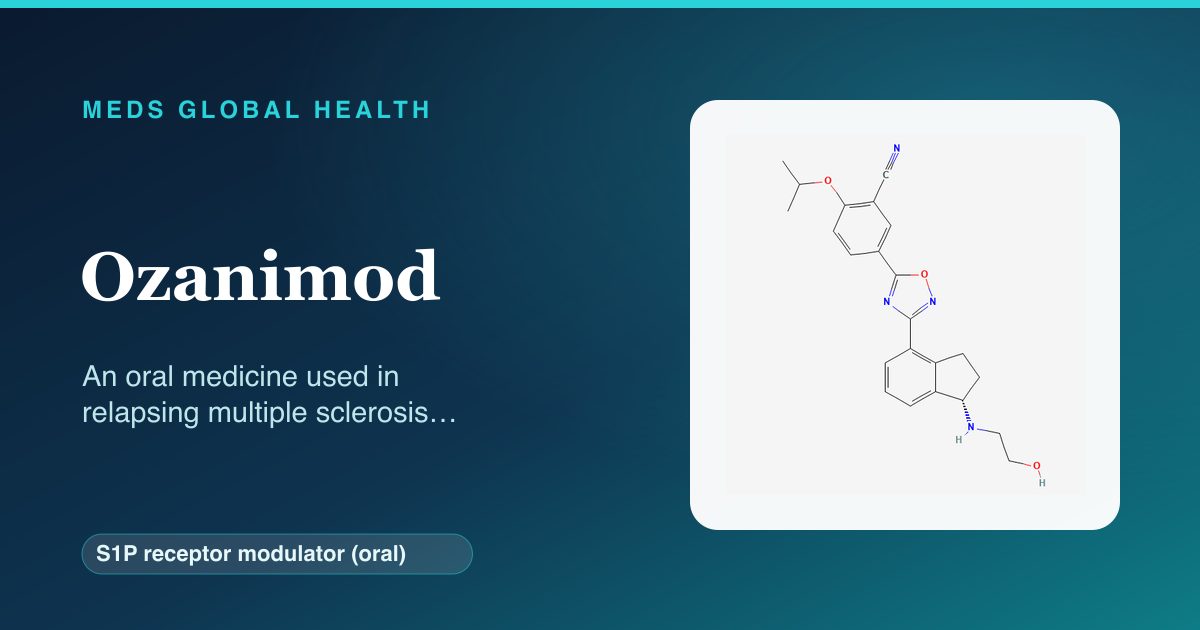
What it is
Ozanimod is a medicine taken by mouth as a capsule, used for two separate conditions: relapsing multiple sclerosis, where the immune system attacks the protective covering of nerves, and moderate to severe ulcerative colitis, an inflammatory bowel condition. It belongs to a group of medicines called S1P receptor modulators. It is a long-term treatment that works by dampening down part of the immune system, and it is started, supervised and monitored by a specialist team because of the checks needed when treatment begins.
How it works
Ozanimod acts on a signal that immune cells, particularly a type of white blood cell, use to move out of the lymph nodes into the bloodstream. By blocking this signal, it keeps many of these cells trapped in the lymph nodes, so fewer of them travel to the brain, spinal cord or bowel to cause inflammation. In multiple sclerosis this reduces relapses and nerve damage; in ulcerative colitis it helps calm the inflamed bowel lining. Because it changes how the immune system behaves, it works steadily over time and needs regular monitoring.
Company & origin
A specialist oral medicine used in the UK for relapsing multiple sclerosis and for moderate to severe ulcerative colitis.
Practical use
How to take Ozanimod
General, dose-free guidance — always follow your prescriber's and the leaflet's specific instructions.
- Take it by mouth, usually once a day, following the gradual starting pack exactly so your body builds up to the regular dose.
- Attend the heart-rate and other checks arranged before and around starting, as the first doses can slow the heart.
- Report signs of infection such as fever, sore throat or feeling unwell, as it can make infections more likely.
- Avoid live vaccines while taking it and tell your team before any vaccinations.
- Avoid MAOI antidepressants and be careful with tyramine-rich foods, and use reliable contraception as advised.
Weighing it up
Advantages & disadvantages of Ozanimod
Advantages
- An oral capsule that can reduce relapses in multiple sclerosis and help control ulcerative colitis.
- Offers a tablet-based option rather than an injection or infusion.
- Works steadily over the long term to calm the immune-driven inflammation.
Disadvantages
- Needs a careful start with a gradual build-up and heart-rate checks, as early doses can slow the heart.
- Can raise the risk of infections, affect the eyes and raise liver enzymes, so monitoring is needed.
- Must be kept apart from MAOIs and tyramine-rich foods, and is not suitable in pregnancy.
Practical use
Good to know
The most important thing to understand about ozanimod is the careful start: the first doses can slow the heart rate, so it is begun with a gradual build-up and your heart rate and rhythm are checked before and around starting, especially if you have a heart condition. Because it holds back immune cells, it can make infections more likely, so any signs of infection such as fever should be reported, and live vaccines should be avoided while on it and for a time afterwards. It can cause swelling at the back of the eye (macular oedema), so eye checks are advised, particularly if you have diabetes or eye problems, and it can raise liver enzymes, so liver blood tests are done. It must not be combined with certain antidepressants called MAOIs, and tyramine-rich foods need care because of a risk of raised blood pressure. Reliable contraception is needed, as it can harm a developing baby.
Who should not take it / use with caution
- People who have had a serious allergic reaction to ozanimod should not take it.
- It is avoided in people with certain recent heart problems or serious heart-rhythm conditions, and is used with care if there are other heart concerns.
- It must not be combined with MAOI antidepressants, and is avoided in pregnancy and breastfeeding.
- It is used with caution in people with active infections, eye problems or liver disease, under specialist guidance.
Monitoring
- Heart-rate and rhythm checks before and around starting treatment.
- Regular blood tests for blood counts and liver function, and blood-pressure checks.
- Eye checks for macular swelling, especially in people with diabetes or eye problems.
Side effects
- A slowing of the heart rate when treatment is first started, which is why a gradual build-up and checks are used.
- Infections, such as colds or, less commonly, more serious ones, as the immune system is dampened.
- Raised liver enzymes seen on blood tests, and sometimes raised blood pressure.
- Less commonly, swelling at the back of the eye (macular oedema), which eye checks are designed to catch.
Key interactions
- It must not be taken with MAOI antidepressants, and tyramine-rich foods need care because of a blood-pressure risk.
- Medicines that slow the heart rate, such as some beta-blockers, need caution when starting it.
- Other medicines that affect the immune system can add to the infection risk, so tell your team everything you take.
Available as: Capsules taken by mouth, including a gradual starting pack.
Answers
Ozanimod: frequently asked questions
What is ozanimod used for?
It is used to treat relapsing multiple sclerosis and moderate to severe ulcerative colitis by holding back immune cells so they cause less inflammation.
Why does it need a careful start?
The first doses can slow the heart rate, so it is started with a gradual build-up and your heart rate and rhythm are checked around starting.
Can I have vaccines while taking it?
Live vaccines should be avoided while on ozanimod and for a time afterwards; tell your team before any vaccinations so they can advise you.
Why are eye checks needed?
It can occasionally cause swelling at the back of the eye (macular oedema), so eye checks help catch this early, especially if you have diabetes or eye problems.
Are there foods or medicines to avoid?
Yes. It must not be combined with MAOI antidepressants, and tyramine-rich foods need care because of a risk of raised blood pressure.
Authoritative sources
- BNF
- NICE CKS
Building a medicines information resource?
We create evidence-led, dose-free drug and formulary references for teams.