A retinoid used to reduce new bone formation in FOP
Palovarotene
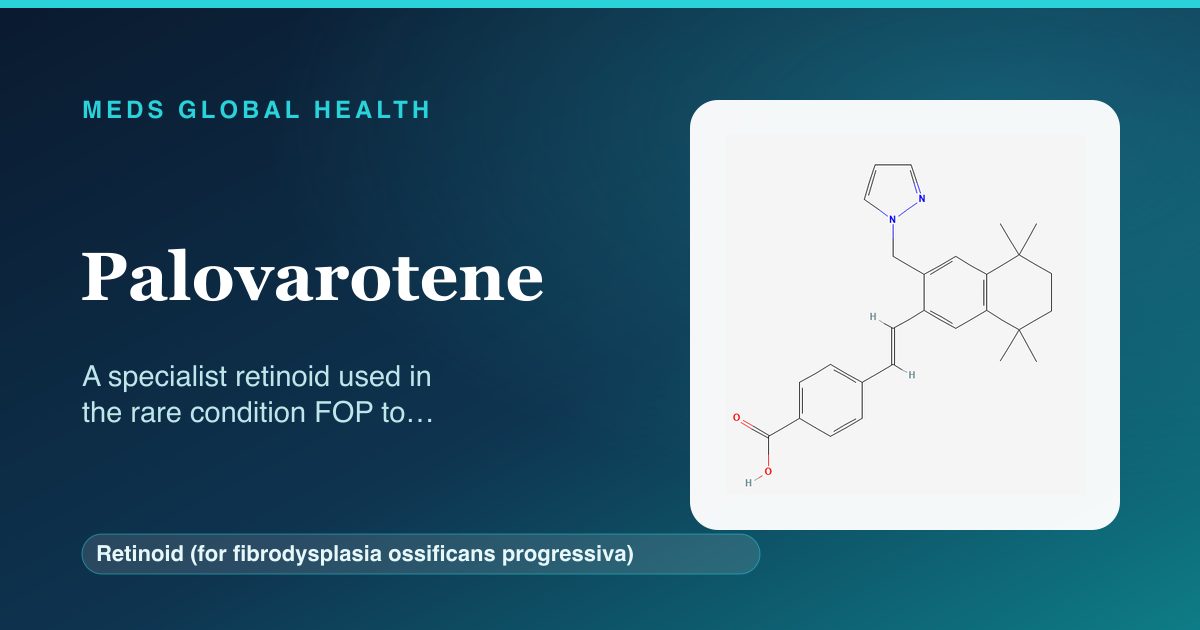
A specialist retinoid used in the rare condition FOP to reduce new abnormal bone forming in soft tissues.
What is Palovarotene?
Palovarotene is a specialist retinoid medicine used in fibrodysplasia ossificans progressiva (FOP), a very rare condition in which extra bone forms in muscles, tendons and other soft tissues. It works to reduce this new, abnormal bone formation. Its most important risk is severe harm to an unborn baby, so strict pregnancy prevention is essential for anyone who could become pregnant. In growing children it can cause the growth plates in bones to close too early, affecting growth. Like other retinoids, it commonly causes dry skin, lips and eyes. It is used only under specialist care.
Education and reference only. This is a plain-language guide to Palovarotene — it deliberately contains no doses. Doses depend on the person, the brand and the reason for treatment, and belong with your prescriber. Always check the BNF, the product labelling (SmPC) and follow medical advice.
What it is
Palovarotene is a retinoid, a medicine related to vitamin A, used to treat fibrodysplasia ossificans progressiva, or FOP. FOP is an extremely rare genetic condition in which bone gradually forms in places it should not, such as muscles and connective tissue, restricting movement over time. Palovarotene is used to reduce the formation of this new, abnormal bone. Because it is a powerful and specialised treatment with significant risks, it is prescribed and closely supervised by specialist services experienced in managing FOP.
How it works
In FOP, episodes of inflammation can trigger the body to lay down new bone in soft tissues. Palovarotene works on retinoid signalling, a pathway involved in how cells decide to become bone, in a way that helps reduce this abnormal new bone formation. By dampening down the process that turns soft tissue into bone, it aims to slow the build-up of extra bone over time. Because it is a retinoid, it shares the family's well-known effects, including serious risks in pregnancy and effects on growing bone in children.
Company & origin
A specialist retinoid medicine used to reduce new abnormal bone formation in fibrodysplasia ossificans progressiva (FOP).
Practical use
How to take Palovarotene
General, dose-free guidance — always follow your prescriber's and the leaflet's specific instructions.
- Take it exactly as your specialist team prescribes, following their instructions on timing and food.
- If you could become pregnant, use reliable contraception and follow the pregnancy-prevention and testing plan exactly, as it can cause severe birth defects.
- For children, attend all appointments so growth and bones can be monitored, as it can affect growing bone.
- Use moisturisers, lip balm and eye drops as advised to ease dryness of the skin, lips and eyes.
- Report any new bone or joint problems, severe headaches or vision changes to your specialist team.
Weighing it up
Advantages & disadvantages of Palovarotene
Advantages
- Offers a treatment aimed at reducing new abnormal bone formation in the very rare condition FOP.
- Provides a specific option for a condition that previously had few treatments.
- Used within an experienced specialist service with close monitoring.
Disadvantages
- Can cause severe birth defects, so strict pregnancy prevention is essential.
- In growing children it can cause growth plates to close too early, affecting growth.
- Commonly causes retinoid effects such as dry skin, lips and eyes, and needs specialist supervision.
Practical use
Good to know
The most important thing to understand about palovarotene is that, like other retinoids, it can cause severe birth defects, so strict pregnancy prevention is essential: anyone who could become pregnant must avoid pregnancy before, during and for a period after treatment, with reliable contraception and pregnancy testing as the specialist team directs. A second crucial point is that in children who are still growing, it can cause the growth plates at the ends of bones to close too early (premature physeal closure), which can affect final height and bone growth, so children are monitored carefully. Like all retinoids, it commonly causes dry skin, dry lips, dry eyes and other mucocutaneous effects. It is a specialist medicine that must only be used under expert supervision with regular monitoring.
Who should not take it / use with caution
- It must not be used in pregnancy, and anyone who could become pregnant must follow strict pregnancy prevention.
- People who have had a serious allergic reaction to it should not take it.
- It is used with particular care in growing children because of the risk of early growth-plate closure.
Monitoring
- Pregnancy testing and confirmation of reliable contraception for anyone who could become pregnant.
- In children, careful monitoring of growth and the bone growth plates.
- Reviewing skin, eyes, joints and overall response, with checks as the specialist team advises.
Side effects
- Dry skin, dry lips, dry eyes and other retinoid-type mucocutaneous effects.
- Headache, joint or muscle aches and skin reactions.
- In children, early closure of growth plates affecting growth; in pregnancy, severe harm to the baby.
Key interactions
- It should not be combined with other retinoids or vitamin A supplements, which add to the risks.
- Some medicines that affect how it is broken down in the body may need review by the specialist team.
- Tell your specialist about all your medicines and supplements before and during treatment.
Available as: Capsules taken by mouth.
Answers
Palovarotene: frequently asked questions
What is palovarotene used for?
It is a retinoid used in fibrodysplasia ossificans progressiva (FOP), a rare condition, to reduce new abnormal bone forming in soft tissues.
Why is pregnancy prevention so important?
Like other retinoids, it can cause severe birth defects, so anyone who could become pregnant must avoid pregnancy and follow strict prevention and testing.
Can children take it?
It is used in some children under specialist care, but it can cause growth plates to close too early, so growth is monitored very carefully.
What everyday side effects are common?
Like other retinoids it often causes dry skin, lips and eyes, which moisturisers, lip balm and eye drops can help ease.
Who prescribes it?
It is a specialist medicine, prescribed and closely supervised by services experienced in managing FOP, with regular monitoring.
Authoritative sources
- BNF
- NICE CKS
Building a medicines information resource?
We create evidence-led, dose-free drug and formulary references for teams.