An old antiepileptic for absence seizures, now obsolete
Paramethadione
An old antiepileptic once used for absence seizures, now obsolete because of serious side effects.
What is Paramethadione?
Paramethadione is an old antiepileptic medicine of the oxazolidinedione type that was used to treat absence seizures (brief 'blank' episodes), usually when other medicines did not work. It is now obsolete because of serious side effects, including problems with the blood (such as a dangerous fall in blood cells) and toxicity affecting the kidneys and liver. It has been replaced by safer antiepileptics. It is included here for historical reference, as it is no longer used in modern practice.
Education and reference only. This is a plain-language guide to Paramethadione — it deliberately contains no doses. Doses depend on the person, the brand and the reason for treatment, and belong with your prescriber. Always check the BNF, the product labelling (SmPC) and follow medical advice.
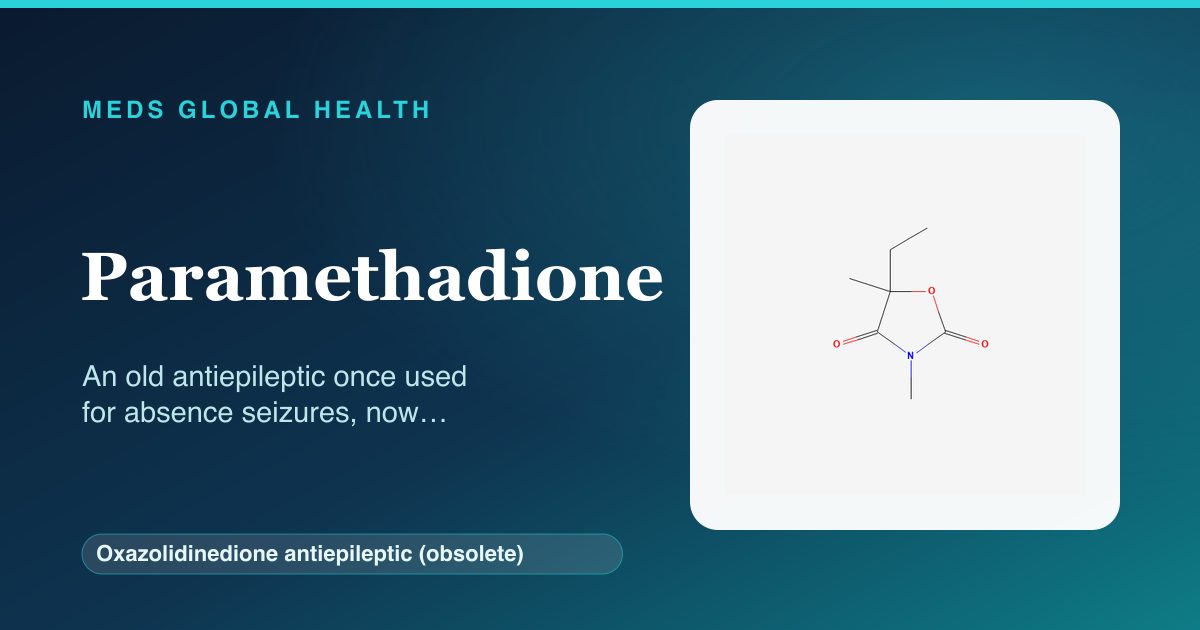
What it is
Paramethadione belongs to an old group of antiepileptic medicines called oxazolidinediones, closely related to another old medicine, trimethadione. It was used mainly to treat absence seizures, a type of epilepsy in which a person has very brief lapses of awareness. Because of serious safety problems, it fell out of use and is now obsolete, replaced by safer and more effective antiepileptics. It is described here for historical and educational purposes rather than as a current treatment.
How it works
Paramethadione was thought to work by calming the abnormal electrical activity in the brain that causes absence seizures, helping to reduce these brief lapses of awareness. However, the oxazolidinedione medicines also affected other parts of the body, which is why they could cause serious harm to the blood, kidneys and liver. As newer antiepileptics were developed that controlled seizures more safely, paramethadione's poor safety profile meant it was no longer worth using.
Company & origin
Originated / developed by: No longer marketed.
An old antiepileptic of the oxazolidinedione type, once used for absence seizures and now obsolete.
What it treats
Conditions Paramethadione is used for
Practical use
How to take Paramethadione
General, dose-free guidance — always follow your prescriber's and the leaflet's specific instructions.
- Paramethadione is obsolete and no longer used, so it is not a current treatment option.
- Historically, antiepileptics like this were taken regularly by mouth and never stopped suddenly.
- Any sign of infection, unusual bruising or bleeding needed urgent attention because of the blood risks.
- Regular blood, kidney and liver checks were essential when it was in use.
- For absence seizures today, ask your specialist about modern, safer antiepileptic medicines.
Weighing it up
Advantages & disadvantages of Paramethadione
Advantages
- Historically offered a treatment for absence seizures when few options existed.
- Helped some people whose absence seizures did not respond to other early medicines.
- Of mainly historical interest in understanding how epilepsy treatment developed.
Disadvantages
- Could cause serious blood problems, including a dangerous fall in blood cells.
- Could cause toxicity affecting the kidneys and liver, along with skin and eye effects.
- Obsolete and no longer used, replaced by safer antiepileptics.
Practical use
Good to know
The key point about paramethadione is that it is an obsolete medicine, no longer used because its serious risks outweigh its benefits now that safer antiepileptics exist. The most concerning side effects were problems with the blood, including a dangerous drop in blood cells (such as aplastic anaemia or a fall in infection-fighting white cells), which could be life-threatening, along with toxicity affecting the kidneys and liver. Like related medicines, it could also cause skin reactions and visual disturbances such as glare. It is not a current treatment option; anyone with absence seizures today would be offered modern, far safer medicines. It is presented here only for historical understanding.
Who should not take it / use with caution
- It is obsolete and no longer available, so it should not be used.
- People with blood, kidney or liver problems were at particular risk from it.
- It was avoided in pregnancy because of the risk of harm to the baby.
Monitoring
- Regular blood counts were essential to catch any dangerous fall in blood cells.
- Kidney and liver function needed regular checking.
- Watching for skin reactions, eye symptoms and signs of infection or bleeding.
Side effects
- Serious blood problems, such as a dangerous fall in blood cells, which could be life-threatening.
- Kidney and liver toxicity.
- Skin reactions and visual disturbances such as sensitivity to light or glare.
Key interactions
- Historically it could interact with other medicines that affect the blood, kidneys or liver.
- It was used with great care alongside other antiepileptics.
- As it is obsolete, modern interaction guidance focuses on the safer medicines that replaced it.
Available as: Capsules or solution taken by mouth (no longer available).
Answers
Paramethadione: frequently asked questions
What was paramethadione used for?
It was an old antiepileptic used to treat absence seizures, the brief 'blank' episodes seen in some types of epilepsy.
Why is it no longer used?
It could cause serious blood problems and toxicity to the kidneys and liver, so it became obsolete once safer antiepileptics were available.
What were the most serious risks?
The most concerning was a dangerous fall in blood cells, which could be life-threatening, along with kidney and liver toxicity.
Is it still available?
No. Paramethadione is obsolete and no longer used; it has been replaced by safer and more effective medicines.
What is used for absence seizures now?
Modern, far safer antiepileptic medicines are used today; a specialist can advise on the best option.
Authoritative sources
- BNF
- NICE CKS
Building a medicines information resource?
We create evidence-led, dose-free drug and formulary references for teams.