An enzyme-substitute injection for phenylketonuria (PKU)
Pegvaliase
An enzyme-substitute injection used to lower blood phenylalanine levels in adults with phenylketonuria (PKU).
What is Pegvaliase?
Pegvaliase is a specialist medicine used in adults with phenylketonuria (PKU), an inherited condition in which the body cannot break down an amino acid called phenylalanine, so it builds up and can harm the brain. It is given as an injection under the skin and works as a substitute enzyme that breaks down phenylalanine, lowering its level in the blood. Its most important risk is serious allergic reactions, including anaphylaxis, which is why the first doses are given under medical supervision and people are taught to carry and use an adrenaline auto-injector. Reactions where the injection is given are also common. It is used under close specialist care.
Education and reference only. This is a plain-language guide to Pegvaliase — it deliberately contains no doses. Doses depend on the person, the brand and the reason for treatment, and belong with your prescriber. Always check the BNF, the product labelling (SmPC) and follow medical advice.
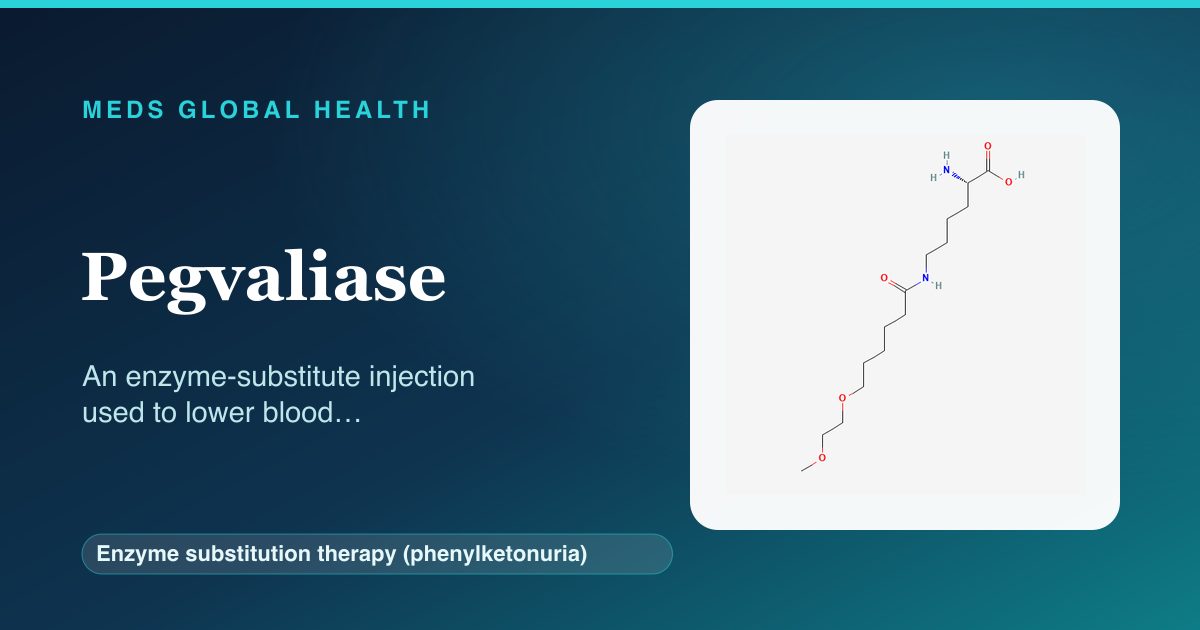
What it is
Pegvaliase is a medicine used to treat phenylketonuria (PKU), an inherited condition in which a missing or faulty enzyme means the body cannot break down phenylalanine, an amino acid found in protein. Without treatment, phenylalanine builds up in the blood and can harm the brain. Pegvaliase acts as a substitute for the missing enzyme, breaking phenylalanine down so its blood level falls. It is given as an injection under the skin in adults, and is used to help control phenylalanine when diet alone is not enough. Because of the risk of serious allergic reactions, it is started and supervised very carefully by a specialist metabolic team.
How it works
In PKU, the body lacks the enzyme that normally breaks down phenylalanine, so it accumulates in the blood. Pegvaliase is a different, man-made enzyme that can do a similar job, converting phenylalanine into harmless substances the body can deal with, which lowers the blood level. By bringing phenylalanine down, it helps protect the brain and can allow some people more flexibility with their diet. Because it is a protein given by injection, the immune system can react to it, which is why allergic reactions are the main concern, especially early in treatment, and why doses are increased slowly under supervision.
Company & origin
A specialist injection used to lower blood phenylalanine in adults with phenylketonuria (PKU).
Practical use
How to take Pegvaliase
General, dose-free guidance — always follow your prescriber's and the leaflet's specific instructions.
- Inject it under the skin exactly as your metabolic team has trained you, with the dose built up slowly as advised.
- Always carry an adrenaline auto-injector and know how to use it, in case of a serious allergic reaction.
- Learn the signs of an allergic reaction and get emergency help straight away if they happen.
- Attend regular blood tests so your phenylalanine level can be checked and your treatment and diet balanced.
- Stay in close contact with your dietitian and metabolic team and do not change the dose yourself.
Weighing it up
Advantages & disadvantages of Pegvaliase
Advantages
- Lowers blood phenylalanine in adults with PKU by acting as a substitute for the missing enzyme.
- Can help control phenylalanine when diet alone is not enough, and may allow some dietary flexibility.
- Can be self-injected at home once treatment is established and the person is trained.
Disadvantages
- Can cause serious allergic reactions, including anaphylaxis, which is its main and most serious risk.
- Commonly causes reactions where the injection is given, joint pains and a flu-like feeling, especially early on.
- Needs careful supervision, slow dose building, and carrying an adrenaline auto-injector at all times.
Practical use
Good to know
The most important thing to understand about pegvaliase is the risk of serious allergic reactions, including anaphylaxis, which can be life-threatening. Because of this, the first doses are given where medical help is on hand, the dose is built up slowly, and people are trained to recognise an allergic reaction and to carry and use an adrenaline auto-injector at all times. Reactions where the injection is given, and joint pains or a general flu-like feeling, are common, especially while the dose is being increased. Blood phenylalanine levels are checked regularly so the treatment and diet can be balanced, and the dietitian and metabolic team stay closely involved. It is a long-term treatment that needs commitment and careful supervision, and it should not be started or changed without the specialist team.
Who should not take it / use with caution
- People who have had a serious allergic reaction (anaphylaxis) to pegvaliase should not continue it.
- It is not suitable for people who cannot reliably carry and use an adrenaline auto-injector or recognise an allergic reaction.
- It is used with caution in pregnancy and breastfeeding, only under specialist guidance.
- It should only be used under a specialist metabolic service that can manage allergic reactions.
Monitoring
- Regular blood tests to check phenylalanine levels and balance treatment with diet.
- Close watching for allergic reactions, especially early in treatment and during dose increases.
- Reviewing how well it is tolerated and staying in regular contact with the dietitian and metabolic team.
Side effects
- Serious allergic reactions, including anaphylaxis, which is the most important risk and needs emergency treatment.
- Reactions where the injection is given, such as redness, swelling, pain or itching.
- Joint pains and a general flu-like feeling, especially while the dose is being increased.
- Headache, tiredness or nausea in some people.
Key interactions
- Other medicines that are themselves injected proteins may, in theory, add to the risk of reactions, so tell your team about them.
- Make sure all your healthcare teams know you carry and may need an adrenaline auto-injector.
- There are few other well-established routine interactions, but always give a full medicines list.
Available as: A solution given by injection under the skin.
Answers
Pegvaliase: frequently asked questions
What is pegvaliase used for?
It is used in adults with phenylketonuria (PKU) to lower blood phenylalanine by acting as a substitute for the enzyme the body is missing.
What is its most serious risk?
Serious allergic reactions, including anaphylaxis, which is why the first doses are supervised, the dose is built up slowly, and people carry an adrenaline auto-injector.
Why do I need to carry an adrenaline auto-injector?
Because a serious, sudden allergic reaction can happen, you are trained to recognise it and to use an adrenaline auto-injector and get emergency help straight away.
Do I still need to watch my diet?
Your phenylalanine is checked regularly so your treatment and diet can be balanced, and your dietitian and metabolic team stay closely involved throughout.
Can I inject it at home?
Yes, once treatment is established and you have been trained, but the first doses are given where medical help is available because of the risk of allergic reactions.
Authoritative sources
- BNF
- NICE CKS
Building a medicines information resource?
We create evidence-led, dose-free drug and formulary references for teams.