An old painkiller withdrawn worldwide because of kidney damage
Phenacetin
An old painkiller and fever medicine, withdrawn worldwide because of kidney damage and cancer risk.
What is Phenacetin?
Phenacetin is an old medicine that was used as a painkiller and to bring down fever. It is no longer used: it has been withdrawn worldwide because long-term use, especially in large amounts, caused serious kidney damage (a condition called analgesic nephropathy) and was linked to cancer of the urinary tract. In the body it is converted into paracetamol, which is now used in its place as a much safer alternative. Phenacetin is of historical interest only and is not a current treatment.
Education and reference only. This is a plain-language guide to Phenacetin — it deliberately contains no doses. Doses depend on the person, the brand and the reason for treatment, and belong with your prescriber. Always check the BNF, the product labelling (SmPC) and follow medical advice.
What it is
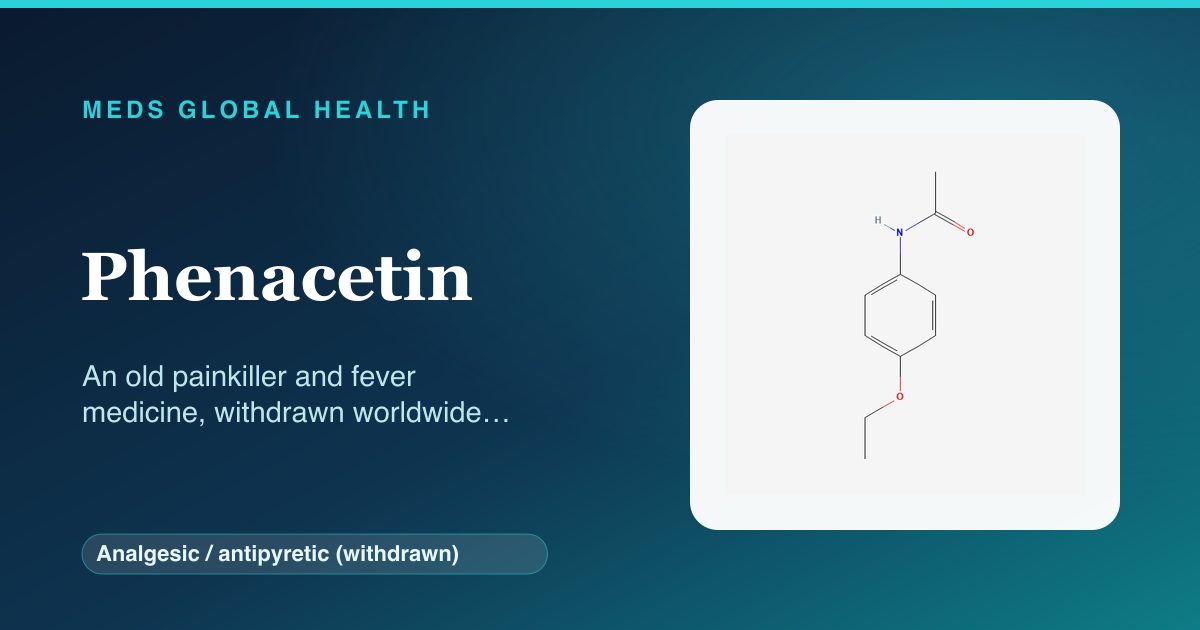
Phenacetin is a medicine that was widely used in the past to relieve pain and reduce fever, often combined with other ingredients in remedies. It is now obsolete and banned in many countries. The reason is that long-term, heavy use damaged the kidneys and was linked to cancer of the kidney and urinary tract. Importantly, the body breaks phenacetin down into paracetamol (acetaminophen), and it is paracetamol, the safer breakdown product, that replaced it. Phenacetin itself is described here for historical and educational reasons.
How it works
Phenacetin was thought to relieve pain and lower fever through effects on the brain and on chemical messengers involved in pain and temperature. In the body, it is converted (metabolised) into paracetamol, which carries much of this pain- and fever-relieving effect. The serious problem lay not in the paracetamol it produced but in phenacetin itself and some of its other breakdown products, which, with long-term heavy use, damaged the kidneys and were linked to cancer. This is why phenacetin was removed and paracetamol used instead.
Company & origin
Originated / developed by: No longer marketed.
An old painkiller and fever medicine, withdrawn worldwide after long-term use was linked to kidney damage and cancer.
Practical use
How to take Phenacetin
General, dose-free guidance — always follow your prescriber's and the leaflet's specific instructions.
- Phenacetin is withdrawn worldwide and no longer used, so it is not a treatment option.
- For everyday pain or fever, paracetamol, its much safer alternative, is used instead.
- Always follow the dosing instructions for any painkiller you do use, and avoid long-term heavy use without advice.
- If you have old medicines containing phenacetin, do not use them; ask a pharmacist how to dispose of them safely.
- Speak to a pharmacist or doctor for safe options to manage pain or fever.
Weighing it up
Advantages & disadvantages of Phenacetin
Advantages
- Historically relieved pain and reduced fever before safer medicines were available.
- Led, through its breakdown product paracetamol, to one of the safest and most widely used painkillers today.
- Of mainly historical interest in understanding how painkillers developed.
Disadvantages
- Long-term use caused serious kidney damage (analgesic nephropathy).
- Linked to cancer of the kidney and urinary tract.
- Withdrawn worldwide and obsolete, replaced by safer alternatives such as paracetamol.
Practical use
Good to know
The most important thing to know about phenacetin is that it has been withdrawn worldwide because of serious harm: long-term use, particularly in large or combined doses, caused kidney damage known as analgesic nephropathy and was linked to cancer of the kidney and urinary tract. It is no longer available and should not be used. A useful point to understand is that phenacetin is turned into paracetamol in the body, and paracetamol, the much safer alternative, is what replaced it for pain and fever. So while phenacetin itself is unsafe and obsolete, its safer 'descendant' is one of the most widely used painkillers today. Phenacetin is included here purely for historical understanding.
Who should not take it / use with caution
- It is withdrawn worldwide and no longer available, so it should not be used by anyone.
- People with kidney problems were at particular risk of harm from it.
- For pain or fever, safer alternatives such as paracetamol should be used instead.
Monitoring
- Historically, kidney function needed close attention with long-term use.
- Watching for signs of kidney problems or changes in the urine.
- Today, monitoring focuses on the safer medicines that replaced it.
Side effects
- Long-term kidney damage (analgesic nephropathy) with heavy or prolonged use.
- A link to cancer of the kidney and urinary tract.
- Blood problems, including changes to red blood cells, in some people.
Key interactions
- Historically it was often combined with other painkillers, which increased the risk of kidney harm.
- As it is obsolete, modern guidance focuses on the safer medicines that replaced it.
- Tell your pharmacist about all painkillers you take, as overuse of combinations can harm the kidneys.
Available as: Tablets or powders taken by mouth (no longer available).
Answers
Phenacetin: frequently asked questions
What was phenacetin used for?
It was an old medicine used as a painkiller and to bring down fever, often combined with other ingredients.
Why was it withdrawn?
Long-term, heavy use caused serious kidney damage (analgesic nephropathy) and was linked to cancer of the kidney and urinary tract.
Is phenacetin related to paracetamol?
Yes. The body turns phenacetin into paracetamol, and paracetamol, the much safer alternative, is what replaced it.
Is it still available?
No. Phenacetin has been withdrawn worldwide and is no longer used; safer painkillers such as paracetamol are used instead.
What should I use for pain or fever instead?
Paracetamol or other modern painkillers are used today; a pharmacist or doctor can advise on a safe option for you.
Authoritative sources
- BNF
- NICE CKS
Building a medicines information resource?
We create evidence-led, dose-free drug and formulary references for teams.