A short-term appetite-suppressant for weight loss
Phendimetrazine
A stimulant medicine used for a short time to reduce appetite as part of a weight-loss plan.
What is Phendimetrazine?
Phendimetrazine is a stimulant-type appetite suppressant used for a short time to help with weight loss alongside diet and exercise. It works on the brain to reduce hunger, but because it is a stimulant it can raise the heart rate and blood pressure, cause restlessness and trouble sleeping, and carries a risk of dependence and misuse. For these reasons it is a controlled drug, used only for a short period and not in people with heart problems. It is largely a United States product and is not generally available in the UK.
Education and reference only. This is a plain-language guide to Phendimetrazine — it deliberately contains no doses. Doses depend on the person, the brand and the reason for treatment, and belong with your prescriber. Always check the BNF, the product labelling (SmPC) and follow medical advice.
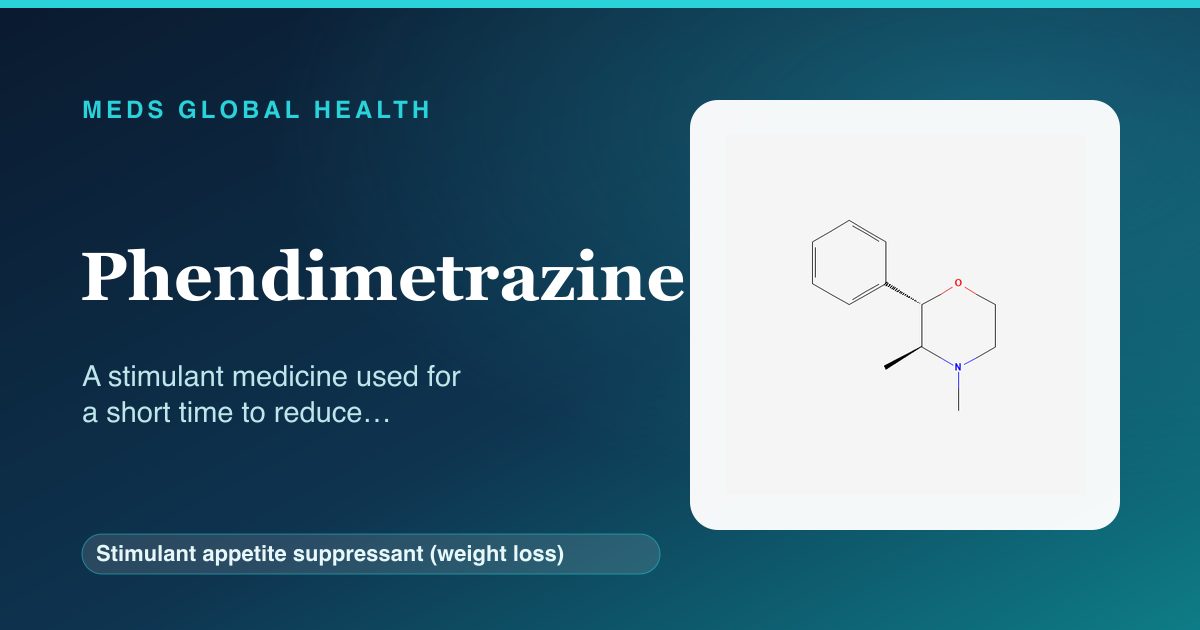
What it is
Phendimetrazine is a stimulant medicine used as an appetite suppressant to help with short-term weight loss in people who are significantly overweight, alongside a reduced-calorie diet and exercise. It works by acting on the brain to reduce feelings of hunger. Because it is a stimulant that can be misused and can lead to dependence, it is a controlled drug and is intended only for short-term use. It is taken by mouth and is mainly prescribed in the United States; it is not generally available in the UK, where other approaches to weight management are used.
How it works
Phendimetrazine acts on the brain in a way similar to other stimulants, increasing chemical messengers that reduce appetite, so people feel less hungry and tend to eat less. This appetite-reducing effect supports a calorie-controlled diet, helping with weight loss over a short period. Because the body adjusts to it over time and the appetite effect tends to wear off, it is only meant to be used for a few weeks rather than long term. Its stimulant nature is also why it can speed up the heart, raise blood pressure and cause restlessness.
Company & origin
A stimulant-type appetite suppressant used mainly in the United States for short-term weight loss; it is not generally available in the UK.
Practical use
How to take Phendimetrazine
General, dose-free guidance — always follow your prescriber's and the leaflet's specific instructions.
- Take it by mouth exactly as prescribed, for the short period your prescriber has set, and do not extend it yourself.
- Take it earlier in the day rather than late, as it is a stimulant and can stop you sleeping.
- Use it alongside a reduced-calorie diet and more activity, as it is only one part of a weight-loss plan.
- Do not take more than prescribed, as higher doses do not work better and increase the risk of harm and dependence.
- Do not stop suddenly after regular use without advice, and tell your prescriber about any heart or mood symptoms.
Weighing it up
Advantages & disadvantages of Phendimetrazine
Advantages
- Can reduce appetite and support short-term weight loss alongside diet and exercise.
- Taken by mouth for a defined short course.
- May help kick-start weight loss in people who are significantly overweight.
Disadvantages
- Being a stimulant, it can raise the heart rate and blood pressure and cause restlessness and poor sleep.
- Carries a risk of dependence and misuse, so it is a controlled drug used only short term.
- Not suitable for people with heart disease, and largely unavailable in the UK.
Practical use
Good to know
The most important things to understand about phendimetrazine are that it is a stimulant and a controlled drug, used only for a short time. Because it stimulates the body, it can raise the heart rate and blood pressure, cause palpitations, restlessness, trouble sleeping and a dry mouth, so it is avoided in people with heart disease, high blood pressure that is not controlled, an overactive thyroid or a history of drug misuse. It carries a real risk of dependence and misuse, which is why it is tightly controlled and not used long term. It works best as one part of a wider plan that includes diet and exercise, not on its own. It is largely a United States product and is not generally prescribed in the UK; anyone managing their weight here should speak to their own clinician about suitable options.
Who should not take it / use with caution
- People with heart disease, an irregular heartbeat or high blood pressure that is not controlled should not take it.
- People with an overactive thyroid, glaucoma or a history of drug or alcohol misuse should not take it.
- It should not be used in pregnancy or breastfeeding, or with certain antidepressants known as MAOIs.
- People who have had a serious reaction to it or to similar stimulant medicines should not take it.
Monitoring
- Checking heart rate and blood pressure before and during treatment.
- Reviewing how well weight loss is going and whether continuing is appropriate.
- Watching for signs of dependence, mood changes or heart symptoms.
Side effects
- A faster heartbeat, palpitations or a rise in blood pressure.
- Restlessness, trouble sleeping, headache, dry mouth or constipation.
- Feeling anxious, irritable or on edge.
- Rarely but seriously, chest pain, severe breathlessness or signs of dependence, which need medical attention.
Key interactions
- It must not be used with or soon after antidepressants known as MAOIs, as this can dangerously raise blood pressure.
- It can add to the effects of other stimulants and some decongestants, increasing the strain on the heart.
- Tell your prescriber about all your medicines, including those for blood pressure, mood and the heart.
Available as: Tablets and capsules taken by mouth.
Answers
Phendimetrazine: frequently asked questions
What is phendimetrazine used for?
It is a stimulant appetite suppressant used for short-term weight loss in people who are significantly overweight, alongside a reduced-calorie diet and exercise.
Why is it only used for a short time?
Its appetite-reducing effect tends to wear off and it carries a risk of dependence, so it is a controlled drug intended only for a few weeks of use.
Can people with heart problems take it?
No. As a stimulant it can raise the heart rate and blood pressure, so it is avoided in people with heart disease or uncontrolled high blood pressure.
Is it available in the UK?
It is largely a United States product and is not generally available in the UK, where other approaches to weight management are used.
Will it work on its own?
No. It is only one part of a weight-loss plan and works best alongside a reduced-calorie diet and more physical activity.
Authoritative sources
- BNF
- NICE CKS
Building a medicines information resource?
We create evidence-led, dose-free drug and formulary references for teams.