A short-acting alpha-blocker used in hospitals and dentistry
Phentolamine
A short-acting alpha-blocker used to control high blood pressure in phaeochromocytoma surgery, reverse dental numbness and treat injection leakage into tissue.
What is Phentolamine?
Phentolamine is a short-acting alpha-blocker, a medicine that relaxes blood vessels. It is used in specialist settings: to control sudden high blood pressure during surgery for a phaeochromocytoma (a rare adrenal-gland tumour), in dentistry to reverse the numbness from a local anaesthetic so feeling returns sooner, and to treat extravasation, where certain drugs leak out of a vein into the surrounding tissue. Its dominant effect is a sudden drop in blood pressure with a fast or irregular heartbeat, so it is given by trained professionals in a controlled setting.
Education and reference only. This is a plain-language guide to Phentolamine — it deliberately contains no doses. Doses depend on the person, the brand and the reason for treatment, and belong with your prescriber. Always check the BNF, the product labelling (SmPC) and follow medical advice.
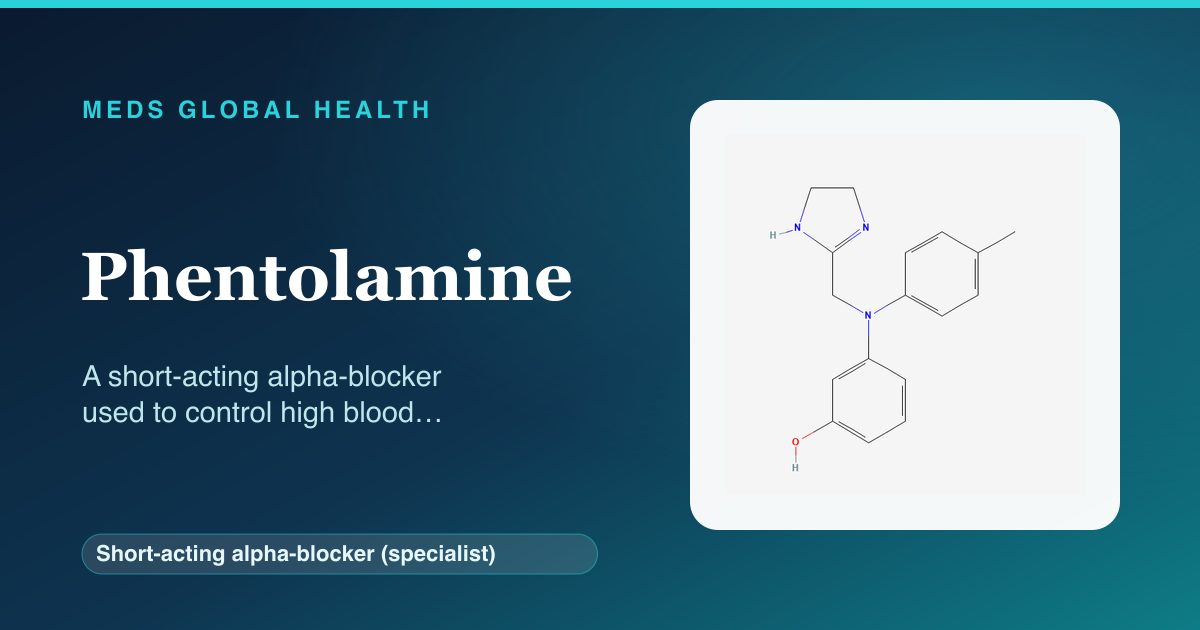
What it is
Phentolamine is a short-acting alpha-blocker, meaning it blocks signals that tighten blood vessels, so the vessels widen. It is a specialist, hospital or dental-clinic medicine rather than something taken at home. It has three main uses: controlling dangerous surges in blood pressure during surgery for a phaeochromocytoma; in dentistry, reversing the numbness caused by a local anaesthetic so that lips, tongue and face recover feeling more quickly; and treating extravasation, where a drug that should stay in a vein leaks into the surrounding tissue and could cause damage. It is given by injection by trained staff.
How it works
Phentolamine blocks alpha receptors on blood vessels, which are the signals that normally make vessels tighten. By blocking them, the vessels relax and widen, which lowers blood pressure and increases blood flow through the area. In phaeochromocytoma surgery, this counters the surges of blood-pressure-raising chemicals the tumour releases. In dentistry, widening the vessels at the injection site helps the local anaesthetic clear away faster, so numbness wears off sooner. In extravasation, the improved blood flow helps disperse a leaked drug and limit tissue damage. Because it acts quickly and briefly, it is used in the moment under supervision.
Company & origin
A short-acting alpha-blocker used in UK hospitals to control high blood pressure around phaeochromocytoma surgery, in dentistry to reverse local-anaesthetic numbness, and to treat injection extravasation.
Practical use
How to take Phentolamine
General, dose-free guidance — always follow your prescriber's and the leaflet's specific instructions.
- It is given by injection by a trained professional in a hospital or dental setting, not taken at home.
- Tell the team about any heart problems, previous heart attack, or low blood pressure before it is used.
- Expect to be monitored, as it can cause a sudden drop in blood pressure and a fast or irregular heartbeat.
- After dental use, take care as feeling returns, since normal sensation comes back sooner than usual.
- Report dizziness, palpitations, chest discomfort or feeling faint to the team straight away.
Weighing it up
Advantages & disadvantages of Phentolamine
Advantages
- Quickly controls dangerous surges in blood pressure during phaeochromocytoma surgery.
- Can shorten the unwanted numbness after a dental local anaesthetic.
- Helps limit tissue damage when certain drugs leak out of a vein (extravasation).
Disadvantages
- Can cause a sudden drop in blood pressure and a fast or irregular heartbeat.
- A specialist injection that must be given and monitored by trained professionals.
- Used with particular caution in people with heart disease.
Practical use
Good to know
The most important thing to know about phentolamine is that it acts powerfully and quickly on blood pressure, so its dominant risk is a sudden fall in blood pressure together with a fast or irregular heartbeat; this is exactly why it is given by trained professionals who can monitor and respond. It is a short-acting medicine used at the moment it is needed rather than a regular treatment. In its dental use, it is simply speeding up the return of normal feeling after numbing, which many people welcome, but it can cause a brief rise then change in heart rate. People may feel dizzy, flushed or have a headache afterwards. Because of its effects on the heart and blood pressure, it is used with particular caution in anyone with heart disease.
Who should not take it / use with caution
- People who have had a serious allergic reaction to phentolamine should not be given it.
- It is used with great caution, or avoided, in people with significant heart disease, a recent heart attack or very low blood pressure.
- It is given only under professional supervision with monitoring of blood pressure and heart rate.
Monitoring
- Close monitoring of blood pressure and heart rate during and after use.
- Watching for a fast or irregular heartbeat or a sudden drop in blood pressure.
- Checking the treated area after use for extravasation, or feeling returning after dental use.
Side effects
- A sudden drop in blood pressure, with dizziness or feeling faint.
- A fast or irregular heartbeat, or palpitations.
- Flushing, headache, a blocked nose or nausea.
Key interactions
- It can add to the blood-pressure-lowering effect of other blood-pressure medicines.
- It is used with care alongside medicines that affect the heart rate or rhythm.
- The team will review all your medicines, as combinations can affect blood pressure and the heart.
Available as: A solution for injection, given by a healthcare professional.
Answers
Phentolamine: frequently asked questions
What is phentolamine used for?
It is a short-acting alpha-blocker used to control high blood pressure during phaeochromocytoma surgery, to reverse dental numbness, and to treat drugs leaking out of a vein into tissue.
Why is it given only in hospital or a clinic?
It acts quickly on blood pressure and the heart, so its dominant risk is a sudden drop in blood pressure with a fast or irregular heartbeat, needing trained staff and monitoring.
How does it reverse dental numbness?
By widening the blood vessels at the injection site, it helps the local anaesthetic clear away faster, so feeling in the lips, tongue and face returns sooner.
What is extravasation?
It is when a drug that should stay inside a vein leaks into the surrounding tissue; phentolamine improves blood flow to help disperse it and limit damage.
What side effects might I notice?
People may feel dizzy or faint from low blood pressure, notice a fast or pounding heartbeat, or have flushing and headache afterwards.
Authoritative sources
- BNF
- NICE CKS
Building a medicines information resource?
We create evidence-led, dose-free drug and formulary references for teams.