An antifibrotic for pulmonary fibrosis
Pirfenidone
A specialist antifibrotic that slows lung scarring in idiopathic pulmonary fibrosis.
What is Pirfenidone?
Pirfenidone is a specialist medicine used to slow the progressive lung scarring of idiopathic pulmonary fibrosis (IPF). It does not cure the condition or reverse existing scarring, but it can slow how quickly lung function declines, which is why it is started and monitored by lung specialists. It commonly causes nausea and weight loss, and it makes the skin much more sensitive to sunlight, so high-factor sunblock and covering up are important. The liver is checked with blood tests, and grapefruit and smoking can interfere with how it works.
Education and reference only. This is a plain-language guide to Pirfenidone — it deliberately contains no doses. Doses depend on the person, the brand and the reason for treatment, and belong with your prescriber. Always check the BNF, the product labelling (SmPC) and follow medical advice.
What it is
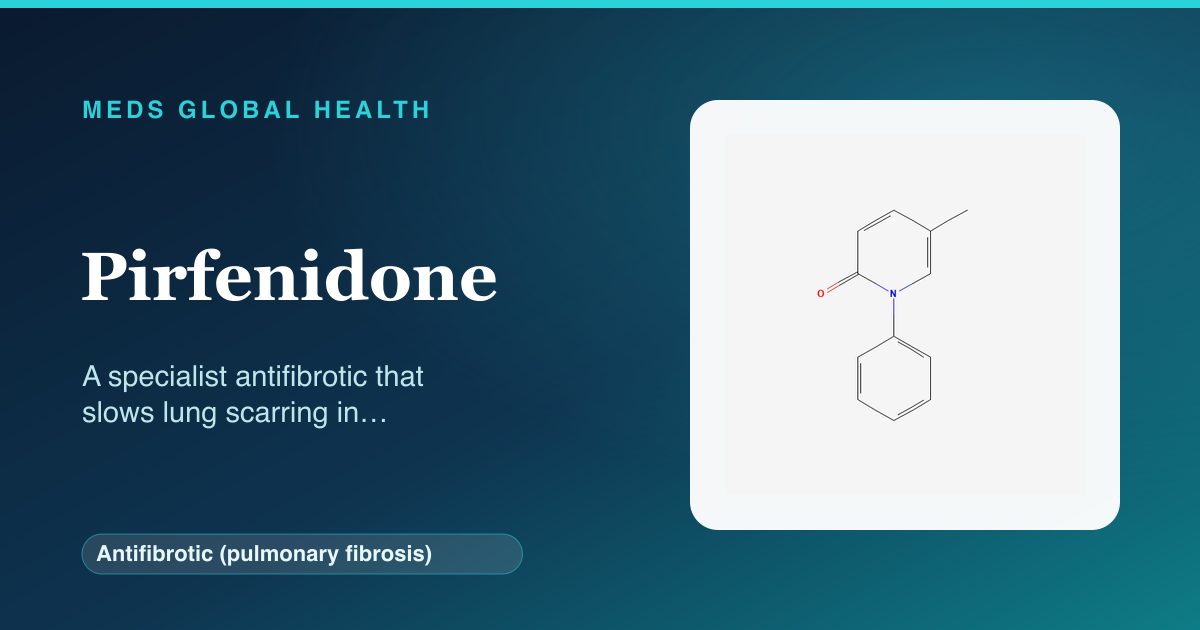
Pirfenidone is an antifibrotic medicine for idiopathic pulmonary fibrosis (IPF), a condition in which the lungs gradually become scarred and stiff, making breathing harder over time. It is a specialist treatment, started by an interstitial lung disease team, and is taken by mouth several times a day with food. It is one of two main antifibrotic medicines used for IPF (the other being nintedanib) and is chosen to slow the disease rather than to relieve day-to-day symptoms directly.
How it works
Pirfenidone works against the processes that drive fibrosis, the formation of scar tissue, in the lungs. By dampening the signals and cells that lay down scarring, it slows the rate at which the lungs become stiffer and lung function falls in IPF. It does not undo scarring that has already formed, so the aim is to slow progression and preserve lung function for longer rather than to cure the disease or quickly ease breathlessness.
Company & origin
A specialist antifibrotic medicine used in the UK to slow lung scarring in idiopathic pulmonary fibrosis (IPF).
Practical use
How to take Pirfenidone
General, dose-free guidance — always follow your prescriber's and the leaflet's specific instructions.
- Take it with food, usually spread across the day, exactly as your lung specialist directs; taking it with food reduces nausea.
- Protect your skin from the sun with high-factor sunblock, hats and clothing that covers you, and avoid sunbeds, as it causes marked sun sensitivity.
- Avoid grapefruit and grapefruit juice, which can change how your body handles the medicine.
- Attend your regular liver blood tests, and report any yellowing of the skin or eyes, dark urine or unusual tiredness.
- If you smoke, ask for help to stop, as smoking can reduce how well the medicine works and harms your lungs.
Weighing it up
Advantages & disadvantages of Pirfenidone
Advantages
- Can slow the decline in lung function in idiopathic pulmonary fibrosis.
- Offers a treatment option for a serious condition that previously had few.
- Taken by mouth and managed by a specialist lung team with regular review.
Disadvantages
- Does not cure IPF or reverse existing lung scarring.
- Causes marked sun sensitivity and commonly causes nausea, poor appetite and weight loss.
- Needs regular liver blood tests and careful avoidance of grapefruit and smoking interactions.
Practical use
Good to know
It is important to understand that pirfenidone slows IPF rather than curing it; it cannot reverse existing lung scarring, but it can slow how fast the disease progresses, which is valuable in a serious condition. The most noticeable everyday cautions are sun sensitivity and stomach effects: pirfenidone can cause marked sensitivity to sunlight, so high-factor sunblock, hats and covering the skin are recommended, even on cloudy days, and sunbeds are avoided. Nausea, loss of appetite and weight loss are common, so it is taken with food and weight is kept an eye on. The liver is checked with regular blood tests, because it can occasionally affect liver function. Grapefruit and grapefruit juice can change how the body handles it and are best avoided, and smoking can lower its levels and is also harmful to the lungs, so stopping smoking is strongly encouraged.
Who should not take it / use with caution
- It is used with caution, or avoided, in people with significant liver problems.
- Care is needed in severe kidney problems, and it is generally avoided in pregnancy and breastfeeding.
- People who cannot avoid strong sun exposure or who have had severe reactions to it may need an alternative.
Monitoring
- Regular liver blood tests, especially in the early months.
- Watching weight, appetite and any skin or sun-related reactions.
- Lung function tests over time to see how the disease is progressing.
Side effects
- Nausea, loss of appetite, weight loss, indigestion and tiredness are common.
- Skin reactions and marked sensitivity to sunlight, sometimes with rash, are common.
- Less often, changes in liver blood tests, dizziness or headache.
Key interactions
- Grapefruit and grapefruit juice can increase its effects and are best avoided.
- Smoking can lower its levels, reducing how well it works.
- Some medicines (such as certain antibiotics and others that affect the same liver pathway) can raise or lower its levels, so they are checked.
Available as: Capsules and tablets taken by mouth with food.
Answers
Pirfenidone: frequently asked questions
Will pirfenidone cure my pulmonary fibrosis?
No. It does not cure IPF or reverse existing scarring, but it can slow how quickly the disease progresses and lung function declines, which is valuable in a serious condition.
Why do I need to be careful in the sun?
Pirfenidone makes the skin much more sensitive to sunlight, so high-factor sunblock, hats and covering your skin are important, even on cloudy days, and sunbeds should be avoided.
Why does it make me feel sick or lose weight?
Nausea and reduced appetite are common; taking it with food helps, and your weight will be kept an eye on, so tell your team if it becomes a problem.
Can I drink grapefruit juice?
It is best avoided, as grapefruit can change how your body handles the medicine and increase its effects.
Why do I need blood tests?
Pirfenidone can occasionally affect the liver, so regular blood tests check liver function; report any yellowing of the skin or eyes, dark urine or unusual tiredness.
The wider class
About Antifibrotic (pulmonary fibrosis)
Pirfenidone belongs to the antifibrotic (pulmonary fibrosis) class. For how the class as a whole works, its shared safety principles and monitoring, see the full guide.
Browse by body system
Authoritative sources
- BNF
- NICE CKS
Building a medicines information resource?
We create evidence-led, dose-free drug and formulary references for teams.