A BCR-ABL tyrosine kinase inhibitor for certain leukaemias
Ponatinib
A targeted cancer medicine taken by mouth for certain leukaemias, blocking an abnormal signal that drives the cancer.
What is Ponatinib?
Ponatinib is a specialist targeted cancer medicine used to treat chronic myeloid leukaemia and a type of acute lymphoblastic leukaemia that carries the Philadelphia chromosome. It blocks an abnormal protein called BCR-ABL that drives these leukaemias, and it can work when other similar medicines have stopped helping, including against a resistant change called T315I. Its most serious risks are blood clots in the arteries causing heart attacks and strokes, and heart failure, along with serious liver damage, raised blood pressure and pancreatitis. It is taken by mouth and used under close specialist supervision.
Education and reference only. This is a plain-language guide to Ponatinib — it deliberately contains no doses. Doses depend on the person, the brand and the reason for treatment, and belong with your prescriber. Always check the BNF, the product labelling (SmPC) and follow medical advice.
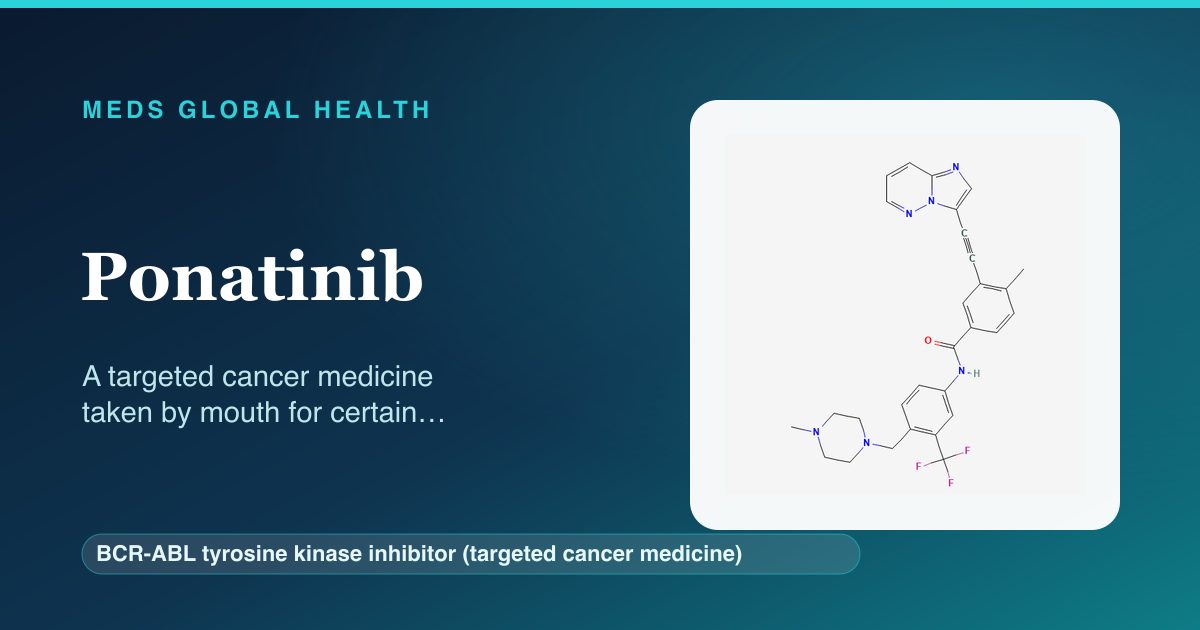
What it is
Ponatinib is a targeted cancer medicine used to treat certain leukaemias, mainly chronic myeloid leukaemia (CML) and a type of acute lymphoblastic leukaemia (ALL) that carries an abnormality called the Philadelphia chromosome. These cancers are driven by an abnormal protein called BCR-ABL. Ponatinib belongs to a group called tyrosine kinase inhibitors and is often chosen when other medicines in this group no longer work, including against a difficult resistance change known as T315I. It is taken by mouth as tablets, under the close care of a specialist cancer team.
How it works
The leukaemias ponatinib treats are driven by an abnormal protein, BCR-ABL, which sends constant 'grow and divide' signals to the cancer cells. Ponatinib blocks BCR-ABL, switching off these signals so the cancer cells stop multiplying and many die. It is powerful and can still block forms of BCR-ABL that have changed to escape other medicines, including the T315I change. That strength comes with significant risks, particularly to the blood vessels and heart, so it is taken regularly under close monitoring, and the team aims to use the lowest dose that controls the leukaemia.
Company & origin
A specialist targeted cancer medicine used in the UK to treat certain leukaemias, often when other similar medicines no longer work.
Practical use
How to take Ponatinib
General, dose-free guidance — always follow your prescriber's and the leaflet's specific instructions.
- Take it by mouth, usually once a day, at about the same time each day as your specialist team advises.
- Swallow the tablets whole with water; do not stop or change the dose without specialist advice.
- Seek emergency help for chest pain, sudden weakness or numbness, trouble speaking, breathlessness, or leg pain or swelling.
- Report yellowing of the skin or eyes, dark urine or severe tummy pain promptly, as these can signal liver or pancreas problems.
- Use effective contraception as advised, because this medicine can harm a developing baby.
Weighing it up
Advantages & disadvantages of Ponatinib
Advantages
- A powerful targeted treatment for certain leukaemias driven by the abnormal BCR-ABL protein.
- Can still work when other similar medicines have stopped helping, including against the resistant T315I change.
- Taken at home as tablets rather than needing an infusion.
Disadvantages
- Can cause serious blood clots in the arteries leading to heart attacks and strokes, and heart failure.
- Can seriously damage the liver and inflame the pancreas, and can raise blood pressure.
- Needs close monitoring and careful control of heart and blood-vessel risk factors.
Practical use
Good to know
The dominant safety concern with ponatinib is to the blood vessels and heart: it can cause blood clots and blockages in the arteries leading to heart attacks and strokes, as well as clots in the veins and a weakening of the heart that can cause heart failure. Because of this, you should report chest pain, sudden weakness or numbness, trouble speaking, breathlessness or leg pain or swelling at once, and the team will manage risk factors such as blood pressure carefully. It can seriously damage the liver, so liver blood tests are watched and you should report yellowing of the skin or eyes, dark urine or severe tummy pain. It can also cause raised blood pressure and inflammation of the pancreas (pancreatitis), which causes severe tummy pain. As with cancer medicines of this kind, it can harm a developing baby, so effective contraception is important.
Who should not take it / use with caution
- People who have had a serious allergic reaction to ponatinib should not take it.
- It is used with great caution, or avoided, in people with a history of heart attacks, strokes or other clots.
- It can harm a developing baby, so it is avoided in pregnancy and effective contraception is needed.
Monitoring
- Regular checks of blood pressure, heart and blood-vessel health.
- Liver blood tests and checks of the pancreas, plus regular blood counts.
- Watching closely for signs of clots, heart problems and other serious side effects.
Side effects
- Blood clots and blockages in the arteries and veins, including heart attacks and strokes.
- Heart failure, raised blood pressure and inflammation of the pancreas (pancreatitis).
- Liver damage, falling blood counts, tiredness, rash and tummy upset.
- Rarely but seriously, severe liver injury or life-threatening clots needing urgent care.
Key interactions
- Some medicines and supplements change how ponatinib is broken down, so a full medicines list is important.
- Medicines that affect blood pressure, the heart or the risk of clotting may need careful review.
- Live vaccines are generally avoided during treatment because the immune system is affected.
Available as: Tablets taken by mouth.
Answers
Ponatinib: frequently asked questions
What is ponatinib used for?
It is a targeted cancer medicine used to treat certain leukaemias, mainly chronic myeloid leukaemia and a Philadelphia-chromosome-positive acute lymphoblastic leukaemia, by blocking the abnormal BCR-ABL protein that drives them.
Why is it used when other medicines stop working?
It is powerful and can still block forms of BCR-ABL that have changed to escape other medicines, including a resistant change called T315I.
What are its most serious risks?
Its most serious risks are blood clots in the arteries causing heart attacks and strokes, and heart failure, so any chest pain, sudden weakness or breathlessness needs emergency help.
Can it affect my liver?
Yes. It can cause serious liver damage, so liver blood tests are monitored and you should report yellowing of the skin or eyes, dark urine or severe tummy pain.
Can I stop it if I feel well?
No. Do not stop or change the dose without specialist advice, as it controls the leukaemia and stopping can let the cancer return.
Authoritative sources
- BNF
- NICE CKS
Building a medicines information resource?
We create evidence-led, dose-free drug and formulary references for teams.