A urinary alkaliniser
Potassium citrate
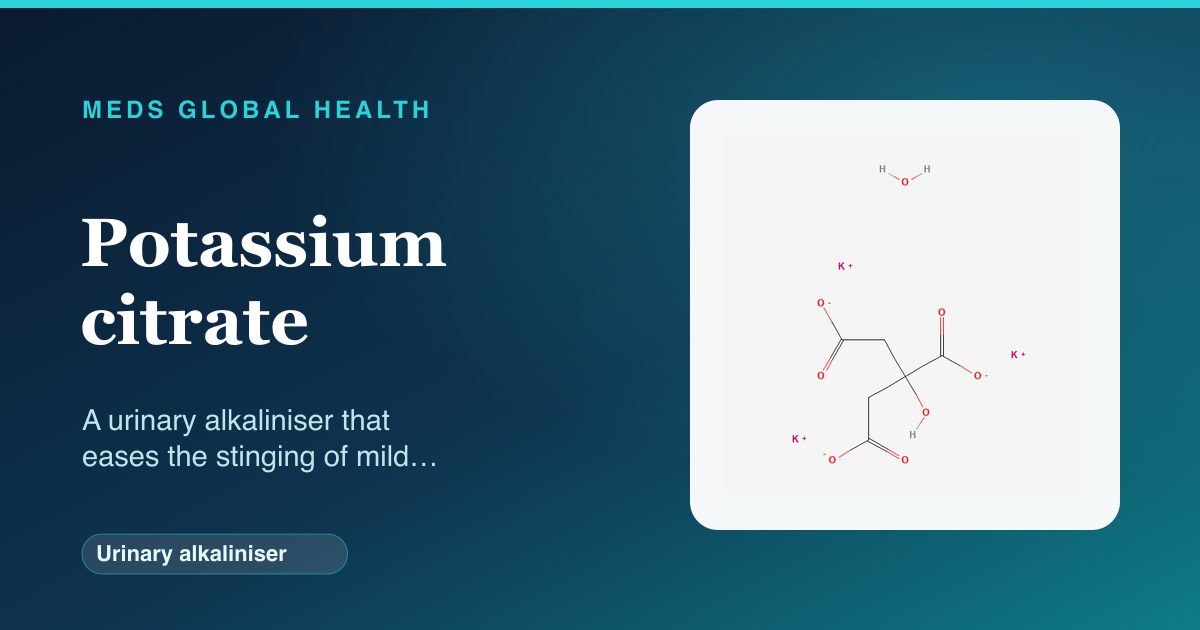
A urinary alkaliniser that eases the stinging of mild cystitis and can help prevent some kidney stones.
What is Potassium citrate?
Potassium citrate makes the urine less acidic, which can ease the stinging and burning of mild cystitis (a lower urinary tract infection) while the body fights it off. It is not an antibiotic and does not cure the infection itself, so see a doctor if symptoms last more than a couple of days, if there is fever, blood in the urine, or if you are pregnant or it is a man or child. It is also used in some people to help prevent certain types of kidney stone by keeping the urine less acidic. Because it adds potassium to the body, it needs care in people with kidney problems or those taking medicines that raise potassium.
Education and reference only. This is a plain-language guide to Potassium citrate — it deliberately contains no doses. Doses depend on the person, the brand and the reason for treatment, and belong with your prescriber. Always check the BNF, the product labelling (SmPC) and follow medical advice.
What it is
Potassium citrate is a urinary alkaliniser, meaning it makes the urine less acidic. As a mixture taken by mouth, it is used to relieve the discomfort of mild cystitis, the common lower urinary tract infection that causes a stinging, burning sensation when passing urine and a frequent urge to go. It does not kill the bacteria, but by reducing the acidity of the urine it can take the edge off the stinging while the infection settles. It is also used, often under a doctor's guidance, to help prevent certain kidney stones in people prone to forming them, by keeping the urine less acidic.
How it works
When urine is acidic it can sting as it passes over inflamed tissues during cystitis. Potassium citrate is absorbed and processed by the body in a way that leaves the urine more alkaline (less acidic), which soothes that stinging sensation. It does not attack the bacteria causing the infection, so it works alongside the body's own defences and, if needed, antibiotics. In stone prevention, keeping the urine less acidic and adding citrate helps keep certain stone-forming substances dissolved rather than clumping together, which can reduce the chance of new stones forming.
Company & origin
A long-established urinary alkaliniser used in the UK to ease the stinging of mild cystitis and to help prevent certain kidney stones.
Practical use
How to take Potassium citrate
General, dose-free guidance — always follow your prescriber's and the leaflet's specific instructions.
- Mix the dose well with plenty of water and drink it, then keep your fluid intake up through the day.
- Use it for short-term relief of the stinging of mild cystitis, not as a cure for the infection.
- See a doctor if symptoms last more than a couple of days, keep returning, or come with fever, back pain or blood in the urine.
- Do not use it without advice if you have kidney or heart problems, or if you take medicines that can raise potassium.
- Avoid taking it at the same time as sodium-based cystitis products unless a healthcare professional has advised it.
Weighing it up
Advantages & disadvantages of Potassium citrate
Advantages
- Eases the stinging and burning of mild cystitis while the infection settles.
- Simple to take, well diluted in water, and available without a prescription for short-term relief.
- Also helps some people prevent certain kidney stones by keeping the urine less acidic.
Disadvantages
- It only relieves symptoms and does not cure the urinary infection, which may still need antibiotics.
- Adds potassium to the body, so it is not safe for everyone, especially with kidney or heart problems.
- Can cause stomach upset and has a strong taste that some people dislike.
Practical use
Good to know
The key thing to understand is that potassium citrate relieves symptoms; it is not an antibiotic and does not treat the infection itself. For straightforward, mild cystitis in an otherwise well adult woman, it can ease the stinging while plenty of fluids and time do their work, but you should see a doctor if symptoms last more than two or three days, get worse, keep coming back, or if there is fever, back or side pain, blood in the urine, or if you are pregnant, or if the person affected is a man or a child, as these need proper assessment. Because it adds potassium to the body, it should be used with caution by anyone with kidney problems or a heart condition, and by people taking medicines that raise potassium, since too much potassium in the blood can be dangerous. It is taken well diluted with water, and it should not be used with sodium-based urinary products at the same time without advice.
Who should not take it / use with caution
- People with significant kidney problems or a high blood potassium level should not use it without advice.
- It is generally avoided in people taking medicines that raise potassium, such as certain blood-pressure tablets and potassium supplements.
- Pregnant women, men and children with cystitis symptoms should see a doctor rather than self-treat.
Monitoring
- Reviewing whether symptoms are settling and whether antibiotics or further assessment are needed.
- Caution and, where relevant, blood-potassium checks in people with kidney or heart problems or on potassium-raising medicines.
- For stone prevention, follow-up arranged by the doctor or specialist guiding treatment.
Side effects
- Mild stomach upset, nausea or a feeling of fullness, especially if not well diluted.
- A strong or unpleasant taste that some people find off-putting.
- Rarely, a build-up of potassium in the blood, which is more likely with kidney problems or potassium-raising medicines.
Key interactions
- Adds to the effect of other medicines that raise potassium, such as some blood-pressure tablets and potassium supplements.
- Changing the acidity of the urine can affect how some other medicines are handled by the body.
- Should not be combined with sodium-based urinary alkalinisers at the same time without advice.
Available as: Oral mixture (liquid) taken by mouth, well diluted with water.
Answers
Potassium citrate: frequently asked questions
Does potassium citrate cure a urine infection?
No. It eases the stinging of mild cystitis but is not an antibiotic and does not cure the infection, which may still need treatment from a doctor.
When should I see a doctor instead of self-treating?
See a doctor if symptoms last more than a couple of days, keep coming back, or come with fever, back pain or blood in the urine, or if you are pregnant or it is a man or child.
Is it safe for everyone?
No. Because it adds potassium to the body, it should be used with caution or avoided in people with kidney or heart problems or those taking medicines that raise potassium.
How do I take it?
It is mixed well with plenty of water and drunk, and you should keep your fluids up; follow the directions on the product or from your pharmacist.
Can it help with kidney stones?
In some people it is used under a doctor's guidance to help prevent certain kidney stones by keeping the urine less acidic, but that use should be supervised.
Authoritative sources
- BNF
- NICE CKS
Building a medicines information resource?
We create evidence-led, dose-free drug and formulary references for teams.