An antifolate chemotherapy for peripheral T-cell lymphoma
Pralatrexate
An antifolate chemotherapy used to treat peripheral T-cell lymphoma, a cancer of certain white blood cells.
What is Pralatrexate?
Pralatrexate is a specialist chemotherapy used to treat peripheral T-cell lymphoma, a cancer of a type of white blood cell. It is an antifolate, meaning it blocks the way cells use folate (a B vitamin) to grow, which damages the cancer cells. It is given as an injection into a vein by a cancer team. Its most important effects are sore mouth and throat (mucositis) and a fall in blood counts (bone-marrow suppression), so people are given folic acid and vitamin B12 supplements alongside it to make it safer. It is a specialist-only treatment with close monitoring.
Education and reference only. This is a plain-language guide to Pralatrexate — it deliberately contains no doses. Doses depend on the person, the brand and the reason for treatment, and belong with your prescriber. Always check the BNF, the product labelling (SmPC) and follow medical advice.
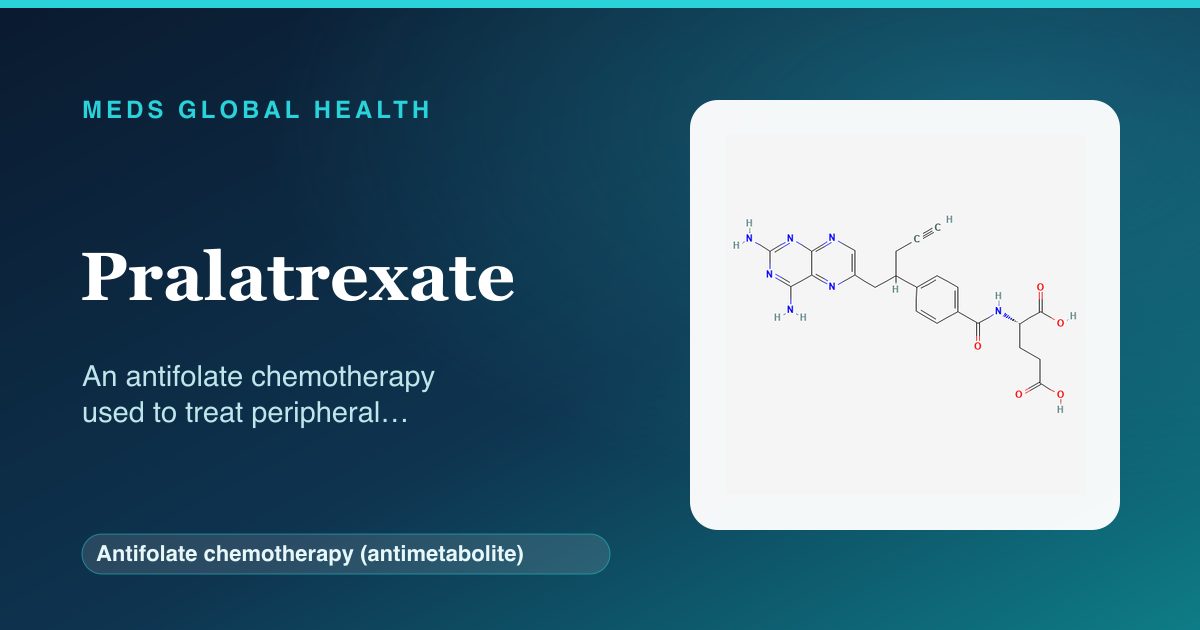
What it is
Pralatrexate is a chemotherapy medicine of the antifolate (antimetabolite) type, used to treat peripheral T-cell lymphoma, a cancer affecting a particular kind of white blood cell. It is given as an injection into a vein by a specialist cancer team, usually in cycles. To reduce its side effects, people taking it are given folic acid tablets and vitamin B12 injections, because topping up these vitamins makes the treatment better tolerated. It is a hospital-based, specialist-only medicine that is closely monitored.
How it works
Cancer cells need folate, a B vitamin, to build the DNA they require to divide and grow. Pralatrexate is an antifolate: it gets taken up into cells and blocks the enzymes that use folate, starving the cells of the building blocks they need, which damages and kills fast-dividing cancer cells. Because healthy fast-dividing cells, such as those in the mouth lining and bone marrow, are also affected, it can cause mouth soreness and low blood counts. Giving folic acid and vitamin B12 alongside helps protect normal cells and lessens these effects without stopping the medicine working.
Company & origin
A specialist chemotherapy medicine used in the UK for a type of lymphoma called peripheral T-cell lymphoma, given under cancer-team supervision.
Practical use
How to take Pralatrexate
General, dose-free guidance — always follow your prescriber's and the leaflet's specific instructions.
- It is given as an injection into a vein by your cancer team, usually in treatment cycles, not taken at home.
- Take your folic acid tablets every day and have your vitamin B12 injections as scheduled, as these make the treatment safer.
- Tell your team straight away about a sore mouth, mouth ulcers, or trouble eating and drinking, as these may need treatment or a dose change.
- Contact your team urgently if you get a fever or other signs of infection, as your blood counts may be low.
- Attend all your blood-test and review appointments so your counts can be checked before each dose.
Weighing it up
Advantages & disadvantages of Pralatrexate
Advantages
- Offers a treatment option for peripheral T-cell lymphoma that has come back or not responded to other treatment.
- Targets fast-dividing cancer cells by blocking their use of folate.
- Folic acid and vitamin B12 supplements can reduce how severe its side effects are.
Disadvantages
- Commonly causes a sore, ulcerated mouth and throat (mucositis) that can make eating and drinking difficult.
- Lowers blood counts (bone-marrow suppression), raising the risk of infection, bleeding and anaemia.
- Must be given into a vein by a specialist team, with regular blood tests and vitamin supplements.
Practical use
Good to know
The most important thing to understand is that pralatrexate works against a cancer but also affects healthy fast-growing tissues, which is why two side effects dominate: a sore, ulcerated mouth and throat (mucositis), and a fall in blood counts (bone-marrow suppression) that raises the risk of infection, bleeding and anaemia. A key safety step is that you must take folic acid tablets every day and have vitamin B12 injections as scheduled while on treatment, because these supplements reduce the severity of side effects; missing them can make the medicine more toxic. Regular blood tests check your counts before each dose, and the team may delay or adjust treatment if your mouth or blood counts are badly affected. Report a fever, mouth ulcers that stop you eating or drinking, or unusual bleeding or bruising straight away. It is a specialist medicine given and supervised by a cancer team.
Who should not take it / use with caution
- People who have had a serious allergic reaction to pralatrexate should not receive it.
- It is not used in pregnancy because it can harm an unborn baby; effective contraception is needed during treatment.
- It is used with care, and at an adjusted dose or with extra caution, in people with kidney or liver problems.
- It should only be used under a specialist cancer team, with folic acid and vitamin B12 supplementation and close monitoring.
Monitoring
- Regular blood tests to check blood counts before each dose.
- Checking the mouth and throat for soreness and ulcers (mucositis).
- Reviewing kidney and liver function, and adjusting treatment if needed.
Side effects
- A sore, ulcerated mouth and throat (mucositis), which can make eating and drinking hard.
- Low blood counts (bone-marrow suppression), raising the risk of infection, bleeding and anaemia.
- Tiredness, nausea and reduced appetite.
- Rarely but seriously, severe infections, serious mucositis, or skin reactions, which need urgent medical attention.
Key interactions
- Medicines that affect the kidneys, such as some anti-inflammatory painkillers and certain antibiotics, can raise pralatrexate levels and toxicity.
- It is used carefully alongside other medicines that lower blood counts.
- Tell your team about all your medicines, including over-the-counter ones and supplements, so interactions can be checked.
Available as: A solution given as an injection into a vein by a specialist team.
Answers
Pralatrexate: frequently asked questions
What is pralatrexate used for?
It is a chemotherapy used to treat peripheral T-cell lymphoma, a cancer of a type of white blood cell, given by a specialist cancer team.
Why do I need folic acid and vitamin B12 with it?
These supplements help protect healthy cells and reduce how severe the side effects, such as mouth soreness and low blood counts, become, so they are an important part of treatment.
Why does it make my mouth sore?
Pralatrexate affects fast-growing cells, including those lining the mouth, which causes mucositis; tell your team, as it can be treated and the dose adjusted.
How is it given?
It is given as an injection into a vein by your cancer team in treatment cycles, not taken at home.
What should I watch for between doses?
Contact your team urgently about a fever or signs of infection, severe mouth ulcers, or unusual bleeding or bruising, as your blood counts may be low.
Authoritative sources
- BNF
- NICE CKS
Building a medicines information resource?
We create evidence-led, dose-free drug and formulary references for teams.