A RET inhibitor for RET-altered cancers
Pralsetinib
A targeted cancer tablet for certain lung and thyroid cancers driven by a change in the RET gene.
What is Pralsetinib?
Pralsetinib is a specialist cancer medicine used to treat certain lung and thyroid cancers that have a specific change (alteration) in a gene called RET. It is a targeted treatment that blocks the faulty RET signal driving these cancers, and it is taken by mouth. Important safety concerns include inflammation in the lungs (pneumonitis), raised blood pressure, liver changes and an increased risk of bleeding. It can also reactivate hidden infections such as tuberculosis, and it can harm a developing baby, so testing and reliable contraception matter.
Education and reference only. This is a plain-language guide to Pralsetinib — it deliberately contains no doses. Doses depend on the person, the brand and the reason for treatment, and belong with your prescriber. Always check the BNF, the product labelling (SmPC) and follow medical advice.
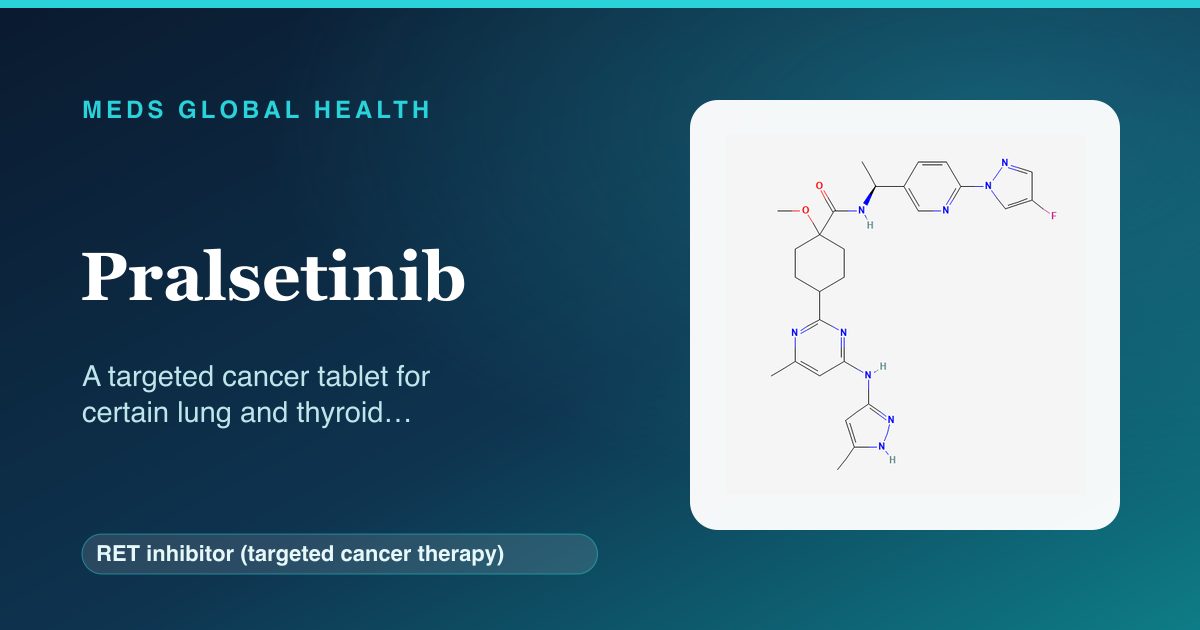
What it is
Pralsetinib is a targeted cancer medicine for cancers that carry a particular change in the RET gene, mainly certain non-small-cell lung cancers and some thyroid cancers. The cancer is usually tested first to confirm it has this RET change, because the medicine only works against cancers driven by it. It is taken by mouth as a capsule and is prescribed and monitored by a cancer specialist team, who watch for effects on the lungs, blood pressure, liver and bleeding.
How it works
Some cancers are driven by a faulty version of a protein called RET, which constantly signals the cancer cells to grow. Pralsetinib blocks this RET signal, switching off the main driver of the cancer's growth, which can shrink or control these tumours. Because it targets a specific genetic change, the cancer is tested for that change before treatment. Blocking RET and related signals elsewhere in the body is also why it can raise blood pressure and affect the lungs, liver and bleeding, which the team keeps an eye on.
Company & origin
A specialist cancer medicine used in the UK to treat certain lung and thyroid cancers that have a particular change in the RET gene.
Practical use
How to take Pralsetinib
General, dose-free guidance — always follow your prescriber's and the leaflet's specific instructions.
- Take it by mouth as prescribed, usually on an empty stomach; follow your team's exact instructions on food and timing.
- Swallow the capsules whole with water; do not open or chew them unless told otherwise.
- Keep all your appointments for blood pressure, liver blood tests and any lung or infection checks.
- Report new or worsening breathlessness, cough or fever straight away, as these can signal a serious lung problem.
- Tell your team before any planned surgery, and use reliable contraception during treatment and for the time afterwards advised.
Weighing it up
Advantages & disadvantages of Pralsetinib
Advantages
- Can shrink or control certain lung and thyroid cancers that are driven by a change in the RET gene.
- A targeted treatment matched to the cancer's specific genetic change.
- Taken by mouth at home rather than as an infusion.
Disadvantages
- Can cause serious lung inflammation (pneumonitis) and commonly raises blood pressure.
- Can change liver blood tests and increase the risk of bleeding.
- Can reactivate hidden infections such as tuberculosis and can harm a developing baby.
Practical use
Good to know
A key safety point with pralsetinib is the risk of inflammation in the lungs (pneumonitis), so any new or worsening breathlessness, cough or fever should be reported promptly, as this can become serious. It commonly raises blood pressure, which will be checked regularly and may need treating, and it can change liver blood tests, so these are monitored too. It can increase the risk of bleeding, so report unusual bruising or bleeding. Because it can wake up hidden infections such as tuberculosis, you may be checked for these before starting, and any persistent fever, cough or night sweats should be reported. It can affect wound healing, so it is usually paused around surgery. It can harm a developing baby, so reliable contraception is needed during treatment and for a time afterwards.
Who should not take it / use with caution
- People who have had a serious allergic reaction to pralsetinib should not take it.
- It is not used in pregnancy because it can harm a developing baby, and breastfeeding is avoided during treatment.
- It is used with caution in people with significant lung, liver or heart problems, uncontrolled high blood pressure, or active infection.
Monitoring
- Regular blood pressure checks, liver blood tests and blood counts.
- Watching for lung problems, bleeding and signs of infection such as fever or cough.
- Reviewing how well the cancer is responding to treatment.
Side effects
- Raised blood pressure, tiredness, constipation or diarrhoea, and muscle or joint aches.
- Changes in blood counts and in liver blood tests.
- Bleeding problems, and signs of infection such as fever, which should be reported.
- Rarely but seriously, lung inflammation (pneumonitis) causing breathlessness or cough, which needs prompt medical attention.
Key interactions
- Some medicines can raise pralsetinib levels and increase side effects, so tell your team everything you take.
- Other medicines, and acid-lowering medicines, can lower its levels and make it less effective, so these are reviewed.
- Medicines that increase bleeding risk, such as anticoagulants, need careful review by your team.
Available as: Capsules taken by mouth.
Answers
Pralsetinib: frequently asked questions
What is pralsetinib used for?
It is used to treat certain lung and thyroid cancers that have a specific change in the RET gene, by blocking the faulty RET signal driving the cancer.
Why is my cancer tested before treatment?
Pralsetinib only works against cancers driven by a change in the RET gene, so the cancer is tested to confirm this change before treatment starts.
What lung symptoms should I report?
Report new or worsening breathlessness, cough or fever promptly, as these can be signs of serious lung inflammation (pneumonitis).
Can it affect old infections?
It can reactivate hidden infections such as tuberculosis, so you may be checked beforehand; report any persistent fever, cough or night sweats.
Is it safe in pregnancy?
No. Pralsetinib can harm a developing baby, so reliable contraception is needed during treatment and for a time afterwards.
Authoritative sources
- BNF
- NICE CKS
Building a medicines information resource?
We create evidence-led, dose-free drug and formulary references for teams.