The natural progestogen hormone (micronised progesterone)
Progesterone
A natural progestogen hormone used in HRT to protect the womb lining alongside oestrogen, and in fertility and early-pregnancy support.
What is Progesterone?
Progesterone is a body-identical form of the natural female hormone of the same name. In hormone replacement therapy (HRT), it is given alongside oestrogen, often as a micronised capsule taken at night, to protect the lining of the womb. It is also used in fertility treatment and to support early pregnancy. Drowsiness is common, which is why the capsules are often taken at bedtime, and breast tenderness and changes in bleeding can occur. As with other hormone treatments, there is a small increased risk of blood clots, so it is used with care in some people.
Education and reference only. This is a plain-language guide to Progesterone — it deliberately contains no doses. Doses depend on the person, the brand and the reason for treatment, and belong with your prescriber. Always check the BNF, the product labelling (SmPC) and follow medical advice.
What it is
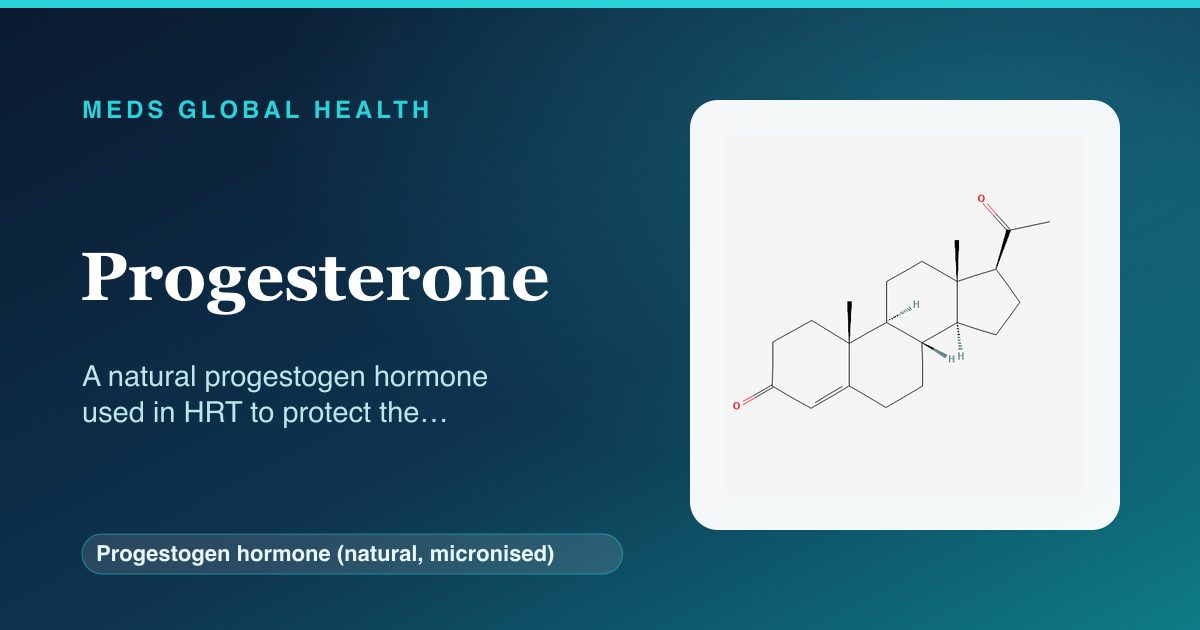
Progesterone is a natural female hormone that the body normally makes, particularly after ovulation and during pregnancy. The medicine is a body-identical (micronised) version of this hormone. Its most important everyday use is as the progestogen part of HRT: when a woman who still has her womb takes oestrogen, progesterone is added to protect the womb lining from being over-stimulated. It is also used in fertility treatment, such as IVF, and to help support early pregnancy. It is most often taken as a capsule by mouth or used vaginally, and is prescribed under medical guidance.
How it works
Oestrogen on its own can make the lining of the womb thicken, which over time raises the risk of changes in that lining. Progesterone balances this by keeping the womb lining in check, which is why it is added to oestrogen in HRT for women who still have a womb. In fertility and early-pregnancy use, it helps prepare and maintain the womb lining so that a pregnancy can establish and continue. Because it is the same hormone the body makes naturally, micronised progesterone tends to be well tolerated, though it commonly causes drowsiness, which is why it is often taken at night.
Company & origin
A body-identical form of the natural hormone progesterone, used in the UK in HRT to protect the womb lining and in fertility and early-pregnancy support.
What it treats
Conditions Progesterone is used for
Practical use
How to take Progesterone
General, dose-free guidance — always follow your prescriber's and the leaflet's specific instructions.
- Take micronised progesterone capsules as prescribed, often at bedtime, as they commonly cause drowsiness.
- Follow the pattern you are given, as it may be taken every day or only for part of each month in HRT.
- If you have been given it to use vaginally, follow the specific instructions for that route.
- Do not stop or change your HRT without advice, as the progesterone is there to protect your womb lining.
- Tell your prescriber about your full medical history, including any clotting problems, so the right plan is chosen.
Weighing it up
Advantages & disadvantages of Progesterone
Advantages
- A body-identical hormone that protects the womb lining when oestrogen is taken in HRT.
- Often well tolerated, and taking it at night can help with sleep because it tends to cause drowsiness.
- Also valuable in fertility treatment and in supporting early pregnancy.
Disadvantages
- Commonly causes drowsiness, so it is usually taken at bedtime rather than during the day.
- Can cause breast tenderness and changes in bleeding, especially in the first few months.
- Carries a small increased risk of blood clots, as with other hormone treatments.
Practical use
Good to know
A practical point is that micronised progesterone capsules often cause drowsiness, so they are usually taken at bedtime, where this effect can actually help with sleep. Breast tenderness and changes in your bleeding pattern, such as spotting, are common, especially in the first few months of HRT, and usually settle. As with all hormone treatments that include a progestogen, there is a small increased risk of blood clots, so it is used carefully in people with particular risk factors, and you should seek urgent help for symptoms such as a swollen, painful leg or sudden breathlessness. The way it is taken can vary: in HRT it may be taken every day or only for part of each month, and your prescriber will explain which pattern applies to you. Tell your prescriber about your full medical history so the right HRT plan can be chosen.
Who should not take it / use with caution
- People who have had a serious allergic reaction to progesterone or its ingredients should not take it.
- It is used with caution, or avoided, in people with a history of blood clots, certain hormone-sensitive cancers or unexplained vaginal bleeding.
- It is used with care in people with liver problems, and the overall HRT plan is tailored to your medical history.
Monitoring
- Reviewing how well your HRT is working and how you are tolerating it.
- Checking your bleeding pattern, with further assessment if bleeding is unexpected or persistent.
- Regular reviews of the benefits and risks of continuing HRT over time.
Side effects
- Drowsiness, which is why the capsules are often taken at night.
- Breast tenderness, bloating or headache, especially early on.
- Changes in bleeding, such as spotting, particularly in the first few months.
- Rarely, signs of a blood clot, such as a swollen painful leg or sudden breathlessness, which need urgent help.
Key interactions
- Some medicines and herbal remedies, such as St John's wort, can reduce how well hormone treatments work.
- Certain medicines for epilepsy or infections can affect hormone levels, so tell your prescriber what you take.
- Always give a full medicines list so your HRT can be kept safe and effective.
Available as: Capsules taken by mouth (often at night) and pessaries or gel used vaginally.
Answers
Progesterone: frequently asked questions
What is progesterone used for?
It is the natural progestogen hormone, used in HRT alongside oestrogen to protect the womb lining, and in fertility treatment and early-pregnancy support.
Why do I take the capsules at night?
Micronised progesterone commonly causes drowsiness, so it is usually taken at bedtime, where this effect can also help with sleep.
Why do I need it as well as oestrogen?
Oestrogen on its own can over-thicken the womb lining; progesterone keeps the lining in check, which protects it, so it is added if you still have a womb.
Will it change my bleeding?
Changes in bleeding, such as spotting, are common in the first few months; tell your prescriber if bleeding is heavy, unexpected or does not settle.
Does it increase the risk of blood clots?
As with other hormone treatments, there is a small increased risk of clots, so it is used carefully in some people and you should seek urgent help for clot symptoms.
Authoritative sources
- BNF
- NICE CKS
Building a medicines information resource?
We create evidence-led, dose-free drug and formulary references for teams.