An anti-worm medicine for threadworm and roundworm
Pyrantel
An anti-worm medicine used to treat threadworm, roundworm and some other gut worms, generally well tolerated.
What is Pyrantel?
Pyrantel is an anti-worm (anthelmintic) medicine used to treat common gut worms, including threadworm and roundworm. It works by paralysing the worms so they lose their grip on the bowel and are then passed out naturally in the stool. It is taken by mouth and is generally well tolerated, with only mild side effects such as tummy upset, nausea or headache in some people. For threadworm in particular, treating the whole household and good hygiene help stop the infection coming back.
Education and reference only. This is a plain-language guide to Pyrantel — it deliberately contains no doses. Doses depend on the person, the brand and the reason for treatment, and belong with your prescriber. Always check the BNF, the product labelling (SmPC) and follow medical advice.
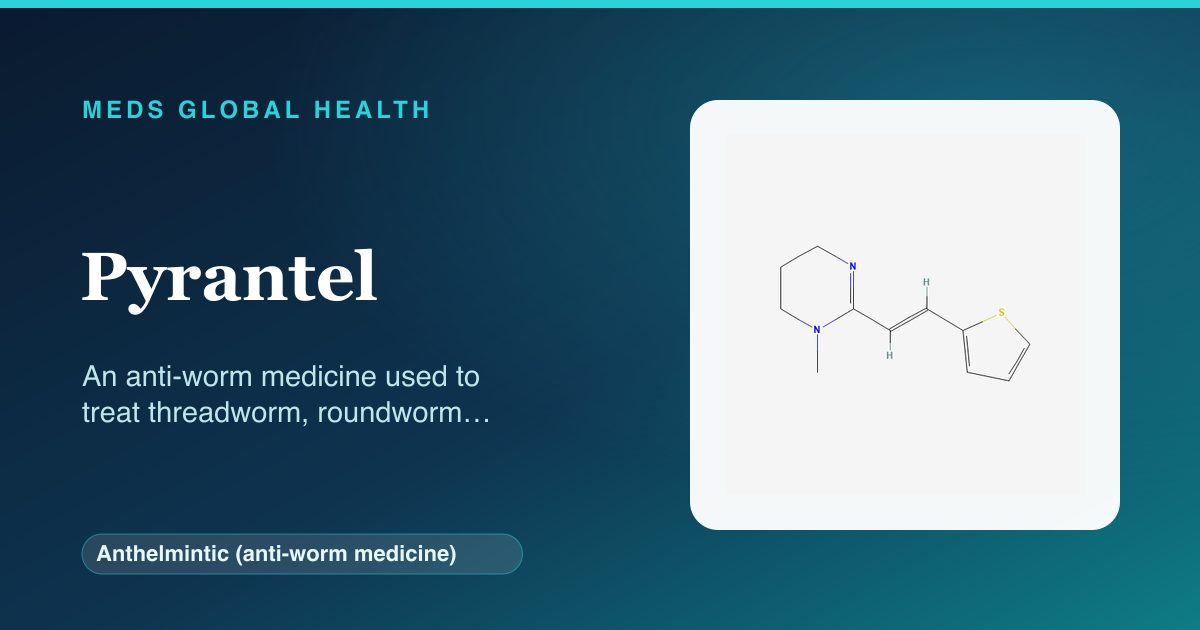
What it is
Pyrantel is a long-established anti-worm medicine, known as an anthelmintic, used to clear common worm infections of the gut. It is used for threadworm (which causes an itchy bottom, especially at night) and roundworm, and works against some other gut worms too. It is taken by mouth and acts directly on the worms in the bowel. It is generally a well-tolerated medicine, and for some worm infections it can be bought from a pharmacy, while for others it is prescribed. For threadworm, treating everyone in the household and following good hygiene measures alongside it gives the best results.
How it works
Pyrantel works by paralysing the worms living in the gut. It interferes with the way the worms' muscles work, so they can no longer cling to the wall of the bowel. Once they lose their grip, the worms are simply passed out of the body in the stool through the normal movement of the gut. Because it acts on the worms already present rather than their eggs, and because worm eggs can re-infect a person, a second dose after a couple of weeks and good hygiene are often advised, particularly for threadworm, to deal with any new worms that hatch.
Company & origin
A long-established anti-worm medicine used for common gut worms such as threadworm and roundworm.
Practical use
How to take Pyrantel
General, dose-free guidance — always follow your prescriber's and the leaflet's specific instructions.
- Take it by mouth as directed, with or without food, following the instructions for the type of worm being treated.
- For threadworm, treat everyone in the household at the same time, as the infection spreads easily.
- Wash hands and scrub nails regularly, and wash bedding and nightwear, to stop re-infection.
- Take a second dose after a couple of weeks if advised, to catch any worms that have hatched since.
- Tell your pharmacist or doctor about other medicines and any liver problems before taking it.
Weighing it up
Advantages & disadvantages of Pyrantel
Advantages
- An effective, well-established treatment for common gut worms such as threadworm and roundworm.
- Generally well tolerated, with only mild side effects in most people.
- Taken by mouth as a single dose for many infections, with a repeat dose if needed.
Disadvantages
- Clears the worms present but not their eggs, so re-infection can happen without good hygiene.
- Can cause mild side effects such as tummy upset, nausea or headache in some people.
- For threadworm, the whole household usually needs treating at the same time.
Practical use
Good to know
Pyrantel is generally a well-tolerated medicine, with only mild side effects such as tummy upset, nausea, headache or feeling a little dizzy in some people. The most useful practical point, especially for threadworm, is that the medicine clears the worms that are there now but does not kill the eggs, so re-infection is common; treating the whole household at the same time, washing hands and nails well, and washing bedding and nightwear all help stop the worms coming back. A second dose is often advised after a couple of weeks to catch any worms that have since hatched. It is taken by mouth and can usually be taken with or without food. Tell your pharmacist or doctor about other medicines and any liver problems before using it.
Who should not take it / use with caution
- People who have had a serious allergic reaction to pyrantel should not take it.
- It is used with care in people with liver problems, under advice.
- It is used with care, and on medical advice, in pregnancy and in very young children.
Monitoring
- Checking whether the symptoms, such as an itchy bottom with threadworm, settle after treatment.
- Considering a repeat dose and good hygiene to deal with re-infection.
- Seeking advice if symptoms persist or come back despite treatment.
Side effects
- Mild tummy upset, such as nausea, stomach cramps or diarrhoea.
- Headache, dizziness or feeling a little drowsy in some people.
- Loss of appetite or a temporary feeling of being unwell.
- Rarely, allergic-type reactions, which should be reported.
Key interactions
- It should not be used at the same time as piperazine, another anti-worm medicine, as they can work against each other.
- Tell your pharmacist or doctor about other medicines you take before using it.
- There are otherwise few well-established routine interactions for short-term use.
Available as: Tablets and an oral liquid taken by mouth.
Answers
Pyrantel: frequently asked questions
What is pyrantel used for?
It is an anti-worm medicine used to treat common gut worms such as threadworm and roundworm, and it works against some other gut worms too.
How does it get rid of the worms?
It paralyses the worms so they lose their grip on the bowel wall, and they are then passed out naturally in the stool.
Why might I need a second dose?
Pyrantel clears the worms that are present but not their eggs, so a second dose after a couple of weeks helps catch any worms that have since hatched.
Should the whole family be treated?
For threadworm, yes; treating everyone in the household at the same time, along with good hygiene, helps stop the infection spreading and coming back.
Does it cause many side effects?
It is generally well tolerated, with only mild effects such as tummy upset, nausea or headache in some people.
Authoritative sources
- BNF
- NICE CKS
Building a medicines information resource?
We create evidence-led, dose-free drug and formulary references for teams.