A medicine for toxoplasmosis and some malaria, used with folinic acid
Pyrimethamine
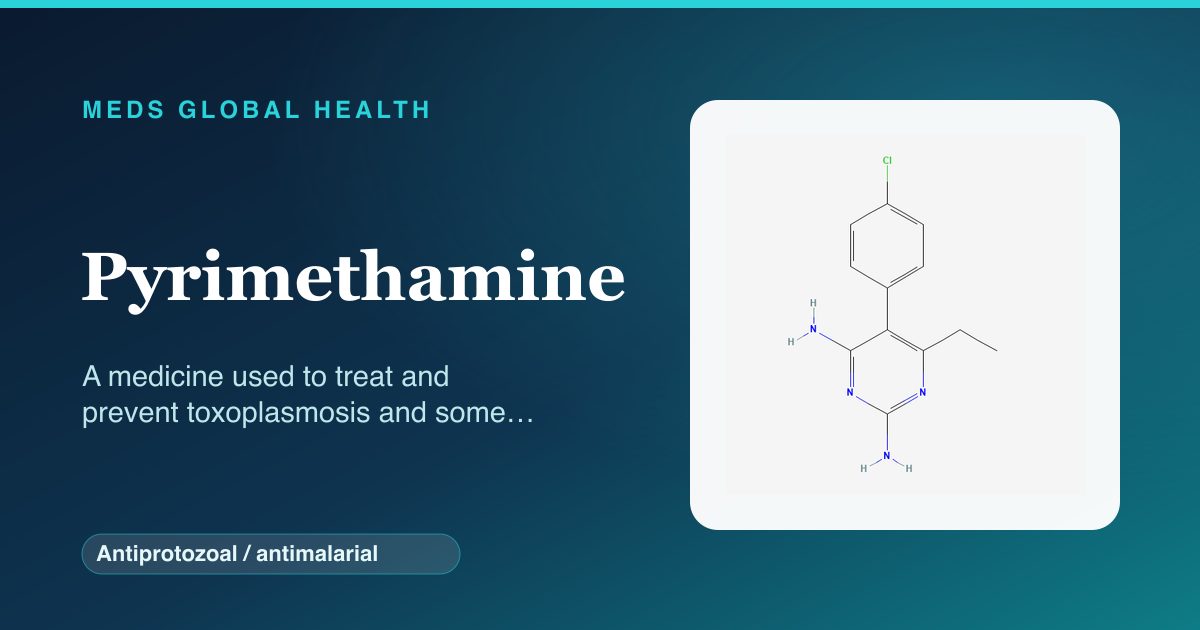
A medicine used to treat and prevent toxoplasmosis and some malaria, usually combined with sulfadiazine and folinic acid, which can lower blood cell counts.
What is Pyrimethamine?
Pyrimethamine is a specialist medicine used to treat and prevent toxoplasmosis (a parasitic infection) and some forms of malaria. It is usually given as part of a combination, most often with sulfadiazine, and almost always alongside folinic acid. The most important thing to know is that it can suppress the bone marrow and lower blood cell counts, which is exactly why folinic acid is given with it to protect the blood; blood counts are also monitored. It can also cause a skin rash. It is used under specialist supervision.
Education and reference only. This is a plain-language guide to Pyrimethamine — it deliberately contains no doses. Doses depend on the person, the brand and the reason for treatment, and belong with your prescriber. Always check the BNF, the product labelling (SmPC) and follow medical advice.
What it is
Pyrimethamine is a specialist anti-infective medicine used mainly to treat and to help prevent toxoplasmosis, an infection caused by a parasite, and to treat some forms of malaria. It is rarely used on its own: for toxoplasmosis it is usually combined with another medicine called sulfadiazine, and it is almost always given together with folinic acid. The folinic acid is important because pyrimethamine can lower the body's blood cell counts, and folinic acid helps protect against this. It is taken by mouth and used under specialist supervision, with regular blood tests.
How it works
Pyrimethamine works by blocking a step the parasite needs to use folate, a building block essential for making new cells, so the parasite cannot multiply and the infection can be controlled or cleared. The problem is that this same process is needed by the body's own fast-growing cells, especially those in the bone marrow that make blood cells, so pyrimethamine can lower blood cell counts. Folinic acid is given alongside because it supplies a form of folate the body can use but the parasite largely cannot, helping protect the bone marrow while still allowing the medicine to act against the infection.
Company & origin
A specialist medicine used in the UK to treat and prevent toxoplasmosis and some forms of malaria, usually combined with other medicines.
Practical use
How to take Pyrimethamine
General, dose-free guidance — always follow your prescriber's and the leaflet's specific instructions.
- Take it by mouth as prescribed, and take the folinic acid you are given alongside it, as this protects your blood counts.
- Take it as part of the combination you have been prescribed, such as with sulfadiazine for toxoplasmosis.
- Attend all your blood-count tests, as pyrimethamine can lower blood cell counts.
- Report straight away any sore throat, fever, unusual bruising or bleeding, extreme tiredness, or a serious or spreading rash.
- Tell your team about other medicines, especially any that can affect the blood or folate.
Weighing it up
Advantages & disadvantages of Pyrimethamine
Advantages
- An effective treatment and preventer for toxoplasmosis and some forms of malaria.
- Works well as part of a combination, especially with sulfadiazine, against toxoplasmosis.
- Can be protected against its main blood side effect by giving folinic acid alongside it.
Disadvantages
- Can suppress the bone marrow and lower blood cell counts, needing folinic acid and blood monitoring.
- Commonly causes a skin rash, which can occasionally be serious.
- Usually needs to be combined with other medicines, whose side effects also apply.
Practical use
Good to know
The single most important point with pyrimethamine is that it can suppress the bone marrow and lower the body's blood cell counts, which can leave a person more prone to infection, bleeding or tiredness. This is exactly why folinic acid is almost always given alongside it — to protect the blood — and why regular blood-count tests are part of treatment. It should not be confused with folic acid; the team gives folinic acid specifically. It is usually used as part of a combination, most often with sulfadiazine for toxoplasmosis, so the side effects of those other medicines matter too. A skin rash is also common, and any serious or spreading rash should be reported at once. Tell your team about other medicines, particularly other ones that can affect the blood or folate.
Who should not take it / use with caution
- People who have had a serious allergic reaction to pyrimethamine should not take it.
- It is used with great care in people who already have low blood counts or bone-marrow problems.
- It is used with care in people with kidney or liver problems, and folate deficiency, under specialist guidance.
- It is used with care, and under specialist judgement, in pregnancy, alongside folinic acid.
Monitoring
- Regular blood-count tests to check for bone-marrow suppression and low blood cells.
- Watching for a rash and for signs of infection, bruising or bleeding.
- Making sure folinic acid is being taken alongside to protect the blood.
Side effects
- Lowered blood cell counts, which can cause tiredness, infections, or unusual bruising or bleeding.
- A skin rash, which can occasionally be serious and spreading and needs urgent attention.
- Nausea, stomach upset or loss of appetite.
- Rarely, serious allergic or skin reactions, which need urgent medical attention.
Key interactions
- Other medicines that can lower blood counts or affect folate add to the risk, so tell your team about them.
- It is often given with sulfadiazine, and the two together have a stronger effect on folate, which folinic acid helps offset.
- Tell your team about all your medicines, as some may need review or closer monitoring.
Available as: Tablets taken by mouth.
Answers
Pyrimethamine: frequently asked questions
What is pyrimethamine used for?
It is used to treat and help prevent toxoplasmosis and some forms of malaria, usually as part of a combination with other medicines.
Why do I have to take folinic acid with it?
Pyrimethamine can lower your blood cell counts by affecting folate; folinic acid supplies a form of folate that protects your bone marrow while the medicine still works against the infection.
Is folinic acid the same as folic acid?
No. They are different; your team gives folinic acid specifically with pyrimethamine to protect the blood, so use what you are prescribed.
What serious effects should I watch for?
Tell your team straight away about a sore throat, fever, unusual bruising or bleeding, extreme tiredness, or a serious or spreading rash.
Why is it usually combined with another medicine?
For toxoplasmosis it is usually combined with sulfadiazine because the two work better together against the parasite, with folinic acid added to protect the blood.
Authoritative sources
- BNF
- NICE CKS
Building a medicines information resource?
We create evidence-led, dose-free drug and formulary references for teams.