An antimalarial also used for leg cramps
Quinine
A long-established medicine used to treat malaria and, in small doses, severe night-time leg cramps.
What is Quinine?
Quinine is one of the oldest medicines still in use, originally from the bark of the cinchona tree. It is used to treat malaria, including severe cases, and in much smaller doses it is sometimes used for troublesome night-time leg cramps when other measures have failed. It commonly causes a cluster of effects known as cinchonism, such as ringing in the ears, headache, nausea and blurred vision. It needs care because it can affect heart rhythm and is very dangerous in overdose, so it is used only when clearly needed and kept well away from children.
Education and reference only. This is a plain-language guide to Quinine — it deliberately contains no doses. Doses depend on the person, the brand and the reason for treatment, and belong with your prescriber. Always check the BNF, the product labelling (SmPC) and follow medical advice.
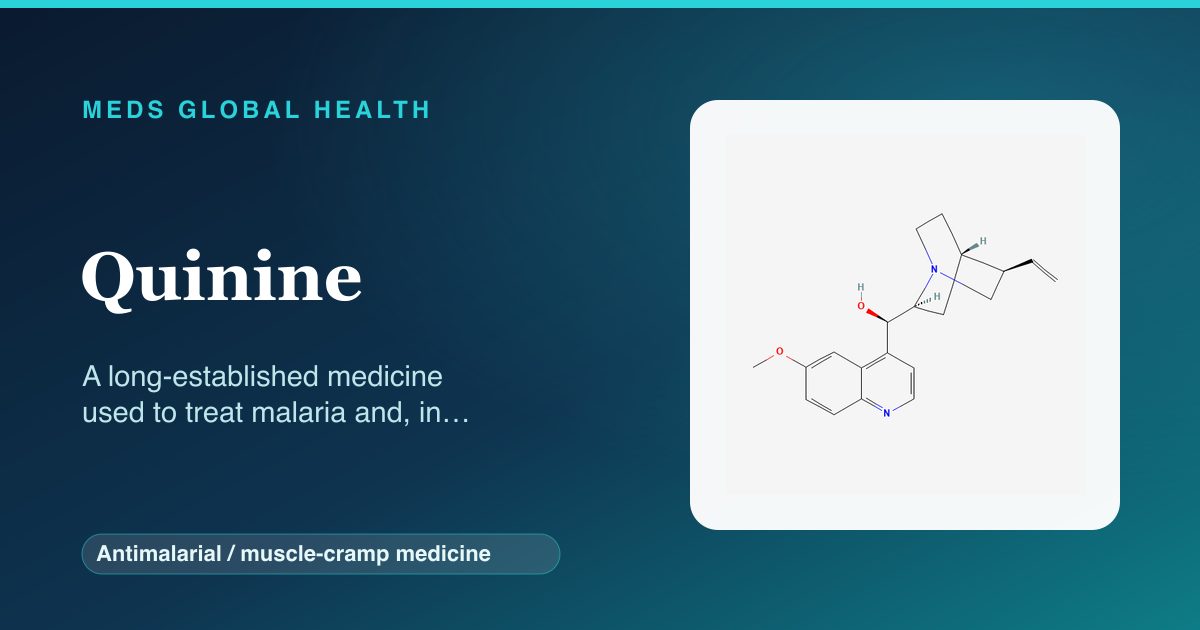
What it is
Quinine is a long-established medicine derived from the bark of the cinchona tree. Its main medical use is treating malaria, including severe malaria in hospital. Separately, and in much smaller doses, it is sometimes used to relieve severe, recurrent night-time leg cramps when simpler measures have not helped and the cramps are seriously disrupting sleep. It is taken by mouth as a tablet, or given in hospital for serious malaria. It is used carefully because of its effects on the heart and its danger in overdose.
How it works
For malaria, quinine kills the parasite while it lives inside red blood cells, helping clear the infection. For leg cramps, it is thought to act on the nerves and muscles to make them less likely to fire off the sudden, painful contractions, although exactly how it helps is not fully understood. Because it can affect the electrical timing of the heartbeat and stress various body systems, the smallest dose that works is used, and its use for cramps is reviewed regularly to make sure the benefit is worth it.
Company & origin
A very old medicine used in the UK to treat malaria and, in low doses, to ease severe night-time leg cramps.
Practical use
How to take Quinine
General, dose-free guidance — always follow your prescriber's and the leaflet's specific instructions.
- Take it exactly as prescribed; for leg cramps it is usually taken at night as a trial that will be reviewed.
- Do not increase the dose yourself, as quinine is dangerous in excess.
- Tell your prescriber if you notice ringing in the ears, headache, blurred vision, palpitations, rash or easy bruising.
- Keep it well out of the sight and reach of children, as overdose can be life-threatening.
- If it is being used for cramps, expect it to be reviewed after a few weeks and stopped if it is not clearly helping.
- Mention all your other medicines, as quinine can interact with several of them.
Weighing it up
Advantages & disadvantages of Quinine
Advantages
- An effective, long-established treatment for malaria, including severe cases.
- Can relieve severe, recurrent night-time leg cramps in some people when other measures fail.
- Widely available and well understood after very long use.
Disadvantages
- Commonly causes cinchonism, with ringing in the ears, headache, nausea and blurred vision.
- Can affect heart rhythm and is very dangerous in overdose.
- For cramps the benefit is modest, so it is used only as a reviewed trial when needed.
Practical use
Good to know
Quinine commonly causes cinchonism, a recognisable set of effects including ringing in the ears, headache, nausea, dizziness and blurred vision, which usually settle when the dose is reduced or stopped. More importantly, it can disturb heart rhythm (affecting the QT interval) and is extremely dangerous in overdose, where even a modest excess can be life-threatening, so it must be kept well out of reach of children and never shared. When used for leg cramps it is started as a trial and reviewed after a few weeks; if it is not clearly helping, it is stopped, because the risks are not worth taking without benefit. People can also be sensitive to quinine in tonic water. Tell your team about any rash, bruising, hearing changes or palpitations.
Who should not take it / use with caution
- People with certain heart-rhythm problems, or a prolonged QT interval, should not take it.
- Those who have had ringing in the ears, optic nerve damage or blood problems from quinine before.
- People with a known allergy or sensitivity to quinine, including from tonic water.
Monitoring
- Reviewing leg-cramp use after a few weeks and stopping it if it is not clearly helping.
- Watching for cinchonism, heart-rhythm changes, rash or unusual bruising.
- Checking heart tracing and blood sugar in hospital when treating severe malaria.
Side effects
- Cinchonism: ringing in the ears, headache, nausea, dizziness and blurred vision.
- Heart-rhythm changes, which can be serious, and low blood sugar in some situations.
- Rarely, serious allergic, skin or blood reactions such as a sudden drop in platelets, needing urgent help.
Key interactions
- Medicines that affect heart rhythm add to the risk and are used together only with care.
- It can raise levels of digoxin, so monitoring may be needed.
- Other antimalarials such as mefloquine can increase the risk of heart and neurological effects.
Available as: Tablets taken by mouth, and an injectable form used in hospital for severe malaria.
Answers
Quinine: frequently asked questions
What is quinine used for?
It is mainly used to treat malaria, including severe cases, and in much smaller doses it is sometimes used for severe night-time leg cramps when other measures have not helped.
What is cinchonism?
Cinchonism is the recognisable cluster of quinine effects, such as ringing in the ears, headache, nausea, dizziness and blurred vision, which usually settle when the dose is reduced or stopped.
Why is it only given as a trial for leg cramps?
The benefit for cramps is modest and there are real risks, so it is started as a trial and reviewed after a few weeks, then stopped if it is not clearly helping.
Is quinine dangerous in overdose?
Yes, very. Even a modest excess can be life-threatening and affect the heart and eyes, so it must be kept well out of reach of children and never shared.
Can tonic water cause problems?
Some people are sensitive to the small amount of quinine in tonic water; tell your prescriber if it has ever upset you, as you may also react to the medicine.
Authoritative sources
- BNF
- NICE CKS
Building a medicines information resource?
We create evidence-led, dose-free drug and formulary references for teams.