An NRI antidepressant
Reboxetine
An antidepressant that works on noradrenaline, used to treat depression.
What is Reboxetine?
Reboxetine is an antidepressant used to treat depression. It belongs to a small group of medicines called noradrenaline reuptake inhibitors (NRIs), meaning it works mainly on the brain chemical noradrenaline rather than serotonin. It is usually a later choice when other antidepressants have not suited a person. Common effects include dry mouth, difficulty sleeping, sweating and constipation, and like all antidepressants it should not be stopped suddenly.
Education and reference only. This is a plain-language guide to Reboxetine — it deliberately contains no doses. Doses depend on the person, the brand and the reason for treatment, and belong with your prescriber. Always check the BNF, the product labelling (SmPC) and follow medical advice.
What it is
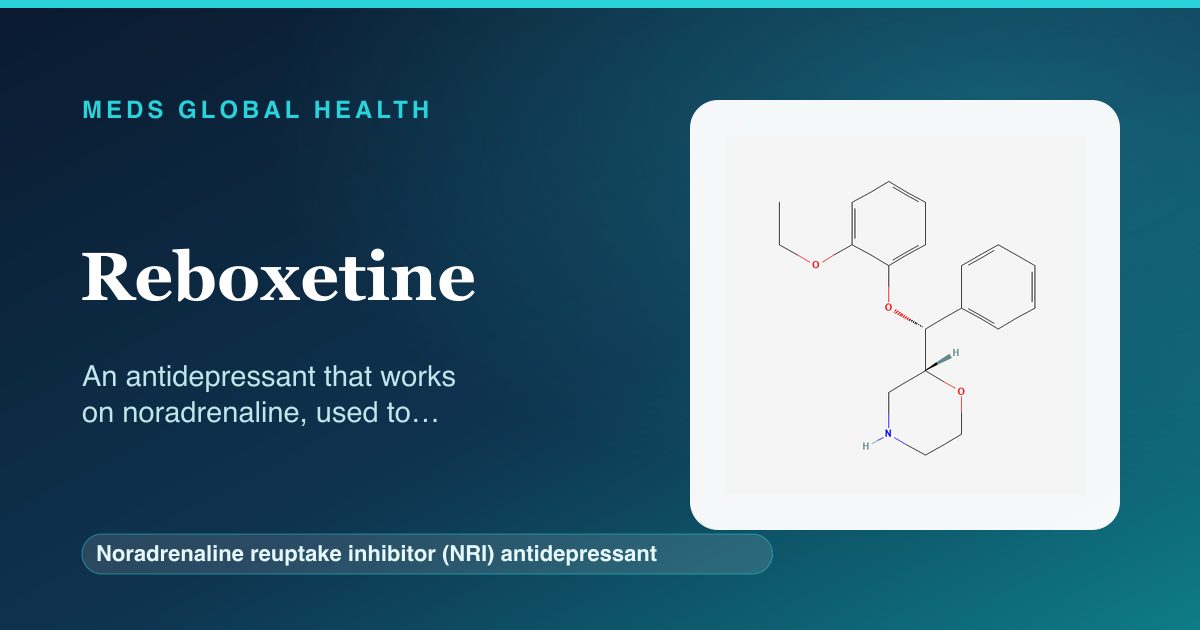
Reboxetine is an antidepressant taken for depression. Unlike the more common SSRI antidepressants, which act mainly on serotonin, reboxetine works chiefly on noradrenaline, another of the brain's messenger chemicals. It is not usually a first choice but can be an option when other antidepressants have not worked or have caused problems. It is taken by mouth, usually every day, and takes a few weeks to show its full effect.
How it works
Reboxetine increases the amount of noradrenaline active in the brain by blocking its reabsorption back into nerve cells. Boosting this messenger chemical is thought to help lift mood and improve energy and concentration in depression. Because it focuses on noradrenaline rather than serotonin, its pattern of side effects differs from SSRIs, tending to cause dry mouth, sweating and difficulty sleeping.
Company & origin
Originated / developed by: Generic (originally Pharmacia).
An antidepressant used in the UK for depression, working mainly on the brain chemical noradrenaline.
What it treats
Conditions Reboxetine is used for
Practical use
How to take Reboxetine
General, dose-free guidance — always follow your prescriber's and the leaflet's specific instructions.
- Take it every day as prescribed, usually at the same times, to keep a steady level.
- Keep taking it even if you do not feel better at first, as it can take a few weeks to work.
- If it disturbs your sleep, ask your prescriber about the timing of your doses.
- Do not stop it suddenly; coming off it is done gradually to avoid withdrawal effects.
- Tell your prescriber promptly about new or worsening low mood, agitation or thoughts of self-harm.
- Mention difficulty passing urine, a fast heartbeat or other troublesome effects at your review.
Weighing it up
Advantages & disadvantages of Reboxetine
Advantages
- Works on noradrenaline, offering an alternative when serotonin-based antidepressants have not suited.
- Can help energy and concentration as well as mood in depression.
- Taken by mouth and has a recognised place when other antidepressants are unsuitable.
Disadvantages
- Commonly causes dry mouth, difficulty sleeping, sweating and constipation.
- Can cause a faster heartbeat and difficulty passing urine in some people.
- Should not be stopped suddenly and may be less widely used than other antidepressants.
Practical use
Good to know
Antidepressants usually take a few weeks to work, so it is important to keep taking reboxetine even if you do not feel better at first. Common effects include dry mouth, trouble sleeping, sweating, constipation and a faster heartbeat. It should not be stopped suddenly, as this can cause withdrawal effects; coming off it is done gradually. As with all antidepressants, especially in younger adults, watch for new or worsening low mood, agitation or thoughts of self-harm in the early weeks and report them straight away. Tell your prescriber if you have heart, prostate or bladder problems, as these may need extra care.
Who should not take it / use with caution
- People who have had a serious allergic reaction to reboxetine should not take it.
- It is used with caution in people with heart problems, or prostate or bladder difficulties.
- It should not be combined with certain other antidepressants (such as MAOIs) without specialist advice.
Monitoring
- Reviewing mood, response and any thoughts of self-harm, especially in the first weeks.
- Checking for troublesome effects such as a fast heartbeat or difficulty passing urine.
- Planning a gradual reduction when the time comes to stop.
Side effects
- Dry mouth, difficulty sleeping, sweating and constipation are common.
- A faster heartbeat, dizziness or difficulty passing urine in some people.
- Rarely, agitation, mood changes or thoughts of self-harm, especially early in treatment.
Key interactions
- Should not be taken with MAOI antidepressants, and care is needed when switching between antidepressants.
- Medicines that affect the heart rhythm or other antidepressants may add to its effects.
- Some medicines change reboxetine levels, so tell your prescriber about everything you take.
Available as: Tablets taken by mouth.
Answers
Reboxetine: frequently asked questions
How is reboxetine different from other antidepressants?
It works mainly on noradrenaline rather than serotonin, so it is an option when serotonin-based antidepressants have not suited, and its side effects differ a little.
How long until it works?
Like most antidepressants it can take a few weeks to show its full benefit, so it is important to keep taking it even if you feel no change at first.
Why does it dry my mouth and stop me sleeping?
Dry mouth, difficulty sleeping and sweating are common with reboxetine; tell your prescriber if they are troublesome, as adjusting the timing may help.
Can I stop it suddenly?
No. Stopping suddenly can cause withdrawal effects, so it should be reduced gradually under your prescriber's guidance.
Does it affect the heart?
It can cause a faster heartbeat, so it is used with caution in people with heart problems; mention any palpitations or chest symptoms to your prescriber.
Authoritative sources
- BNF
- NICE CKS
Building a medicines information resource?
We create evidence-led, dose-free drug and formulary references for teams.