A multikinase inhibitor for bowel, liver and GIST cancers
Regorafenib
A targeted cancer tablet used for some advanced bowel, liver and stomach (GIST) cancers.
What is Regorafenib?
Regorafenib is a specialist cancer medicine used to treat certain advanced bowel cancers, liver cancer and a type of stomach tumour called a GIST, usually after other treatments have been tried. It is a multikinase inhibitor, a targeted treatment that blocks several signals cancers use to grow and build a blood supply. It is taken by mouth with a low-fat meal. Its most serious concern is liver harm, which can rarely be life-threatening, so liver blood tests are essential. It also commonly causes a painful hand-foot skin reaction, raises blood pressure, and increases the risk of bleeding and, rarely, a tear in the gut.
Education and reference only. This is a plain-language guide to Regorafenib — it deliberately contains no doses. Doses depend on the person, the brand and the reason for treatment, and belong with your prescriber. Always check the BNF, the product labelling (SmPC) and follow medical advice.
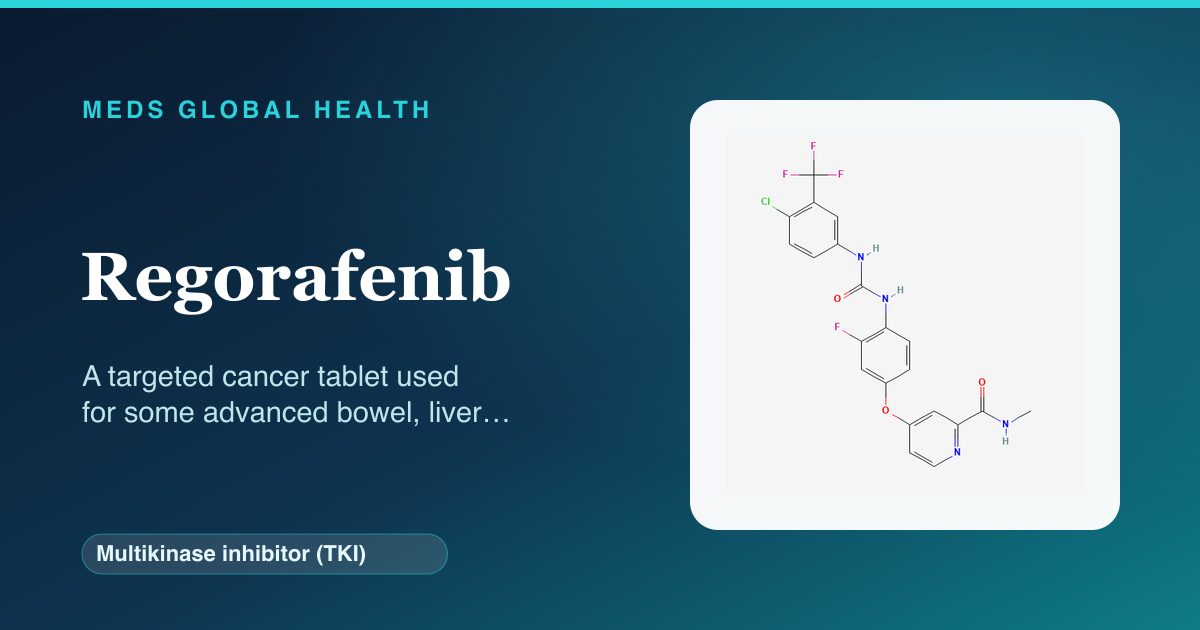
What it is
Regorafenib is a targeted cancer medicine used for some advanced cancers, including bowel cancer, liver cancer and a type of stomach tumour called a gastrointestinal stromal tumour (GIST), generally once other treatments have stopped working. It is one of a group called tyrosine kinase inhibitors, sometimes called multikinase inhibitors, which block several growth and blood-supply signals at once. It is taken by mouth as a tablet, usually in cycles with a break each month, with a low-fat meal, and is prescribed and closely monitored by a cancer specialist team.
How it works
Cancers grow using internal signals and rely on building new blood vessels to feed themselves. Regorafenib blocks several of the enzymes (kinases) that carry these signals, including those involved in forming a tumour's blood supply, which slows the cancer's growth. Because these signals are also used in healthy tissue, blocking them can raise blood pressure, cause a painful reaction on the hands and feet, affect the liver and wound healing, and increase bleeding. It passes through the liver, where it can sometimes cause significant harm, so liver function is checked closely, especially in the first weeks.
Company & origin
A specialist cancer medicine used in the UK for certain advanced bowel and liver cancers and a type of stomach tumour, usually after other treatments.
Practical use
How to take Regorafenib
General, dose-free guidance — always follow your prescriber's and the leaflet's specific instructions.
- Take it by mouth once a day with a low-fat meal, in the cycles your team sets, usually with a break each month.
- Swallow the tablets whole with water at about the same time each day.
- Keep all your liver blood test and blood pressure appointments, especially in the first weeks.
- Report yellowing of the skin or eyes, dark urine, severe tummy pain or painful hands and feet promptly.
- Tell your team before any planned surgery, and use reliable contraception during treatment.
Weighing it up
Advantages & disadvantages of Regorafenib
Advantages
- Can slow the growth of certain advanced bowel, liver and stomach (GIST) cancers when other options are limited.
- Taken by mouth at home rather than as an infusion.
- A targeted treatment that blocks several of the cancer's growth and blood-supply signals.
Disadvantages
- Can cause serious liver harm, which is rarely life-threatening, so frequent liver tests are essential.
- Commonly causes a painful hand-foot skin reaction and raises blood pressure.
- Increases the risk of bleeding and, rarely, a tear in the gut, and can harm a developing baby.
Practical use
Good to know
The most important point with regorafenib is the risk of serious liver harm, which is most likely in the first couple of months and can rarely be life-threatening; you will have frequent liver blood tests early on, and any yellowing of the skin or eyes, dark urine or unusual tiredness should be reported urgently. A very common and troublesome effect is a hand-foot skin reaction, with painful, red, peeling or blistered palms and soles; moisturising, soft footwear and reporting it early help your team manage it. It commonly raises blood pressure, which is monitored, and it increases the risk of bleeding and, rarely, a tear in the gut, so severe tummy pain should be reported urgently. It is taken with a low-fat meal and usually in cycles with a break. It can harm a developing baby, so reliable contraception is needed.
Who should not take it / use with caution
- People who have had a serious allergic reaction to regorafenib should not take it.
- It is used with great caution, or avoided, in people with significant liver problems.
- It is not used in pregnancy because it can harm a developing baby, and breastfeeding is avoided during treatment.
- It is used with caution in people with uncontrolled high blood pressure, a high bleeding risk or recent surgery.
Monitoring
- Frequent liver blood tests, especially in the first weeks, as serious liver harm can occur.
- Regular blood pressure checks and reviews of the hands and feet for skin reactions.
- Watching for bleeding and severe tummy pain, and reviewing how well the cancer is responding.
Side effects
- A painful hand-foot skin reaction, with red, peeling or blistered palms and soles.
- Changes in liver blood tests, raised blood pressure, tiredness, diarrhoea and mouth soreness.
- Bleeding problems and reduced appetite or weight loss.
- Rarely but seriously, severe liver damage, a tear in the gut, or serious bleeding, which need urgent medical attention.
Key interactions
- Some medicines and grapefruit can raise regorafenib levels, increasing side effects, so tell your team everything you take.
- Other medicines can lower its levels and make it less effective, so these are reviewed by your team.
- Medicines that increase bleeding risk, such as anticoagulants, need careful review.
Available as: Tablets taken by mouth.
Answers
Regorafenib: frequently asked questions
What is regorafenib used for?
It is used for certain advanced bowel and liver cancers and a type of stomach tumour called a GIST, usually after other treatments, by blocking the cancer's growth and blood-supply signals.
Why are early liver tests so important?
Regorafenib can cause serious liver harm, most likely in the first couple of months, so frequent liver tests early on catch problems quickly.
What is the hand-foot reaction?
It is a common, painful reaction with red, peeling or blistered palms and soles; moisturising, soft footwear and reporting it early help your team manage it.
Why take it with a low-fat meal?
Taking it with a low-fat meal helps it be absorbed steadily and as intended, so it is taken this way rather than on an empty stomach or with a fatty meal.
Is it safe in pregnancy?
No. Regorafenib can harm a developing baby, so reliable contraception is needed during treatment.
Authoritative sources
- BNF
- NICE CKS
Building a medicines information resource?
We create evidence-led, dose-free drug and formulary references for teams.