An old rauwolfia medicine for high blood pressure
Reserpine
An old, now largely obsolete medicine once used to lower high blood pressure.
What is Reserpine?
Reserpine is an old medicine, derived from the rauwolfia plant, that was once widely used to lower high blood pressure. It works by depleting the body's stores of chemical messengers called catecholamines (such as noradrenaline), which lowers blood pressure but also explains its side effects. The most important of these is depression, which can be severe, along with a stuffy nose, a slow heart rate and drowsiness. Because of these effects and the availability of safer modern blood-pressure medicines, reserpine is now obsolete and rarely used.
Education and reference only. This is a plain-language guide to Reserpine — it deliberately contains no doses. Doses depend on the person, the brand and the reason for treatment, and belong with your prescriber. Always check the BNF, the product labelling (SmPC) and follow medical advice.
What it is
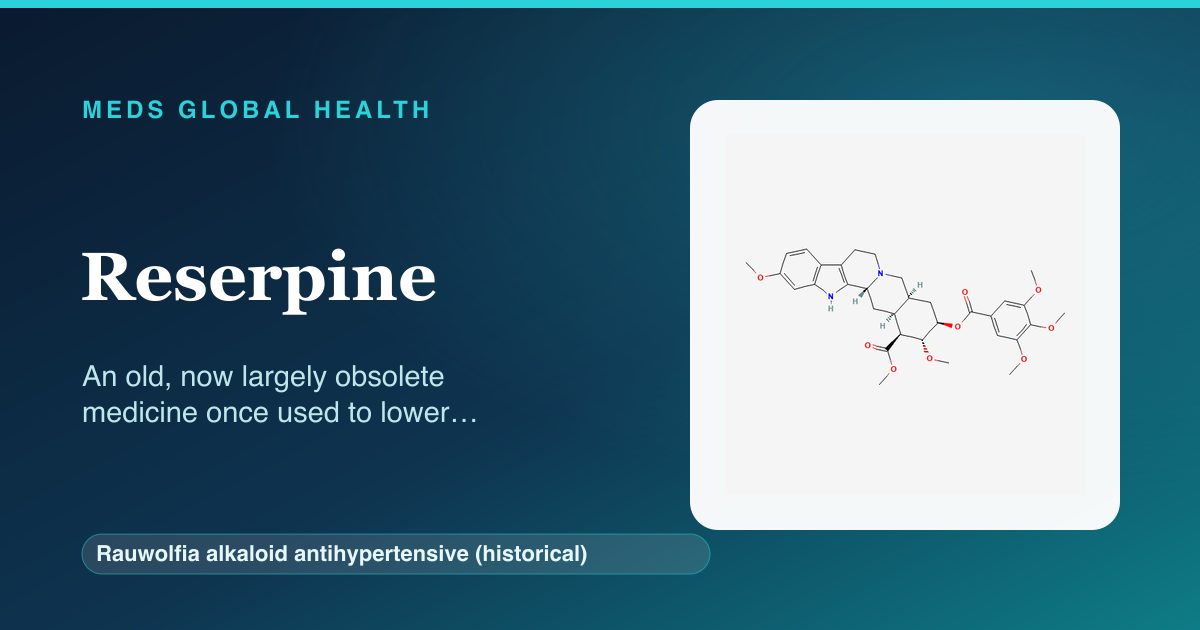
Reserpine is one of the oldest medicines used to treat high blood pressure. It is a rauwolfia alkaloid, meaning it comes from the rauwolfia (snakeroot) plant, which has a long history of traditional use. It was once a mainstay of blood-pressure treatment and was also sometimes used in psychiatry. It is taken by mouth. Today it is regarded as largely obsolete in the UK, because it commonly causes troublesome side effects, particularly low mood, and because modern blood-pressure medicines are both safer and easier to use.
How it works
Reserpine works by emptying nerve cells of their stores of chemical messengers called catecholamines, especially noradrenaline, which normally help keep blood vessels tightened and the heart pumping more forcefully. With less of these messengers available, blood vessels relax and the heart slows a little, so blood pressure falls. The catch is that these same messengers are involved in mood, alertness and many other body functions, so depleting them throughout the body also explains why reserpine can cause depression, drowsiness, a slow heart rate and a blocked nose. This wide-reaching effect is the main reason it has fallen out of use.
Company & origin
An old blood-pressure medicine derived from the rauwolfia plant, now obsolete because of side effects, especially depression, and the arrival of safer treatments.
What it treats
Conditions Reserpine is used for
Practical use
How to take Reserpine
General, dose-free guidance — always follow your prescriber's and the leaflet's specific instructions.
- It is now largely obsolete; modern blood-pressure medicines are used instead.
- If ever used, it is taken by mouth as directed, usually at a low dose.
- Do not stop blood-pressure treatment suddenly without advice.
- Report any low mood, loss of interest or thoughts of self-harm promptly, as it can cause depression.
- Tell your prescriber about any history of depression, stomach ulcers or a slow heart rate before use.
Weighing it up
Advantages & disadvantages of Reserpine
Advantages
- Historically lowered high blood pressure and was once widely available and inexpensive.
- Of value mainly for understanding the history of blood-pressure treatment.
- Largely replaced by modern medicines that are safer and better tolerated.
Disadvantages
- Can cause depression, which may be severe.
- Commonly causes a stuffy nose, a slow heart rate and drowsiness.
- Works slowly, with effects that linger after stopping; now obsolete.
Practical use
Good to know
The most important thing to know about reserpine is that it can cause depression, which can be serious and even severe, especially at higher doses. Anyone taking it who develops low mood, loss of interest, sleep problems or thoughts of self-harm should seek help promptly, and it should not be used by people with a history of depression. Other common effects include a stuffy or blocked nose, a slow heart rate and drowsiness or sedation. Because it lowers blood pressure broadly, it can cause dizziness, particularly on standing. It works slowly and its effects can linger after stopping. For all these reasons, and because much safer blood-pressure medicines now exist, reserpine is considered obsolete and is rarely chosen today.
Who should not take it / use with caution
- People with a history of depression should not take it, because it can cause or worsen low mood.
- People with active stomach ulcers should avoid it, as it can stimulate stomach acid.
- People with a very slow heart rate or certain heart problems should avoid it.
- People who have had a serious allergic reaction to it should not take it.
Monitoring
- Watching closely for low mood or depression.
- Checking blood pressure and heart rate.
- Reviewing for other side effects such as nasal congestion and drowsiness.
Side effects
- Depression, which can be severe, sometimes with thoughts of self-harm.
- A stuffy or blocked nose.
- A slow heart rate and drowsiness or sedation.
- Dizziness on standing, and stomach upset.
Key interactions
- It adds to the blood-pressure-lowering and sedating effects of other such medicines and alcohol.
- It can interact dangerously with certain antidepressants known as MAOIs.
- Care is needed with medicines that slow the heart, as the effects can combine.
Available as: Tablets taken by mouth (historical).
Answers
Reserpine: frequently asked questions
What was reserpine used for?
It was an old medicine used to lower high blood pressure, and was sometimes used in psychiatry, before safer modern treatments became available.
Why is it linked to depression?
It depletes chemical messengers involved in mood as well as blood pressure, which is why it can cause depression, sometimes severe; report any low mood promptly.
Is it still used today?
It is now largely obsolete in the UK, because it commonly causes troublesome side effects and modern blood-pressure medicines are safer and easier to use.
Where does it come from?
It is a rauwolfia alkaloid, derived from the rauwolfia (snakeroot) plant, which has a long history of traditional use.
What other side effects can it cause?
As well as depression, it commonly causes a stuffy nose, a slow heart rate and drowsiness, and can cause dizziness on standing.
Authoritative sources
- BNF
- NICE CKS
Building a medicines information resource?
We create evidence-led, dose-free drug and formulary references for teams.