Vitamin B2
Riboflavin
A B vitamin used to treat deficiency and sometimes to help prevent migraine; it harmlessly turns urine bright yellow.
What is Riboflavin?
Riboflavin is vitamin B2, a water-soluble B vitamin the body uses to release energy from food and to keep skin, eyes and the nervous system healthy. Supplements are used to treat riboflavin deficiency, and it is also sometimes taken to help prevent migraine attacks. It is very safe, with any excess passed out in the urine, which it harmlessly turns a bright yellow colour. Most people get enough from a balanced diet that includes milk, eggs and fortified cereals, so supplements are mainly for deficiency or specific reasons such as migraine prevention.
Education and reference only. This is a plain-language guide to Riboflavin — it deliberately contains no doses. Doses depend on the person, the brand and the reason for treatment, and belong with your prescriber. Always check the BNF, the product labelling (SmPC) and follow medical advice.
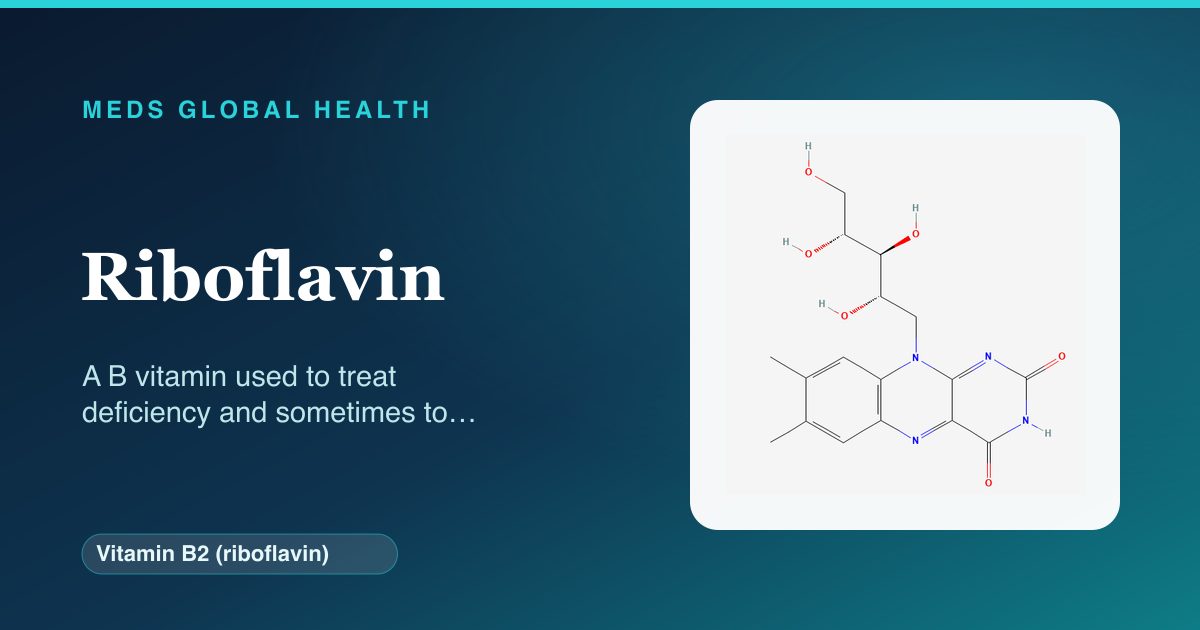
What it is
Riboflavin, or vitamin B2, is a water-soluble B vitamin found in foods such as milk, eggs, lean meat, green vegetables and fortified cereals. The body uses it to release energy from food and to keep the skin, eyes, nervous system and red blood cells healthy. Because it is water-soluble, the body does not store much of it, so a regular dietary supply is needed. As a supplement it is taken to treat or prevent deficiency, and it is also used by some people as a way of helping to reduce migraine attacks.
How it works
Riboflavin is converted in the body into helper molecules that many enzymes use to release energy from fats, carbohydrates and proteins. This supports the normal working of cells, including those of the skin, eyes and nervous system. Correcting a deficiency restores these processes and settles symptoms such as sore lips, mouth and eyes. For migraine, the idea is that supporting energy production in brain cells may make attacks less frequent for some people, which is why it is sometimes tried as a preventive measure.
Company & origin
Riboflavin was identified in the 1930s as a yellow-green fluorescent factor in milk and other foods, which gives it its characteristic colour.
Practical use
How to take Riboflavin
General, dose-free guidance — always follow your prescriber's and the leaflet's specific instructions.
- Take it as advised, usually once a day, with or without food.
- Do not be alarmed if your urine turns bright yellow; this is a harmless effect of riboflavin.
- If you take it to help prevent migraine, allow several weeks of regular use to see whether it helps.
- It is for preventing attacks over time, not for stopping a migraine that has already begun.
- Most people get enough from a balanced diet, so supplements are mainly for deficiency or specific reasons.
Weighing it up
Advantages & disadvantages of Riboflavin
Advantages
- Effectively treats riboflavin deficiency and supports healthy skin, eyes and nervous system.
- Very safe and well tolerated, with any excess passed out in the urine.
- Sometimes helps reduce how often migraine attacks happen.
Disadvantages
- Harmlessly turns the urine bright yellow, which can be surprising.
- When used for migraine, it works gradually and does not help everyone.
- Rarely needed by people who eat a balanced diet.
Practical use
Good to know
Riboflavin is very safe, and one harmless and well-known effect is that it turns the urine a bright yellow or greenish-yellow colour, which is nothing to worry about. Most people get enough from a balanced diet that includes milk, eggs and fortified foods, so supplements are mainly needed for deficiency, which can cause sore or cracked lips, a sore mouth and tired or sensitive eyes. Beyond treating deficiency, riboflavin is sometimes taken to help prevent migraine, and some people find this helpful, though it works gradually over weeks rather than stopping an attack that has already started. As with other vitamins, taking very large amounts is not automatically better.
Who should not take it / use with caution
- There are few reasons to avoid it, but it is best used for deficiency or a specific purpose rather than routinely in large amounts.
- People with a known sensitivity to a particular product should check its ingredients.
- Use for migraine prevention is best discussed with a healthcare professional.
Monitoring
- Reviewing whether a supplement is genuinely needed or whether diet provides enough.
- Checking that deficiency symptoms such as sore lips and eyes improve when treated.
- Assessing over several weeks whether it reduces migraine frequency when used for that.
Side effects
- Bright yellow urine, which is harmless and expected.
- Usually no other effects; occasionally mild stomach upset.
- Rarely, large amounts can cause loose stools.
Key interactions
- No major routine interactions with other medicines are well established.
- Some medicines and conditions can increase the body's need for riboflavin.
- Tell your prescriber what supplements you take so they have the full picture.
Available as: Tablets taken by mouth.
Answers
Riboflavin: frequently asked questions
What is riboflavin used for?
It is used to treat vitamin B2 deficiency and is sometimes taken to help prevent migraine attacks; it supports energy release from food and healthy skin and eyes.
Why has my urine turned bright yellow?
Riboflavin harmlessly turns the urine a bright yellow or greenish colour, and this is nothing to worry about.
Can it help my migraines?
Some people find riboflavin helps reduce how often migraines happen, but it works gradually over weeks and does not help everyone, so discuss it with your healthcare team.
Do I need a riboflavin supplement?
Most people get enough from a balanced diet of milk, eggs and fortified foods, so supplements are mainly for deficiency or specific reasons.
Is it safe to take every day?
Yes, it is very safe, with any excess simply passed out in the urine; as with other vitamins, very large amounts are not automatically better.
Authoritative sources
- BNF
- NICE CKS
Building a medicines information resource?
We create evidence-led, dose-free drug and formulary references for teams.