A PDE4 inhibitor tablet for COPD
Roflumilast
A daily tablet used to reduce flare-ups in severe COPD with chronic bronchitis, taken alongside inhaled treatments.
What is Roflumilast?
Roflumilast is a tablet taken once a day to reduce flare-ups (exacerbations) in people with severe chronic obstructive pulmonary disease (COPD) who have chronic bronchitis and a history of frequent flare-ups. It works by calming inflammation in the airways and is used alongside, not instead of, inhaled treatments. Early on it commonly causes weight loss, nausea, diarrhoea and changes in mood, including low mood or depression, so any new or worsening low mood should be reported promptly. These effects often ease after the first weeks.
Education and reference only. This is a plain-language guide to Roflumilast — it deliberately contains no doses. Doses depend on the person, the brand and the reason for treatment, and belong with your prescriber. Always check the BNF, the product labelling (SmPC) and follow medical advice.
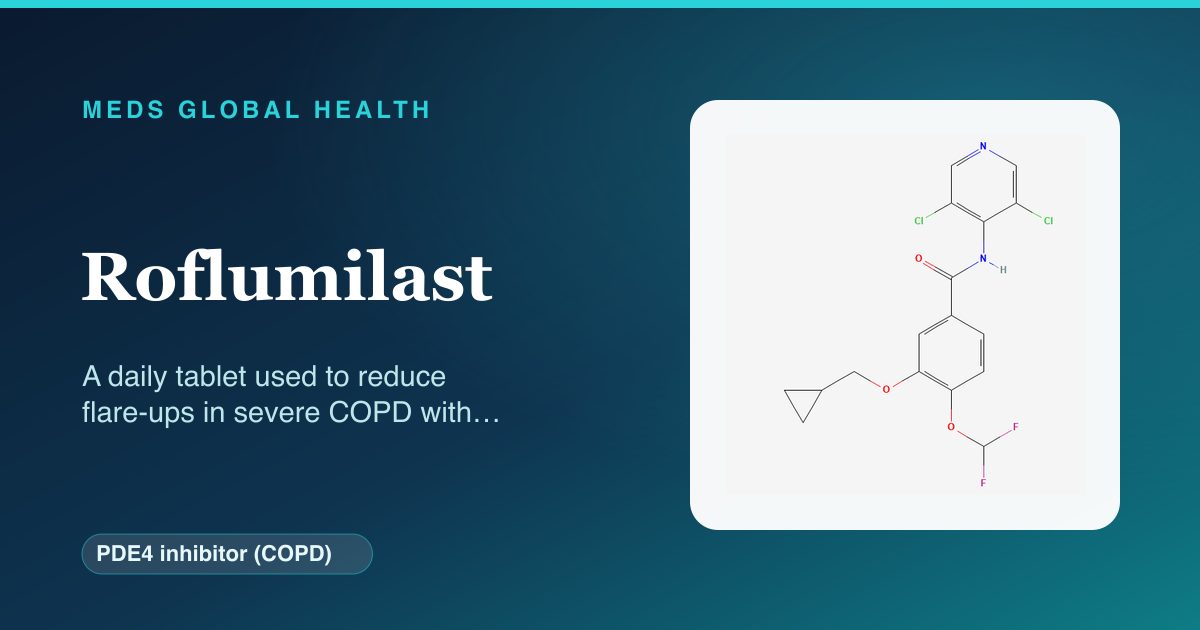
What it is
Roflumilast is an oral medicine in a group called PDE4 inhibitors, used as an add-on treatment in severe COPD with chronic bronchitis and frequent flare-ups. COPD is a long-term lung condition that narrows the airways and causes breathlessness and cough, and chronic bronchitis means a persistent productive cough. Roflumilast is taken as a tablet by mouth once a day, alongside inhalers, to help reduce how often flare-ups happen rather than to relieve breathlessness on the spot.
How it works
Roflumilast blocks an enzyme called PDE4 inside the cells involved in airway inflammation. By blocking it, the medicine dampens the ongoing inflammation that contributes to the damage and flare-ups in COPD with chronic bronchitis. Over time this can reduce how often serious flare-ups occur in people who keep having them despite inhaled treatments. It does not open the airways quickly like a reliever inhaler, so it is taken regularly for its longer-term effect, not for sudden breathlessness.
Company & origin
Originated / developed by: AstraZeneca.
An oral PDE4-inhibitor tablet used in the UK to reduce flare-ups in severe COPD with chronic bronchitis, alongside inhaled treatments.
What it treats
Conditions Roflumilast is used for
Practical use
How to take Roflumilast
General, dose-free guidance — always follow your prescriber's and the leaflet's specific instructions.
- Take one tablet by mouth once a day, at about the same time each day, with or without food.
- Keep using your inhalers as prescribed; roflumilast is added on to them, not a replacement.
- Expect possible nausea, diarrhoea, reduced appetite and weight loss in the first weeks, which often ease with time.
- Tell your team promptly about new or worsening low mood, anxiety, sleep problems or any thoughts of harming yourself.
- Take it regularly for its long-term effect on flare-ups; it does not relieve sudden breathlessness like a reliever inhaler.
Weighing it up
Advantages & disadvantages of Roflumilast
Advantages
- Can reduce how often serious flare-ups happen in severe COPD with chronic bronchitis.
- Taken as a simple once-daily tablet alongside your usual inhalers.
- Targets airway inflammation in a different way from inhaled treatments, adding to their effect.
Disadvantages
- Commonly causes weight loss, reduced appetite, nausea and diarrhoea, especially early on.
- Can affect mood, causing anxiety, sleep problems or depression, so mood must be watched.
- Does not relieve breathlessness quickly and is only for certain people with severe disease.
Practical use
Good to know
Roflumilast is an add-on for people whose severe COPD with chronic bronchitis keeps flaring up despite inhalers; it is not a replacement for them. The side effects to expect, especially in the first weeks, are weight loss, reduced appetite, nausea and diarrhoea, which often settle as your body adjusts; it helps to keep an eye on your weight and tell your team if you lose a lot. The most important caution is its effect on mood: it can cause mood changes, anxiety, sleep problems and depression, and there have been reports of suicidal thoughts, so you, and those close to you, should watch for new or worsening low mood and report it promptly. It is used cautiously, or avoided, in people who are underweight or who have had depression or significant liver problems. Take it regularly for its long-term benefit rather than expecting an immediate change in your breathing.
Who should not take it / use with caution
- People with moderate or severe liver problems should not take it.
- It is used very cautiously, or avoided, in those who are underweight or who have had depression or suicidal thoughts.
- It is avoided in pregnancy and breastfeeding and in people with certain serious immune or heart conditions unless a specialist advises.
Monitoring
- Checking your weight regularly, as weight loss can occur, especially early in treatment.
- Watching for changes in mood, sleep or behaviour, and acting quickly on any low mood or thoughts of self-harm.
- Reviewing whether your flare-ups are reducing and whether the medicine is being tolerated.
Side effects
- Weight loss, reduced appetite, nausea and diarrhoea, particularly in the first weeks, often easing with time.
- Headache, trouble sleeping, dizziness and stomach discomfort.
- Mood changes, anxiety or depression, and rarely thoughts of self-harm, which should be reported promptly.
Key interactions
- Some medicines that affect the liver enzymes (such as certain antibiotics and the antifungal used for infections) can change roflumilast levels.
- Medicines used for epilepsy or the herbal remedy St John's wort can lower its effect.
- Tell your prescriber about all your medicines, including those that can also affect mood, before starting.
Available as: Tablets taken by mouth once a day.
Answers
Roflumilast: frequently asked questions
What is roflumilast for?
It is a once-daily tablet used to reduce flare-ups in severe COPD with chronic bronchitis in people who keep having flare-ups despite their inhalers; it is added on to inhaled treatment.
Will it help my breathing straight away?
No, it works over time to reduce flare-ups and does not relieve sudden breathlessness, so you keep using your reliever inhaler for that and take roflumilast regularly.
Why might I lose weight on it?
Reduced appetite, nausea and weight loss are common, especially in the first weeks, and often ease with time; tell your team if you lose a lot of weight.
Can it affect my mood?
Yes, it can cause mood changes, anxiety, sleep problems or depression, and rarely thoughts of self-harm, so report any new or worsening low mood to your team promptly.
Do I stop my inhalers when I start it?
No, roflumilast is taken alongside your inhalers, not instead of them, so keep using all your prescribed treatments.
Authoritative sources
- BNF
- NICE CKS
Building a medicines information resource?
We create evidence-led, dose-free drug and formulary references for teams.