An oral XPO1-inhibitor ('SINE') chemotherapy for multiple myeloma
Selinexor
An oral targeted chemotherapy used to treat multiple myeloma, a cancer of cells in the bone marrow.
What is Selinexor?
Selinexor is a specialist oral chemotherapy used to treat multiple myeloma, a cancer of plasma cells in the bone marrow. It is an XPO1 inhibitor (a 'SINE'), which traps cancer-fighting proteins inside cancer cells so the cells die. It is taken by mouth, usually with other myeloma medicines, under a cancer team. Its main effects are low blood counts, especially low platelets (thrombocytopenia), and severe nausea, vomiting, loss of appetite and weight loss, so it is given with strong anti-sickness medicines and close monitoring. It can also lower the blood sodium level. It is a specialist-only treatment.
Education and reference only. This is a plain-language guide to Selinexor — it deliberately contains no doses. Doses depend on the person, the brand and the reason for treatment, and belong with your prescriber. Always check the BNF, the product labelling (SmPC) and follow medical advice.
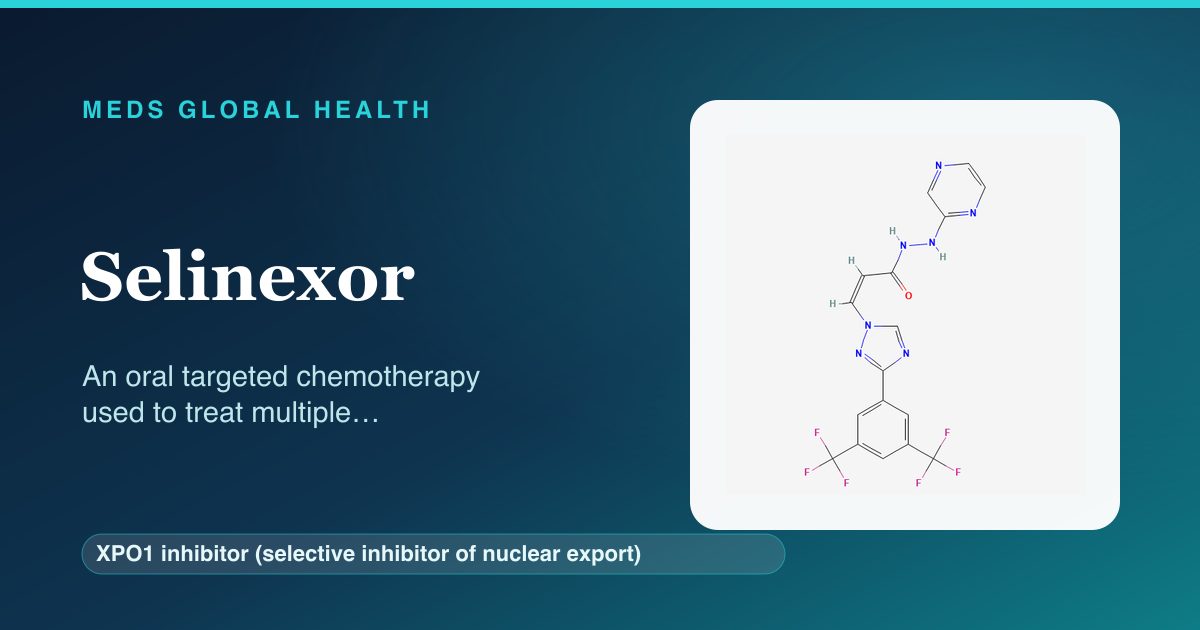
What it is
Selinexor is a targeted chemotherapy medicine taken by mouth, used to treat multiple myeloma, a cancer of plasma cells in the bone marrow. It belongs to a group called selective inhibitors of nuclear export (SINE), which act on a protein called XPO1. It is usually used in combination with other myeloma medicines and a steroid, after other treatments have been tried. It is a specialist, hospital-supervised medicine that needs strong supportive care, particularly anti-sickness treatment, and close monitoring of blood counts and blood salts.
How it works
Cells use a protein called XPO1 to move other proteins out of the cell nucleus. In cancer, this can push out the very proteins that would normally tell a damaged cell to stop growing or to die. Selinexor blocks XPO1, so these protective 'tumour suppressor' proteins stay in the nucleus where they can work, prompting the cancer cells to die. Because the medicine affects normal cells too, it commonly lowers blood counts (especially platelets) and causes strong nausea, vomiting and loss of appetite, which is why supportive medicines and monitoring are an essential part of treatment.
Company & origin
A specialist oral chemotherapy used in the UK for multiple myeloma, a cancer of plasma cells in the bone marrow, given under cancer-team supervision.
Practical use
How to take Selinexor
General, dose-free guidance — always follow your prescriber's and the leaflet's specific instructions.
- Take it by mouth exactly as prescribed, usually together with other myeloma medicines and a steroid, on the days your team specifies.
- Take your anti-sickness medicines as advised, as strong nausea and vomiting are common and easier to prevent than to treat.
- Try to keep eating and drinking, and tell your team if you cannot, as appetite and weight loss need active management.
- Attend all your blood-test appointments so your blood counts and blood sodium can be checked and corrected if needed.
- Contact your team about unusual bruising or bleeding, persistent sickness, confusion, or signs of infection straight away.
Weighing it up
Advantages & disadvantages of Selinexor
Advantages
- An oral, targeted treatment option for multiple myeloma that has come back or not responded to other treatment.
- Works in a different way from other myeloma medicines, by trapping cancer-fighting proteins inside cells.
- Taken by mouth rather than by injection or infusion.
Disadvantages
- Commonly lowers blood counts, especially platelets (thrombocytopenia), raising the risk of bleeding.
- Causes severe nausea, vomiting, loss of appetite and weight loss, needing strong anti-sickness medicines and monitoring.
- Can lower the blood sodium level and must be given by a specialist team with regular blood tests.
Practical use
Good to know
Selinexor is well known for causing significant side effects that need active management. The two that dominate are low blood counts, particularly a fall in platelets (thrombocytopenia) that raises the risk of bleeding, and severe nausea, vomiting, loss of appetite and weight loss; for this reason strong anti-sickness medicines are started from the beginning, and your eating, weight and hydration are watched closely. It can also lower the blood sodium level, which is checked with blood tests and corrected if needed. Blood counts and blood salts are monitored regularly, and the dose may be reduced or paused if side effects are severe. Tell your team about unusual bruising or bleeding, persistent sickness, being unable to eat or drink, confusion, or signs of infection. It is a specialist medicine given and supervised by a cancer team.
Who should not take it / use with caution
- People who have had a serious allergic reaction to selinexor should not take it.
- It is not used in pregnancy because it can harm an unborn baby; effective contraception is needed during treatment.
- It is used with extra care in people who already have low blood counts, low sodium, or poor nutrition.
- It should only be used under a specialist cancer team, with strong supportive care and close monitoring.
Monitoring
- Regular blood tests to check blood counts, especially platelets, before and during treatment.
- Checking the blood sodium level and correcting it if it falls.
- Watching weight, appetite, hydration and side effects to guide the dose.
Side effects
- Low blood counts, especially low platelets (thrombocytopenia), raising the risk of bleeding, and low white cells raising infection risk.
- Severe nausea, vomiting, loss of appetite and weight loss.
- A low blood sodium level, tiredness, diarrhoea and dizziness.
- Rarely but seriously, severe infections, serious bleeding, confusion or severe low sodium, which need urgent medical attention.
Key interactions
- It is used carefully alongside other medicines that lower blood counts.
- Other medicines that can cause nausea, low sodium or dizziness may add to its effects.
- Tell your team about all your medicines, including over-the-counter ones and supplements, so interactions can be checked.
Available as: Tablets taken by mouth.
Answers
Selinexor: frequently asked questions
What is selinexor used for?
It is an oral targeted chemotherapy used to treat multiple myeloma, a cancer of plasma cells in the bone marrow, usually with other myeloma medicines.
Why does it cause so much sickness?
Selinexor commonly causes strong nausea, vomiting and loss of appetite, so anti-sickness medicines are started from the beginning to prevent and control this.
Why are my platelets checked?
It often lowers blood counts, especially platelets (thrombocytopenia), which raises the risk of bleeding, so regular blood tests guide whether the dose needs adjusting.
Why is my blood sodium tested?
Selinexor can lower the blood sodium level, so it is checked with blood tests and corrected if needed to keep you safe.
How is it taken?
It is taken by mouth on the days your specialist team specifies, usually together with other myeloma medicines and a steroid.
Authoritative sources
- BNF
- NICE CKS
Building a medicines information resource?
We create evidence-led, dose-free drug and formulary references for teams.