A targeted treatment for cancers driven by RET changes
Selpercatinib
A targeted oral cancer medicine for tumours, mainly some lung and thyroid cancers, that are driven by a RET gene change.
What is Selpercatinib?
Selpercatinib is a specialist targeted cancer medicine used to treat certain cancers, mainly some lung and thyroid cancers, that have a particular gene change in a protein called RET. It works by blocking the faulty RET signal that tells the cancer cells to grow. It is taken by mouth as capsules under the care of a cancer team. Important safety points include effects on the liver, raised blood pressure, changes to the heart's rhythm, a tendency to bleed and slower wound healing, so regular checks are needed. It can harm an unborn baby, so reliable contraception is essential.
Education and reference only. This is a plain-language guide to Selpercatinib — it deliberately contains no doses. Doses depend on the person, the brand and the reason for treatment, and belong with your prescriber. Always check the BNF, the product labelling (SmPC) and follow medical advice.
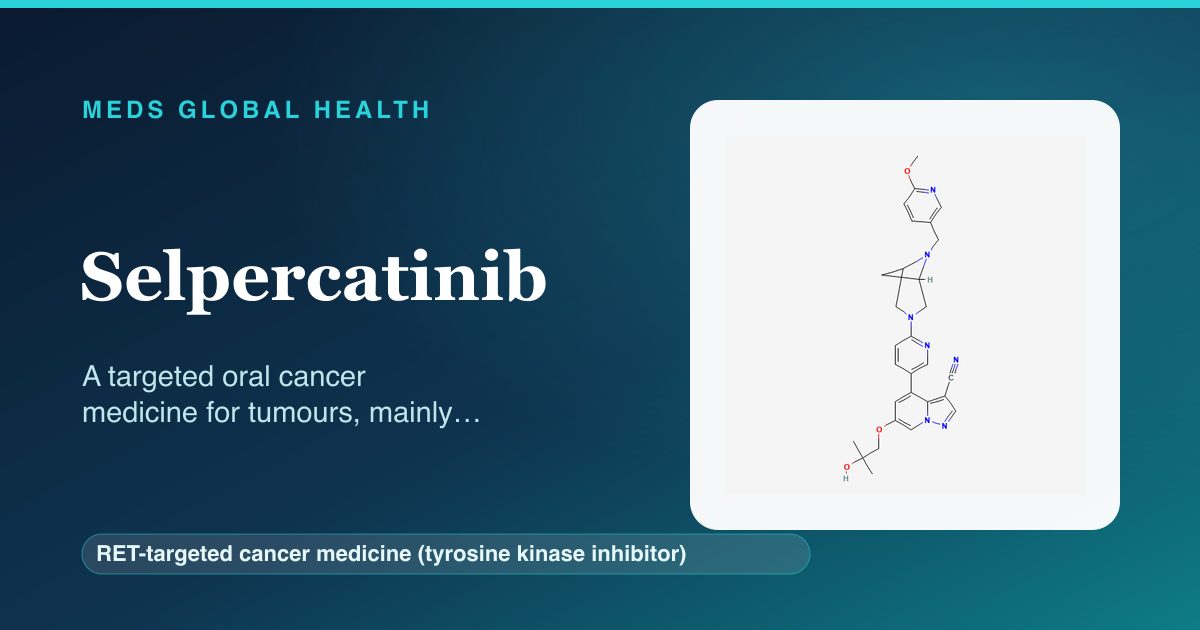
What it is
Selpercatinib is a targeted cancer medicine, one of a group called tyrosine kinase inhibitors, that is matched to tumours with a specific change in a protein called RET. Before it is used, a test confirms the cancer has this RET change. It is used mainly in certain types of lung cancer and thyroid cancer that carry this change. Rather than acting on all rapidly dividing cells the way older chemotherapy does, it is aimed at the faulty signal that is driving that particular cancer. It is taken by mouth as capsules under the supervision of a specialist cancer team.
How it works
Some cancers grow because of a change in a protein called RET, which gets stuck switched on and constantly tells the cells to multiply. Selpercatinib blocks RET, switching off that growth signal, which can shrink the cancer or hold it back. Because it targets the specific fault driving the tumour, it tends to be more focused than general chemotherapy, but it can still affect healthy tissues, which is why side effects such as liver changes, raised blood pressure and bleeding need watching. It is taken every day to keep the RET signal blocked over time.
Company & origin
A specialist oral cancer medicine used in the UK to treat certain lung and thyroid cancers that have a particular gene change called RET.
Practical use
How to take Selpercatinib
General, dose-free guidance — always follow your prescriber's and the leaflet's specific instructions.
- Take the capsules by mouth as prescribed, swallowed whole, at about the same times each day.
- Attend all blood tests, blood-pressure checks and heart tracings, as these guide safe treatment.
- Report any unusual bleeding or bruising, and tell the team before any planned surgery or dental work so it can be paused if needed.
- Use reliable contraception during treatment and for the time advised afterwards, as it can harm an unborn baby.
- Do not stop or change the dose yourself; speak to your cancer team about any side effects.
Weighing it up
Advantages & disadvantages of Selpercatinib
Advantages
- A targeted treatment matched to cancers driven by a specific RET change.
- Taken by mouth as capsules rather than given by drip.
- Often more focused than general chemotherapy, working on the fault driving the tumour.
Disadvantages
- Only suitable for cancers shown by testing to have a RET change.
- Can affect the liver, raise blood pressure, alter the heart's rhythm and increase bleeding.
- Needs regular monitoring and can harm an unborn baby, so contraception is essential.
Practical use
Good to know
The most important thing to understand is that selpercatinib only suits cancers shown by testing to have a RET change, so it is matched to the individual tumour. It can affect the liver, so blood tests are done regularly, and it can raise blood pressure, which is checked and may need treatment. It can also affect the heart's electrical rhythm (the QT interval), so the team may do heart tracings and review other medicines that do the same. Because it can make bleeding more likely and can slow wound healing, it is usually paused around planned surgery, and any unusual bleeding should be reported. It can cause allergic or hypersensitivity reactions in some people. Like other targeted cancer medicines, it can seriously harm an unborn baby, so reliable contraception is essential during treatment and for a time afterwards.
Who should not take it / use with caution
- People who have had a serious allergic reaction to selpercatinib should not take it.
- It is not suitable in pregnancy because it can seriously harm an unborn baby.
- It is used with care in people with heart-rhythm problems, high blood pressure or liver problems, under specialist supervision.
Monitoring
- Regular liver blood tests and blood-pressure checks.
- Heart tracings to check the rhythm where appropriate.
- Watching for bleeding, wound-healing problems and allergic-type reactions, and reviewing other medicines.
Side effects
- Raised blood pressure, which is monitored and may need treatment.
- Changes in liver blood tests, picked up by regular monitoring.
- Tiredness, dry mouth, swelling, diarrhoea or a rash.
- Less commonly but importantly, changes in the heart's rhythm, bleeding, slower wound healing or allergic-type reactions.
Key interactions
- Medicines that affect the heart's QT interval may add to its effect on the heart rhythm, so they are reviewed.
- Some medicines and certain foods such as grapefruit can change the levels of selpercatinib in the body, so tell your team about everything you take.
- Medicines that increase bleeding risk, such as blood thinners, need careful review with your team.
Available as: Capsules taken by mouth.
Answers
Selpercatinib: frequently asked questions
What is selpercatinib used for?
It is used to treat certain cancers, mainly some lung and thyroid cancers, that testing has shown to have a particular gene change in a protein called RET.
Why do I need a test before taking it?
Selpercatinib only works on cancers with a RET change, so a test confirms your tumour has this change before treatment is started.
Why are my blood pressure and liver checked?
It can raise blood pressure and affect the liver, so regular checks let your team catch and manage these early.
Why does my team need to know about surgery?
It can increase bleeding and slow wound healing, so it is usually paused around planned surgery or dental work.
Is contraception necessary?
Yes. Like other targeted cancer medicines, it can seriously harm an unborn baby, so reliable contraception is essential during treatment and for a time afterwards.
Authoritative sources
- BNF
- NICE CKS
Building a medicines information resource?
We create evidence-led, dose-free drug and formulary references for teams.