A caustic stick or solution used to burn off small skin growths and stop minor bleeding
Silver nitrate
A caustic antiseptic, usually a stick or solution, used to remove warts, overgrown granulation tissue and to stop minor bleeding by chemically destroying tissue.
What is Silver nitrate?
Silver nitrate is a caustic antiseptic, usually supplied as a stick (caustic pencil) or solution, used to remove warts, burn off overgrown granulation tissue and to stop small areas of bleeding. It works by chemically burning and destroying the tissue it touches, so the single most important point is that it must be applied only to the exact spot being treated and kept off healthy skin and away from the eyes, which it can damage. It typically stains the skin and surroundings a grey-black colour. It is used by, or under the guidance of, a healthcare professional.
Education and reference only. This is a plain-language guide to Silver nitrate — it deliberately contains no doses. Doses depend on the person, the brand and the reason for treatment, and belong with your prescriber. Always check the BNF, the product labelling (SmPC) and follow medical advice.
What it is
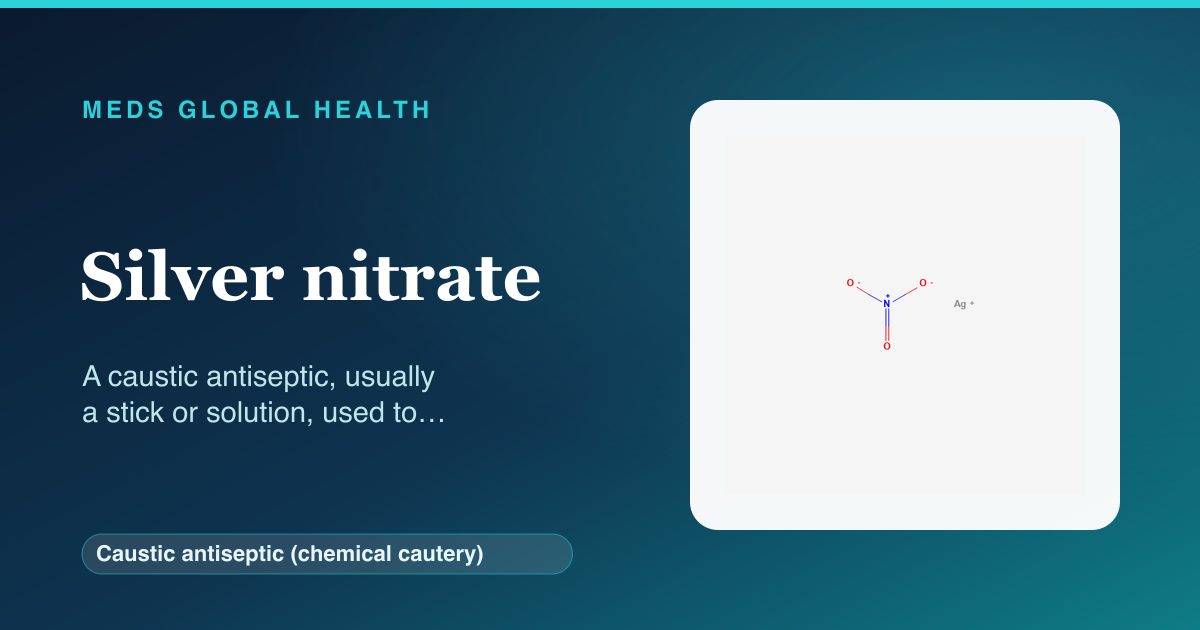
Silver nitrate is a long-established caustic preparation, usually in the form of a moistened stick (a caustic pencil) or a solution. It is used to remove unwanted tissue, such as warts and verrucas or overgrown healing tissue (granulation tissue), and to stop small areas of bleeding, for example after a minor procedure or a persistent nosebleed. It is applied directly to the area being treated, where it chemically destroys the tissue. Because it is corrosive, it is used carefully by, or under the guidance of, a healthcare professional, and is meant to be applied only to the target spot.
How it works
When silver nitrate touches moist tissue it releases substances that chemically burn and destroy the cells it contacts. This is why it can remove a wart or overgrown granulation tissue and why it can seal small bleeding points by cauterising them. The same action means it cannot tell healthy tissue from the tissue being treated, so it will damage normal skin, the inside of the nose or the eyes if it strays. It also reacts with the skin and surroundings to leave a characteristic grey-black stain. Because it works by destroying tissue on contact, careful, precise application to just the target area is essential.
Company & origin
A long-established preparation used in the UK to remove warts and overgrown tissue and to stop minor bleeding, applied directly to the spot being treated.
Practical use
How to take Silver nitrate
General, dose-free guidance — always follow your prescriber's and the leaflet's specific instructions.
- Apply it only to the exact spot being treated, keeping it off surrounding healthy skin.
- Keep it well away from the eyes, mouth and broken skin, which it can damage.
- Expect a grey-black stain on the skin and surroundings; protect clothing and nearby surfaces.
- Use it sparingly and only as often as advised, as overuse can cause a painful chemical burn.
- Rinse with plenty of water and seek advice if it gets on healthy skin or in the eyes.
Weighing it up
Advantages & disadvantages of Silver nitrate
Advantages
- An effective way to remove warts and overgrown granulation tissue.
- Useful for sealing small bleeding points, such as a persistent nosebleed.
- A simple, long-established treatment applied directly to the target area.
Disadvantages
- Chemically burns tissue, so it can damage healthy skin, eyes and mouth if it strays.
- Stains the skin and surroundings a grey-black colour.
- Overuse or treating too large an area can cause a painful chemical burn.
Practical use
Good to know
The most important thing to understand is that silver nitrate works by chemically burning tissue, so it must be applied only to the precise area being treated and kept off surrounding healthy skin, the eyes and mouth, which it can damage. It commonly stains the skin, nails, clothing and nearby surfaces a grey-black colour; the skin staining fades over time as the skin renews. Treating an area that is too large, or applying it too often, can cause a painful chemical burn, so it is used sparingly and usually by or with guidance from a healthcare professional. Protecting the skin around the spot, for example with a barrier, helps limit damage and staining. If it gets on healthy skin or in the eye, it should be rinsed off with plenty of water and advice sought.
Who should not take it / use with caution
- It should not be used on or near the eyes, or on large or delicate areas of skin.
- It is not suitable for moles or any skin lesion that has not been properly assessed first.
- People who have had a reaction to silver-containing products should avoid it.
Monitoring
- Checking that only the target area is treated and healthy skin is protected.
- Reviewing how the wart or treated area responds over the course of treatment.
- Watching for an excessive burn or spread of damage to surrounding skin.
Side effects
- A grey-black stain on the skin, nails or surroundings that fades over time.
- Stinging, redness or a chemical burn at and around the treated area.
- Damage to healthy skin, the eyes or mouth if it is applied or splashed where it should not be.
Key interactions
- It should not be used together with other strong topical chemicals on the same area.
- It can react with metals and some surfaces, leaving stains.
- Tell your healthcare professional about other treatments you are using on the skin.
Available as: A caustic stick (pencil) or a solution applied directly to the skin.
Answers
Silver nitrate: frequently asked questions
What is silver nitrate used for?
It is a caustic antiseptic used to remove warts and overgrown healing tissue and to stop small areas of bleeding by chemically destroying the tissue it touches.
Why does it have to be applied so carefully?
It chemically burns whatever it touches, so it must be applied only to the spot being treated and kept off healthy skin, the eyes and mouth, which it can damage.
Why has it stained my skin grey or black?
Silver nitrate reacts with the skin and surroundings to leave a characteristic grey-black stain; on the skin this fades over time as the skin renews.
Can I use it on a mole?
No. It should never be used on a mole or any skin lesion that has not been properly assessed, as it destroys tissue and can mask a problem.
What if it gets on healthy skin or in my eye?
Rinse the area with plenty of water straight away and seek advice, as it can cause a chemical burn and is especially harmful to the eyes.
Authoritative sources
- BNF
- NICE CKS
Building a medicines information resource?
We create evidence-led, dose-free drug and formulary references for teams.