An anti-foaming remedy for trapped wind and colic
Simeticone
A gentle anti-foaming remedy that relieves trapped wind, bloating and infant colic.
What is Simeticone?
Simeticone is a gentle, widely available remedy for trapped wind, bloating and the discomfort of infant colic, found in products such as Infacol, Dentinox Colic and Wind-eze. It works in a simple physical way: it helps small bubbles of gas in the gut join together into larger bubbles that are easier to bring up or pass out, easing the bloated, gassy feeling. It is not absorbed into the body, which makes it very gentle and suitable even for babies. It treats the symptom of trapped wind rather than an underlying cause, so persistent or severe tummy symptoms should be checked.
Education and reference only. This is a plain-language guide to Simeticone — it deliberately contains no doses. Doses depend on the person, the brand and the reason for treatment, and belong with your prescriber. Always check the BNF, the product labelling (SmPC) and follow medical advice.
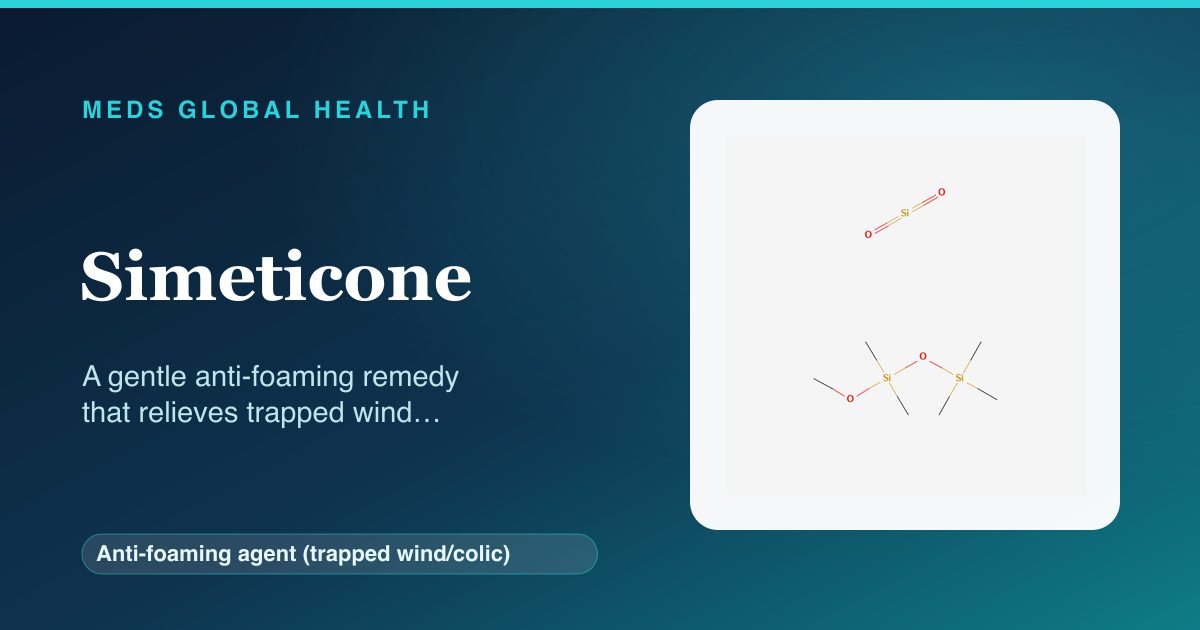
What it is
Simeticone is an 'anti-foaming' remedy used to relieve trapped wind, bloating and the discomfort it causes, including in babies with colic. It is the active ingredient in products such as Infacol and Dentinox Colic for infants, and Wind-eze for adults. Rather than being a medicine that acts on the body's chemistry, it works in a purely physical way inside the gut. It is not absorbed into the bloodstream, which makes it very gentle and one of the few products considered suitable for use in young babies. It comes as drops for infants and as capsules or tablets for older children and adults.
How it works
Trapped wind is uncomfortable because gas in the gut forms lots of small, frothy bubbles that are hard to move. Simeticone lowers the surface tension of these bubbles so they join together into bigger bubbles, which are much easier for the body to bring up as a burp or pass out as wind. By helping the gas come together and move on, it relieves the bloated, gassy, griping feeling. Because it works mechanically in the gut and is not absorbed into the body, it has very little effect anywhere else, which is why it is so gentle.
Company & origin
A gentle anti-foaming remedy used across the UK for trapped wind, bloating and infant colic, found in products such as Infacol and Wind-eze.
Practical use
How to take Simeticone
General, dose-free guidance — always follow your prescriber's and the leaflet's specific instructions.
- Take it as directed on the pack: drops for babies, often with feeds, and capsules or tablets for older children and adults.
- For adults, it is often taken after meals and at bedtime when trapped wind is troublesome.
- Shake infant drops well before use and measure them with the dropper provided.
- Use it for short-term relief of trapped wind and colic rather than as a long-term routine.
- See a pharmacist or GP if tummy pain is severe or persistent, or if a baby is very distressed or unwell.
Weighing it up
Advantages & disadvantages of Simeticone
Advantages
- Eases trapped wind and bloating by helping gas come together and move on.
- Very gentle and not absorbed into the body, so it is suitable even for babies.
- A simple, low-risk option for the discomfort of infant colic.
Disadvantages
- Treats the symptom of trapped wind rather than an underlying cause.
- Does not work for every baby with colic.
- Not a treatment for persistent or severe tummy pain, which needs assessment.
Practical use
Good to know
It helps to understand that simeticone treats the symptom of trapped wind by helping gas move, rather than treating a cause, so it is best for the bloated, gassy feeling itself. In babies, infant colic, with bouts of crying and apparent tummy discomfort, is common and usually settles with time; simeticone drops are a gentle option many parents try, given for example with feeds, though it does not work for every baby. Because it is not absorbed, it is very safe and there is little risk of overdose, but it is still best used as directed on the pack. It is for short-term, everyday wind and colic; persistent, severe or worsening tummy pain, a baby who is very distressed, off feeds or unwell, or symptoms with other warning signs, should be checked by a pharmacist, GP or, if needed, urgently.
Who should not take it / use with caution
- People who have had an allergic reaction to simeticone or another ingredient in the product should not use it.
- It should not be relied on for severe or persistent tummy pain, which needs medical assessment.
- A baby who is very distressed, off feeds or unwell should be seen by a GP rather than only given colic drops.
Monitoring
- No routine monitoring is needed.
- Reviewing symptoms if trapped wind is persistent or severe.
- Seeking advice if a baby with colic seems unwell, off feeds or very distressed.
Side effects
- Side effects are very uncommon, as it is not absorbed into the body.
- Occasionally mild changes in bowel habit.
- Rarely, an allergic reaction to an ingredient, which needs medical attention.
Key interactions
- There are no well-known interactions with other medicines, as it is not absorbed.
- Tell your pharmacist about other tummy or colic products you are using.
- Mention any allergies to product ingredients before choosing one.
Available as: Drops for babies, and capsules or tablets for older children and adults, taken by mouth.
Answers
Simeticone: frequently asked questions
What is simeticone used for?
It is used to relieve trapped wind, bloating and the discomfort of infant colic by helping gas in the gut come together and move on.
How does it work?
It helps small bubbles of gas join into larger bubbles that are easier to bring up as a burp or pass out as wind, easing the bloated, gassy feeling.
Is it safe for babies?
Yes, it is very gentle because it is not absorbed into the body, and infant drops such as Infacol are commonly used for colic, though it does not work for every baby.
Will it cure my baby's colic?
It can help with the trapped-wind discomfort, but colic usually settles with time on its own, and simeticone does not work for every baby.
When should I see a doctor?
See a pharmacist or GP if tummy pain is severe or persistent, or if a baby is very distressed, off feeds or seems unwell.
Authoritative sources
- BNF
- NICE CKS
Building a medicines information resource?
We create evidence-led, dose-free drug and formulary references for teams.