A urea-cycle medicine for ammonia removal
Sodium phenylbutyrate
A specialist medicine that gives the body another route to clear nitrogen and ammonia in urea-cycle disorders.
What is Sodium phenylbutyrate?
Sodium phenylbutyrate is a specialist medicine for urea-cycle disorders, a group of rare inherited conditions in which the body cannot fully clear the waste nitrogen left over from protein, so ammonia can build up in the blood. It gives the body an alternative route to get rid of this nitrogen, helping to keep ammonia down. It is used together with a low-protein diet and is usually taken with food. It has a high sodium content, which matters for some people, and it is managed by a metabolic team with regular blood monitoring.
Education and reference only. This is a plain-language guide to Sodium phenylbutyrate — it deliberately contains no doses. Doses depend on the person, the brand and the reason for treatment, and belong with your prescriber. Always check the BNF, the product labelling (SmPC) and follow medical advice.
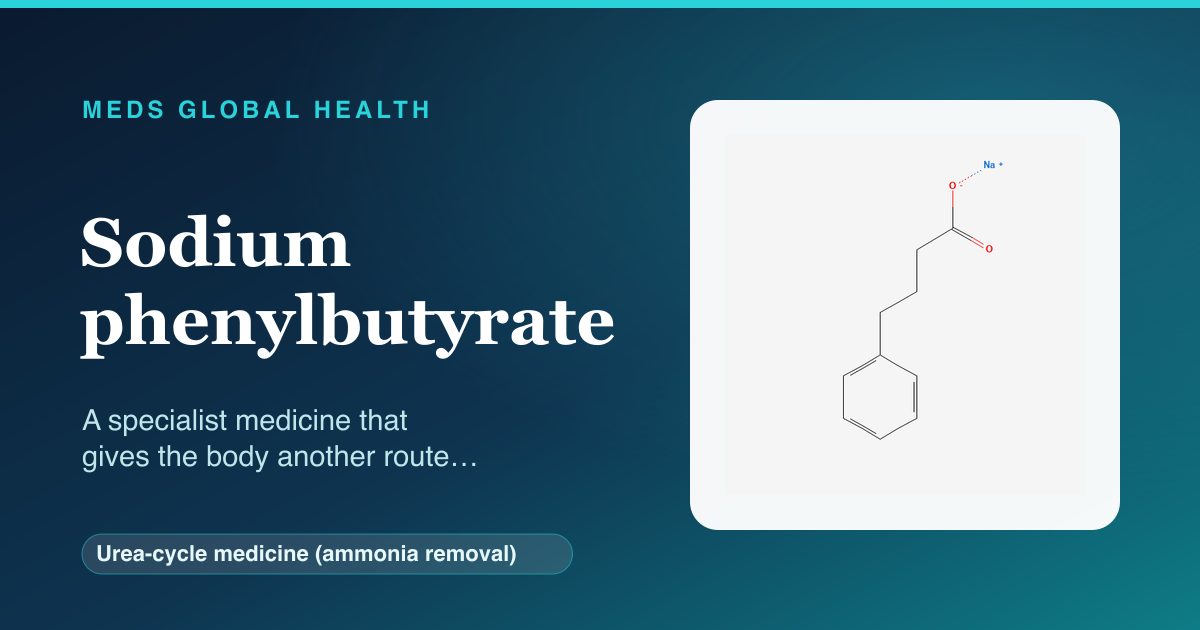
What it is
Sodium phenylbutyrate is a treatment for urea-cycle disorders, rare inherited (genetic) conditions in which the body's normal pathway for turning waste nitrogen into harmless urea does not work fully, allowing toxic ammonia to build up. The medicine provides a different chemical route for the body to remove this nitrogen, lowering the load on the faulty pathway. It is taken by mouth, used alongside a low-protein diet, and managed by a specialist metabolic centre.
How it works
When protein is used, it leaves behind waste nitrogen that normally becomes urea and is passed in urine. In urea-cycle disorders this does not happen properly, so ammonia builds up. Sodium phenylbutyrate is changed in the body into a substance that joins with an amino acid and is removed in the urine, carrying nitrogen out with it. This alternative pathway takes some of the strain off the faulty urea cycle and helps keep ammonia from rising.
Company & origin
Originated / developed by: Immedica / Lucane Pharma.
A specialist medicine used in the UK by metabolic centres to help clear ammonia in urea-cycle disorders, alongside a low-protein diet.
Practical use
How to take Sodium phenylbutyrate
General, dose-free guidance — always follow your prescriber's and the leaflet's specific instructions.
- Take it with or just after food, usually spread across the day, as your metabolic team directs.
- Keep to the low-protein diet planned by your dietitian, as the medicine and diet work together.
- Take the granules or tablets exactly as instructed, and tell your team if you find the taste hard to manage.
- Follow your emergency (sick-day) plan if you become unwell, as ammonia can rise during illness.
- Seek urgent medical help for confusion, drowsiness, repeated vomiting or unusual behaviour, which can be signs of dangerously high ammonia.
- Do not stop it suddenly without your team's advice, and attend your blood-test appointments.
Weighing it up
Advantages & disadvantages of Sodium phenylbutyrate
Advantages
- Gives the body an alternative route to clear waste nitrogen, helping keep ammonia down.
- Used alongside diet to manage rare inherited urea-cycle disorders.
- Available in more than one form, including granules that can be easier for some people.
Disadvantages
- Has a high sodium (salt) content, which matters for people who need to limit salt.
- Does not replace the low-protein diet, which must still be followed carefully.
- Needs lifelong specialist care, regular blood tests and an emergency plan for illness.
Practical use
Good to know
There are a few practical points. First, it gives an extra route to clear nitrogen but does not replace the low-protein diet, which is still essential and planned by a metabolic dietitian. Second, it contains a lot of sodium (salt), which can matter for people who need to watch their salt intake, such as those with heart or kidney problems, so the team takes this into account. It is usually taken with or just after food, often spread across the day. As with all urea-cycle treatment, ammonia can rise during illness, so families are given an emergency plan, and regular blood tests are needed. It must not be stopped without advice.
Who should not take it / use with caution
- Used with caution, and with the sodium content taken into account, in people with heart or kidney problems.
- It should only be used under a metabolic centre experienced in urea-cycle disorders.
- Use in pregnancy or breastfeeding is decided by the specialist team after weighing benefits and risks.
Monitoring
- Regular blood tests to check ammonia and the response to treatment.
- Monitoring related blood levels, including those affected by its sodium content, as advised.
- Reviewing diet, growth and symptoms with the metabolic team and dietitian.
Side effects
- Changes in periods or absent periods in some women.
- Reduced appetite, taste changes, or feeling sick.
- Stomach upset, and effects linked to its sodium content in some people.
Key interactions
- Protein intake affects ammonia, so diet is central to how well it works.
- Some medicines, such as certain steroids or valproate, can affect ammonia and need review by your team.
- Tell your team about all other medicines, as treatment is overseen by a specialist centre.
Available as: Granules and tablets taken by mouth.
Answers
Sodium phenylbutyrate: frequently asked questions
How does sodium phenylbutyrate lower ammonia?
It gives the body an alternative chemical route to carry waste nitrogen out in the urine, taking strain off the faulty urea cycle and helping keep ammonia down.
Do I still need a low-protein diet?
Yes. The medicine adds an extra route to clear nitrogen but does not replace the diet, which is still essential and planned by your dietitian.
Why does the high salt content matter?
It contains a lot of sodium, which can be a concern for people who need to limit salt, such as those with heart or kidney problems, so your team takes this into account.
When should I take it?
It is usually taken with or just after food, often spread across the day, following the schedule your metabolic team gives you.
What should I do if I become ill?
Illness can raise ammonia, so follow the emergency (sick-day) plan from your metabolic team and seek help early if you are concerned.
Authoritative sources
- BNF
- NICE CKS
Building a medicines information resource?
We create evidence-led, dose-free drug and formulary references for teams.