A targeted tablet for liver, kidney and thyroid cancer
Sorafenib
A targeted cancer tablet used for some liver, kidney and thyroid cancers, which slows cancer growth and blood-vessel formation.
What is Sorafenib?
Sorafenib is a specialist cancer tablet used for certain advanced liver, kidney and thyroid cancers. It is a multikinase inhibitor, meaning it blocks several signals that cancers use to grow and to build the new blood vessels that feed them. A very common and characteristic side effect is hand-foot skin reaction, with sore, red or blistered palms and soles. It can also raise blood pressure, increase the risk of bleeding, and, less commonly, strain the heart or cause bowel problems. It can harm a developing baby, so reliable contraception is essential. It is taken by mouth and supervised by a cancer specialist.
Education and reference only. This is a plain-language guide to Sorafenib — it deliberately contains no doses. Doses depend on the person, the brand and the reason for treatment, and belong with your prescriber. Always check the BNF, the product labelling (SmPC) and follow medical advice.
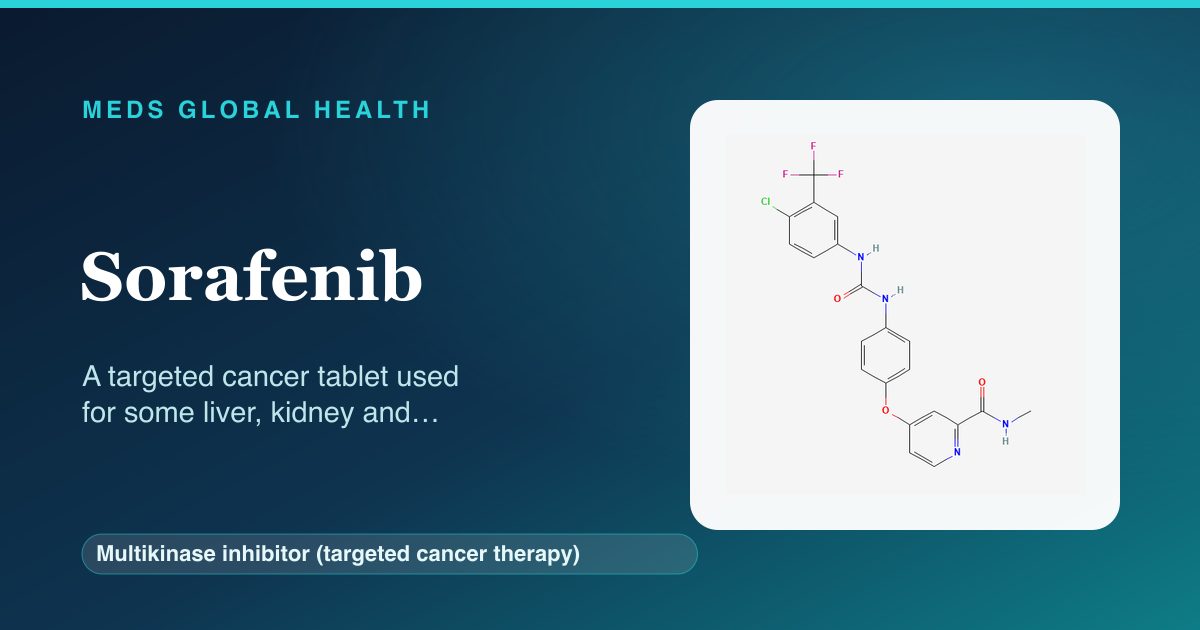
What it is
Sorafenib is a specialist cancer medicine taken as a tablet by mouth. It is used to treat some advanced cancers of the liver, the kidney and the thyroid gland. It belongs to a group of targeted treatments called multikinase inhibitors, which interfere with several of the chemical signals that drive cancer growth and the formation of new blood vessels. It does not cure these cancers but aims to slow their progress. It is prescribed and closely supervised by a cancer specialist team, with regular reviews and monitoring.
How it works
Cancers grow by sending signals that tell cells to multiply and that encourage new blood vessels to form so the tumour can get oxygen and nutrients. Sorafenib blocks several of these signalling proteins (kinases) at once, slowing cancer cell growth and reducing the blood supply the tumour depends on. By acting on the blood-vessel signals, it can affect normal blood vessels too, which helps explain why it can raise blood pressure and increase the risk of bleeding. Because it works on processes in the skin as well, it commonly causes the hand-foot skin reaction.
Company & origin
A specialist oral cancer treatment used in the UK for certain liver, kidney and thyroid cancers, prescribed by cancer specialists.
Practical use
How to take Sorafenib
General, dose-free guidance — always follow your prescriber's and the leaflet's specific instructions.
- Take the tablets by mouth as prescribed, usually away from a high-fat meal, swallowed whole with water.
- Look after your hands and feet with moisturiser and soft footwear, and report sore or blistered palms or soles.
- Have your blood pressure checked regularly and report severe headaches or symptoms of high blood pressure.
- Report any unusual bleeding, chest pain or severe tummy pain straight away.
- Use reliable contraception during treatment and for the time your team advises, as it can harm a developing baby.
Weighing it up
Advantages & disadvantages of Sorafenib
Advantages
- A targeted tablet that can slow the growth of certain liver, kidney and thyroid cancers.
- Taken by mouth at home rather than as a drip.
- Works on several cancer-driving signals at once, including the tumour's blood supply.
Disadvantages
- Commonly causes hand-foot skin reaction, which can be painful and limit daily activities.
- Can raise blood pressure and increase the risk of bleeding.
- Less commonly can strain the heart, reduce its blood supply, or cause a bowel tear.
Practical use
Good to know
The most distinctive side effect is hand-foot skin reaction: the palms and soles can become red, sore, tingly or blistered, which can affect walking and daily tasks; moisturising, soft footwear and avoiding pressure or friction help, and your team may adjust the dose if it is troublesome. Two important safety points are that it commonly raises blood pressure, which is checked regularly, and that it can increase the risk of bleeding. Less commonly but seriously, it can strain the heart or reduce its blood supply, and it can cause a hole or tear in the bowel, so chest pain or severe tummy pain must be reported urgently. Diarrhoea, tiredness and rash are common. It can also cause serious skin reactions in rare cases. It can harm a developing baby, so reliable contraception is essential. Tell your team about all your medicines, as some interact with sorafenib.
Who should not take it / use with caution
- People who have had a serious allergic reaction to sorafenib should not take it.
- It must not be used in pregnancy because it can seriously harm a developing baby.
- It is used with care in people with uncontrolled high blood pressure, heart problems, bleeding risks or significant liver problems, under specialist guidance.
Monitoring
- Regular blood pressure checks, especially in the early weeks of treatment.
- Checking the skin of the hands and feet and reviewing side effects at each visit.
- Blood tests including liver function, and reviewing how the cancer is responding.
Side effects
- Hand-foot skin reaction, with sore, red or blistered palms and soles.
- High blood pressure, diarrhoea, tiredness and rash.
- An increased risk of bleeding, and less commonly heart strain or reduced blood supply to the heart.
- Rarely, a hole or tear in the bowel, or serious skin reactions, which need urgent medical attention.
Key interactions
- Some medicines and supplements speed up or slow down how the body handles sorafenib, so give a full list.
- Medicines that increase bleeding risk, such as blood thinners, need careful review.
- Other medicines that raise blood pressure or affect the heart rhythm should be reviewed by your team.
Available as: Tablets taken by mouth.
Answers
Sorafenib: frequently asked questions
What is sorafenib used for?
It is a targeted cancer tablet used for certain advanced liver, kidney and thyroid cancers, slowing their growth and reducing the tumour's blood supply.
Why are my hands and feet sore?
Hand-foot skin reaction is a very common effect, making the palms and soles red, sore or blistered; moisturising and soft footwear help, and your team may adjust the dose.
Does it affect blood pressure?
Yes, it commonly raises blood pressure, so this is checked regularly and treated if needed; report severe headaches or other symptoms.
Should I worry about bleeding?
It can increase the risk of bleeding, so report any unusual or heavy bleeding to your team, along with any chest or severe tummy pain.
Can I take it if I might become pregnant?
No. It can seriously harm a developing baby, so reliable contraception during treatment and for a time afterwards is essential.
Authoritative sources
- BNF
- NICE CKS
Building a medicines information resource?
We create evidence-led, dose-free drug and formulary references for teams.