An add-on antiseizure medicine for Dravet syndrome
Stiripentol
An add-on antiseizure medicine used, alongside other treatments, for a severe childhood epilepsy called Dravet syndrome.
What is Stiripentol?
Stiripentol is a specialist antiseizure medicine used as an add-on treatment for Dravet syndrome, a severe form of epilepsy that starts in early childhood. It is used together with two other antiseizure medicines, clobazam and valproate, to help reduce seizures. It is taken by mouth as capsules or a powder mixed into food or drink. Common effects include sleepiness and reduced appetite with weight loss. Importantly, it raises the levels of the medicines it is given with, so their doses are often reduced, and blood counts are checked because it can affect white blood cells.
Education and reference only. This is a plain-language guide to Stiripentol — it deliberately contains no doses. Doses depend on the person, the brand and the reason for treatment, and belong with your prescriber. Always check the BNF, the product labelling (SmPC) and follow medical advice.
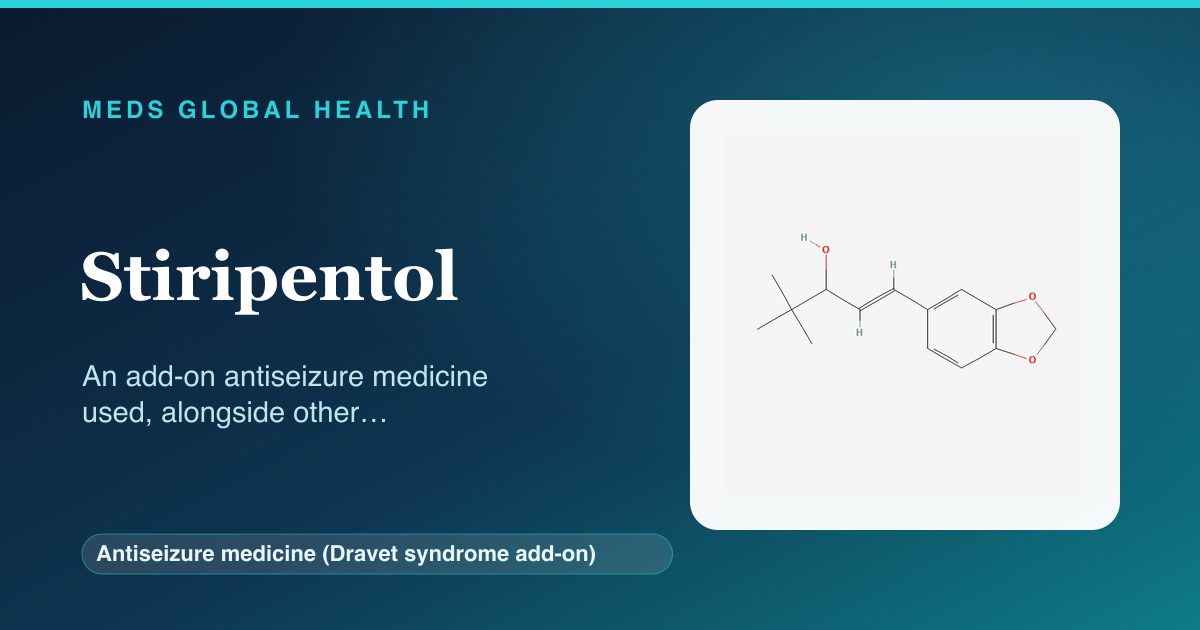
What it is
Stiripentol is an antiseizure medicine used as an add-on treatment for Dravet syndrome, a rare and severe epilepsy that begins in infancy or early childhood and is often hard to control. It is not used on its own; it is given together with two other antiseizure medicines, clobazam and valproate, when seizures are not well controlled on those alone. It is taken by mouth as capsules or as a powder (sachets) mixed into food or a drink. It is prescribed and supervised by a specialist children's epilepsy team.
How it works
Stiripentol helps calm the excessive electrical activity in the brain that causes seizures, partly by boosting the calming chemical signalling that helps settle the brain. A big part of how it helps in Dravet syndrome is that it also slows the breakdown of the other antiseizure medicines it is given with, so their levels rise and they work more strongly. This is why it is always used alongside clobazam and valproate, and why the doses of those medicines are often reduced when stiripentol is added, to avoid too much of a build-up. It is taken every day as part of the overall seizure-control plan.
Company & origin
A specialist antiseizure medicine used in the UK as an add-on treatment for a severe childhood epilepsy called Dravet syndrome.
What it treats
Conditions Stiripentol is used for
Practical use
How to take Stiripentol
General, dose-free guidance — always follow your prescriber's and the leaflet's specific instructions.
- Give it by mouth with food, as capsules or as the powder mixed into a soft food or drink, not on an empty stomach.
- Always give it together with the other antiseizure medicines (clobazam and valproate) as prescribed.
- Expect the team to adjust the doses of the other medicines, and report drowsiness, which can mean their levels have risen.
- Watch appetite, weight and growth, and report ongoing poor appetite or weight loss.
- Do not stop it suddenly, as this can trigger seizures; any changes should be made by the specialist team.
Weighing it up
Advantages & disadvantages of Stiripentol
Advantages
- Can reduce seizures in Dravet syndrome when added to clobazam and valproate.
- Available as a powder that can be mixed into food or drink for children who cannot swallow capsules.
- A specialist option for a severe epilepsy that is often difficult to control.
Disadvantages
- Must be used together with other antiseizure medicines, not on its own.
- Commonly causes sleepiness and reduced appetite with weight loss.
- Raises the levels of co-prescribed medicines, so doses need adjusting, and it can affect blood counts.
Practical use
Good to know
The most important thing to understand is that stiripentol is an add-on, used together with clobazam and valproate rather than on its own. Because it raises the levels of those medicines, the team usually reduces their doses when stiripentol is started, and side effects such as sleepiness can be a sign that the levels of the other medicines have risen, so reporting drowsiness helps the team fine-tune treatment. Reduced appetite and weight loss are common, so growth and weight are watched in children. It can affect the white blood cells, so blood counts are checked, and any signs of infection such as fever or sore throat should be reported. It is taken with food, not on an empty stomach, and should not be stopped suddenly because that can trigger seizures.
Who should not take it / use with caution
- Children who have had a serious allergic reaction to stiripentol should not take it.
- It is used with care in people with liver problems, under specialist supervision.
- It should only be used under a specialist epilepsy team, alongside the medicines it is meant to be combined with.
Monitoring
- Checking seizure control and adjusting the doses of the combined medicines.
- Watching appetite, weight and growth, especially in children.
- Regular blood counts to check white blood cells, and liver tests where appropriate.
Side effects
- Sleepiness or drowsiness, which can reflect rising levels of the other antiseizure medicines.
- Reduced appetite and weight loss, so growth and weight are monitored.
- Unsteadiness, irritability or behaviour changes in some children.
- Less commonly, a drop in white blood cells (neutropenia), which is why blood counts are checked.
Key interactions
- It raises the levels of clobazam and valproate, the medicines it is given with, so their doses are usually reduced.
- It can affect the levels of several other medicines, so a full medicines list is important.
- Some foods and drinks, such as grapefruit and caffeine, can interact, so follow your team's advice.
Available as: Capsules and powder (sachets) to mix into food or drink, taken by mouth.
Answers
Stiripentol: frequently asked questions
What is stiripentol used for?
It is used as an add-on treatment for Dravet syndrome, a severe childhood epilepsy, alongside two other antiseizure medicines called clobazam and valproate.
Why is it given with other medicines?
Stiripentol works best in Dravet syndrome when combined with clobazam and valproate, partly because it raises their levels so they work more strongly.
Why are the other medicines' doses lowered?
Because stiripentol increases the levels of clobazam and valproate, their doses are often reduced to avoid too much build-up and side effects such as drowsiness.
Why is appetite and weight watched?
Reduced appetite and weight loss are common, so the team checks weight and growth, particularly in children.
Why are blood tests needed?
It can lower white blood cells, so blood counts are checked, and any fever or sore throat should be reported.
Authoritative sources
- BNF
- NICE CKS
Building a medicines information resource?
We create evidence-led, dose-free drug and formulary references for teams.