A bone-strengthening treatment for severe osteoporosis
Strontium ranelate
A bone-strengthening medicine used for severe osteoporosis when other treatments are not suitable.
What is Strontium ranelate?
Strontium ranelate is a bone-strengthening medicine used to treat severe osteoporosis, a condition where bones become weak and break easily, when other treatments cannot be used. It is taken by mouth as granules mixed into water, usually at bedtime, away from food and calcium. Because it can raise the risk of heart and circulation problems and serious clots, it is only used in carefully selected people, and the heart and circulation are checked before and during treatment. It is reserved for situations where the more usual osteoporosis treatments are unsuitable.
Education and reference only. This is a plain-language guide to Strontium ranelate — it deliberately contains no doses. Doses depend on the person, the brand and the reason for treatment, and belong with your prescriber. Always check the BNF, the product labelling (SmPC) and follow medical advice.
What it is
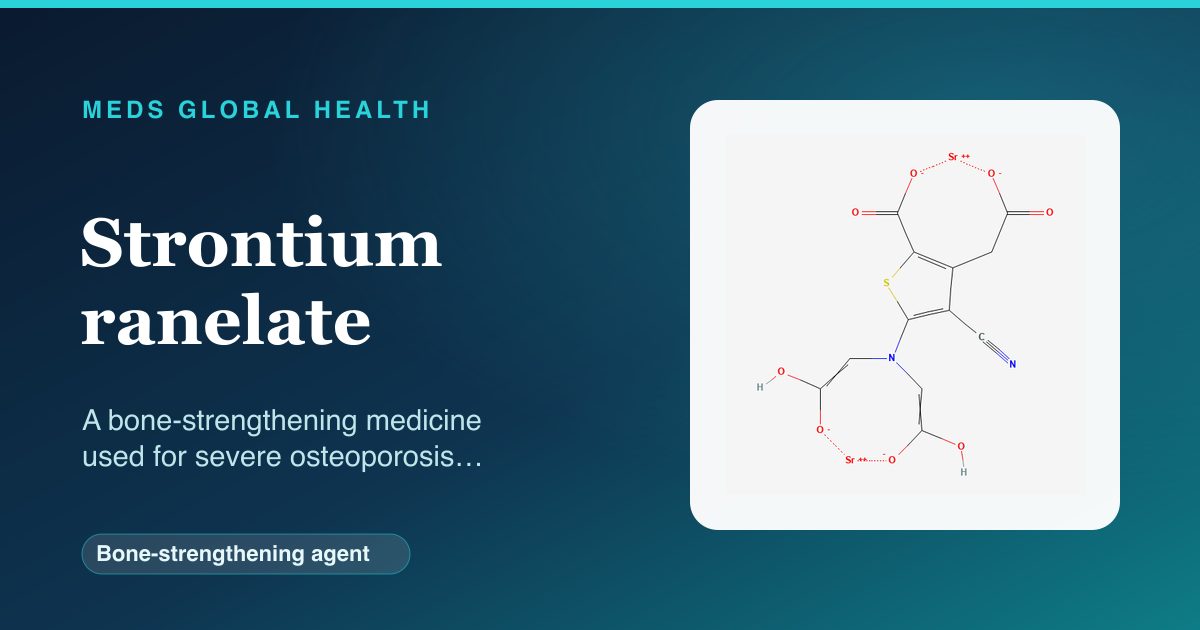
Strontium ranelate is a medicine used to strengthen bone in severe osteoporosis, a condition in which bones thin and become fragile, raising the risk of fractures, particularly of the spine and hip. It is taken by mouth as granules stirred into water. Because of concerns about its effects on the heart and circulation, it is no longer a first choice and is reserved for people with severe osteoporosis who cannot use the more usual treatments. It is started and supervised by a doctor who first checks that the heart and circulation make it safe to use.
How it works
Bone is constantly being broken down and rebuilt, and in osteoporosis the balance tips towards loss, so bones weaken. Strontium ranelate is thought to act on both sides of this balance, helping to slow the breakdown of bone while supporting the building of new bone, which together helps keep bone stronger and lowers the chance of fractures. It is taken every day, away from food and calcium-containing products, because these reduce how well it is absorbed. Because its benefit on bone has to be weighed against its effects on the heart and circulation, it is used only in carefully chosen people with regular review.
Company & origin
A specialist medicine used in the UK for severe osteoporosis when other treatments are unsuitable, taken as oral granules.
What it treats
Conditions Strontium ranelate is used for
Practical use
How to take Strontium ranelate
General, dose-free guidance — always follow your prescriber's and the leaflet's specific instructions.
- Take the granules mixed into water by mouth, usually at bedtime, a couple of hours after food, milk or calcium.
- Keep it well apart from calcium and dairy products, which reduce how well it is absorbed.
- Take it every day as prescribed, alongside any calcium and vitamin D your doctor advises.
- Stop it and seek urgent medical help if you develop a widespread rash, especially with fever or feeling unwell.
- Go for the heart and circulation checks your doctor arranges before and during treatment.
Weighing it up
Advantages & disadvantages of Strontium ranelate
Advantages
- Strengthens bone and helps reduce fractures in severe osteoporosis.
- Offers an option when the more usual osteoporosis treatments cannot be used.
- Taken by mouth as granules dissolved in water.
Disadvantages
- Can raise the risk of heart attacks and serious blood clots, so it is reserved and closely monitored.
- Must be taken away from food and calcium, which makes timing around meals important.
- Can rarely cause serious allergic skin reactions that need urgent attention.
Practical use
Good to know
The most important thing to understand is why this medicine is reserved: it can raise the risk of heart attacks and of serious blood clots, so it is only used in people with severe osteoporosis who cannot take other treatments, and only after the heart and circulation have been assessed. It must not be used by people with a history of heart disease, stroke, poor circulation or blood clots. It is taken away from food, milk and calcium, usually at bedtime a couple of hours after eating, because these reduce absorption. It can also rarely cause serious allergic skin reactions, so any widespread rash, especially with fever or feeling unwell, should be treated as an emergency and the medicine stopped. Adequate calcium and vitamin D, plus regular review, are part of the overall plan.
Who should not take it / use with caution
- People with a history of heart disease, stroke, poor circulation in the legs, or blood clots must not use it.
- People with uncontrolled high blood pressure should not use it.
- People who have had a serious allergic reaction to strontium ranelate should not take it.
- It should only be used under specialist guidance in carefully selected people, after assessing the heart and circulation.
Monitoring
- Assessing the heart and circulation before starting and reviewing them during treatment.
- Watching for any signs of clots, chest symptoms or serious skin reactions.
- Reviewing whether treatment should continue, balancing bone benefit against heart and circulation risk.
Side effects
- Nausea, diarrhoea or headache, especially early in treatment.
- More seriously, heart and circulation problems, including the risk of heart attacks and blood clots.
- Rarely, serious allergic skin reactions, which need the medicine stopped and urgent medical help.
- Occasionally, changes in some blood tests.
Key interactions
- Calcium and dairy products reduce how well it is absorbed, so keep them well apart.
- It can reduce the absorption of certain antibiotics, such as tetracyclines and quinolones, so separate the timing.
- Tell your doctor about all your medicines, particularly anything affecting the heart, circulation or clotting.
Available as: Granules mixed into water and taken by mouth.
Answers
Strontium ranelate: frequently asked questions
What is strontium ranelate used for?
It is a bone-strengthening medicine used for severe osteoporosis, to help reduce fractures, when the more usual osteoporosis treatments cannot be used.
Why is it only used in some people?
It can raise the risk of heart attacks and serious blood clots, so it is reserved for carefully chosen people with severe osteoporosis and is not for anyone with heart or circulation problems.
Why must I take it away from food and calcium?
Food, milk and calcium reduce how well it is absorbed, so it is usually taken at bedtime a couple of hours after eating, kept apart from calcium.
What should I do if I get a rash?
It can rarely cause serious allergic skin reactions, so stop the medicine and seek urgent medical help if you develop a widespread rash, especially with fever or feeling unwell.
Do I still need calcium and vitamin D?
Yes. Adequate calcium and vitamin D, along with regular review, are usually part of the overall plan, as advised by your doctor.
Authoritative sources
- BNF
- NICE CKS
Building a medicines information resource?
We create evidence-led, dose-free drug and formulary references for teams.