A long-acting sulfonamide used with pyrimethamine for malaria
Sulfadoxine
A long-acting sulfonamide used together with pyrimethamine, mainly against malaria.
What is Sulfadoxine?
Sulfadoxine is a long-acting sulfonamide that is used together with another medicine, pyrimethamine, as a combination known as Fansidar. The combination is used against malaria, particularly resistant forms, and for prevention in some regions, though it is not a first-choice treatment in the UK. Like other sulfonamides, it can cause serious skin reactions and blood problems, and can lead to crystals in the urine, so plenty of fluids should be drunk. It must not be used by people with a sulfonamide allergy or G6PD deficiency.
Education and reference only. This is a plain-language guide to Sulfadoxine — it deliberately contains no doses. Doses depend on the person, the brand and the reason for treatment, and belong with your prescriber. Always check the BNF, the product labelling (SmPC) and follow medical advice.
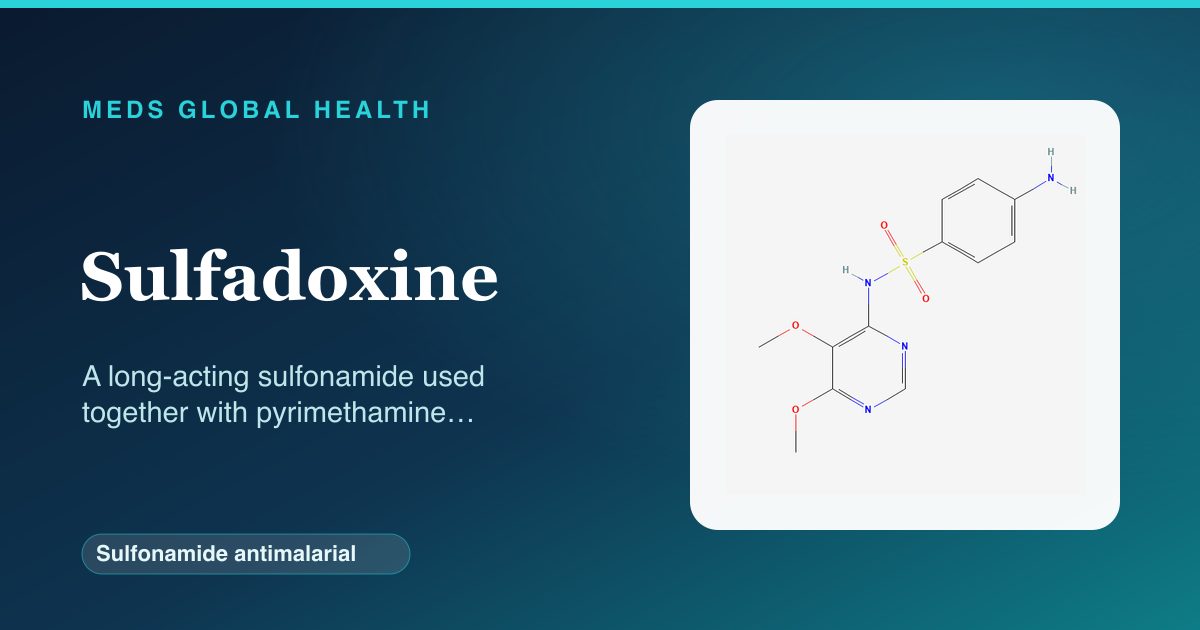
What it is
Sulfadoxine is a long-acting sulfonamide, a type of man-made antibiotic. It is used in combination with pyrimethamine, and the well-known combined product is called Fansidar. Together the two medicines act against the malaria parasite. The combination is used for treating malaria, especially resistant forms, and for prevention in some parts of the world, but it is not a usual first choice for malaria in the UK. It is prescribed under specialist or travel-medicine guidance.
How it works
Sulfadoxine and pyrimethamine each block a different step in the pathway the malaria parasite uses to make folate, a building block it needs to grow. By blocking two steps in the same pathway, the combination works better together than either part alone and makes it harder for the parasite to survive. Because sulfadoxine is long-acting, it stays in the body for a long time, which is why the combination can be given as a single course and why side effects can persist.
Company & origin
A long-acting sulfonamide used together with pyrimethamine (as Fansidar) against malaria, mainly in some regions outside the UK.
Practical use
How to take Sulfadoxine
General, dose-free guidance — always follow your prescriber's and the leaflet's specific instructions.
- Take it exactly as prescribed for your situation, with a full glass of water.
- Drink plenty of fluids to reduce the risk of crystals forming in the urine.
- Tell your prescriber straight away about any rash, blistering, mouth sores or fever, as these can signal a serious skin reaction.
- Tell your prescriber if you have a sulfonamide allergy or the inherited condition G6PD deficiency before starting.
- Follow any malaria-prevention advice you are given, including bite-avoidance measures, as no medicine is fully protective.
Weighing it up
Advantages & disadvantages of Sulfadoxine
Advantages
- Used with pyrimethamine to act against malaria, including some resistant forms.
- Long-acting, so it can be given as a single course for treatment.
- An option for malaria prevention in some regions where it is appropriate.
Disadvantages
- Can rarely cause very serious skin reactions, which is a particular concern given it is long-acting.
- Can cause blood problems and crystals in the urine, so fluids and care are needed.
- Not a usual first-choice malaria medicine in the UK, with safer alternatives often preferred.
Practical use
Good to know
Sulfadoxine carries the same important sulfonamide safety points as other medicines in its group. It can rarely cause very serious skin reactions, including Stevens-Johnson syndrome and toxic epidermal necrolysis, and because it is long-acting these reactions can be serious; any rash, blistering, peeling skin, mouth sores or fever needs urgent medical attention. It can also affect the blood and cause crystals to form in the urine, so drinking plenty of fluids is advised. It must not be used by anyone allergic to sulfonamides or with the inherited condition G6PD deficiency, in whom it can cause red blood cells to break down. The risk of serious skin reactions means it is generally not used for routine malaria prevention where safer options exist, and it is reserved for specific situations.
Who should not take it / use with caution
- People who are allergic to sulfonamides must not take it.
- People with the inherited condition G6PD deficiency should not take it, as it can cause red blood cells to break down.
- It is generally avoided in late pregnancy and in young babies, and used with care in people with kidney or liver problems.
Monitoring
- Watching closely for any sign of a serious skin reaction, especially as it is long-acting.
- Checking blood counts where treatment is repeated or prolonged.
- Encouraging good fluid intake to reduce the risk of urinary crystals.
Side effects
- Nausea, loss of appetite or other stomach upset.
- Skin rash, which can rarely progress to serious reactions such as Stevens-Johnson syndrome.
- Blood problems, such as a fall in blood cells, and crystals forming in the urine.
Key interactions
- It can increase the effect of warfarin and some diabetes medicines, raising the risk of bleeding or low blood sugar.
- It may interact with methotrexate and other medicines that affect folate, increasing the risk of harm.
- Tell your prescriber about all your medicines, as sulfonamides interact with several of them.
Available as: Tablets taken by mouth, usually combined with pyrimethamine.
Answers
Sulfadoxine: frequently asked questions
What is sulfadoxine used for?
It is a long-acting sulfonamide used together with pyrimethamine (as Fansidar) against malaria, including some resistant forms, and for prevention in some regions.
Is it used for malaria in the UK?
It is not a usual first-choice malaria medicine in the UK; safer alternatives are often preferred, and it is reserved for specific situations under specialist guidance.
Why are serious skin reactions a particular worry?
Because sulfadoxine is long-acting, it stays in the body for a long time, so the serious skin reactions sulfonamides can rarely cause are a particular concern. Seek urgent help for any rash, blistering or mouth sores.
Who should not take it?
It must not be taken by anyone allergic to sulfonamides or with the inherited condition G6PD deficiency, in whom it can cause red blood cells to break down.
Does it protect me completely against malaria?
No medicine is fully protective; you should also follow bite-avoidance measures and any other malaria-prevention advice you are given.
Authoritative sources
- BNF
- NICE CKS
Building a medicines information resource?
We create evidence-led, dose-free drug and formulary references for teams.