A targeted tablet for kidney cancer, GIST and pancreatic tumours
Sunitinib
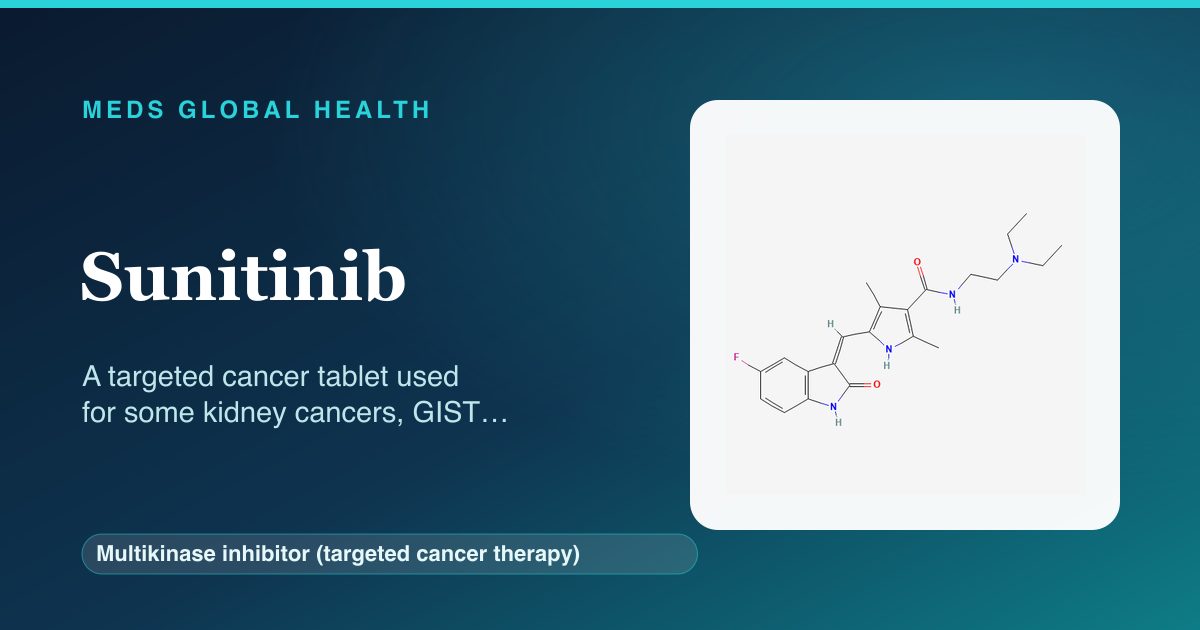
A targeted cancer tablet used for some kidney cancers, GIST and pancreatic neuroendocrine tumours.
What is Sunitinib?
Sunitinib is a specialist cancer tablet used for certain kidney cancers, a type of gut tumour called GIST, and some pancreatic neuroendocrine tumours. It is a multikinase inhibitor, blocking several signals cancers use to grow and to build the blood vessels that feed them. Common problems include high blood pressure, hand-foot skin reaction, tiredness, and an underactive thyroid. It can also affect the heart's pumping or rhythm, increase bleeding, and, uncommonly, affect the liver. It is taken by mouth in cycles and can harm a developing baby, so reliable contraception is essential.
Education and reference only. This is a plain-language guide to Sunitinib — it deliberately contains no doses. Doses depend on the person, the brand and the reason for treatment, and belong with your prescriber. Always check the BNF, the product labelling (SmPC) and follow medical advice.
What it is
Sunitinib is a specialist cancer medicine taken as a capsule by mouth. It is used to treat some advanced kidney cancers, gastrointestinal stromal tumours (a type of cancer in the wall of the gut, known as GIST), and certain pancreatic neuroendocrine tumours. Like sorafenib, it is a multikinase inhibitor, blocking several chemical signals that drive cancer growth and the formation of new blood vessels. It aims to slow the cancer rather than cure it. It is prescribed and closely supervised by a cancer specialist team, often in repeated cycles with rest periods.
How it works
Sunitinib blocks several signalling proteins (kinases) that cancers use to multiply and to build new blood vessels that supply the tumour. By cutting off these growth signals and reducing the tumour's blood supply, it slows the cancer's progress. As with similar medicines, acting on blood-vessel signals affects normal blood vessels too, which helps explain the high blood pressure and bleeding risk. It can also affect the thyroid gland and the heart muscle, which is why thyroid blood tests and heart checks are part of treatment. It is often given in cycles, with periods on and off the medicine.
Company & origin
A specialist oral cancer treatment used in the UK for certain kidney cancers, gastrointestinal stromal tumours and pancreatic neuroendocrine tumours.
Practical use
How to take Sunitinib
General, dose-free guidance — always follow your prescriber's and the leaflet's specific instructions.
- Take the capsules by mouth as prescribed, in the cycles of treatment and rest your team sets, with or without food.
- Have your blood pressure checked regularly and report severe headaches or other symptoms of high blood pressure.
- Attend thyroid and heart checks, and report new tiredness, breathlessness, swelling or a fast or irregular heartbeat.
- Look after your hands, feet and mouth, and report soreness, blistering or mouth ulcers.
- Use reliable contraception during treatment and for the time your team advises, as it can harm a developing baby.
Weighing it up
Advantages & disadvantages of Sunitinib
Advantages
- A targeted tablet that can slow certain kidney cancers, GIST and pancreatic neuroendocrine tumours.
- Taken by mouth at home, usually in cycles with rest periods.
- Works on several cancer-driving signals at once, including the tumour's blood supply.
Disadvantages
- Commonly causes high blood pressure, hand-foot skin reaction and tiredness.
- Often causes an underactive thyroid, needing blood tests and sometimes thyroid replacement.
- Can weaken the heart's pumping, affect its rhythm, increase bleeding and uncommonly affect the liver.
Practical use
Good to know
Several side effects are worth understanding. High blood pressure is common and checked regularly. Hand-foot skin reaction can make the palms and soles sore or blistered, and good skin care helps. An underactive thyroid develops in many people, causing tiredness, weight gain or feeling cold, so thyroid blood tests are done and thyroid hormone replacement may be needed. Importantly, sunitinib can weaken the heart's pumping (its pumping strength is monitored) and can affect the heart's electrical rhythm (the QT interval), so heart tests are part of treatment. It can also increase bleeding and, uncommonly, affect the liver. Tiredness, taste changes, mouth soreness, diarrhoea and changes in hair or skin colour are common. It can harm a developing baby, so reliable contraception is essential. Tell your team about all your medicines, as some interact with sunitinib.
Who should not take it / use with caution
- People who have had a serious allergic reaction to sunitinib should not take it.
- It must not be used in pregnancy because it can seriously harm a developing baby.
- It is used with care in people with heart problems, heart-rhythm conditions, uncontrolled high blood pressure or bleeding risks, under specialist guidance.
Monitoring
- Regular blood pressure checks and thyroid blood tests.
- Heart checks of pumping strength and rhythm, plus liver and blood-count tests.
- Reviewing side effects and how the cancer is responding at each cycle.
Side effects
- High blood pressure, tiredness, hand-foot skin reaction and diarrhoea.
- An underactive thyroid, causing tiredness, weight gain or feeling cold.
- Heart effects, including weakened pumping or changes in the heart's rhythm (the QT interval).
- An increased risk of bleeding, mouth soreness, taste changes, and uncommonly liver problems.
Key interactions
- Some medicines and supplements change how the body handles sunitinib, so give a full list.
- Medicines that affect the heart's rhythm (the QT interval) need careful review when taken with sunitinib.
- Medicines that increase bleeding risk, such as blood thinners, also need careful review.
Available as: Capsules taken by mouth.
Answers
Sunitinib: frequently asked questions
What is sunitinib used for?
It is a targeted cancer tablet used for certain kidney cancers, a gut tumour called GIST, and some pancreatic neuroendocrine tumours.
Why do I need thyroid tests?
Sunitinib often makes the thyroid underactive, causing tiredness or feeling cold, so thyroid blood tests are done and thyroid replacement may be needed.
Does it affect the heart?
It can weaken the heart's pumping and affect its electrical rhythm, so heart checks are part of treatment; report breathlessness, swelling or a fast or irregular heartbeat.
Is high blood pressure common?
Yes, high blood pressure is common, so it is checked regularly and treated if needed; report severe headaches or other symptoms.
Can I take it if I might become pregnant?
No. It can seriously harm a developing baby, so reliable contraception during treatment and for a time afterwards is essential.
Authoritative sources
- BNF
- NICE CKS
Building a medicines information resource?
We create evidence-led, dose-free drug and formulary references for teams.