An injection to help the gut in short bowel syndrome
Teduglutide
A daily injection used to help the gut absorb more in short bowel syndrome and reduce reliance on intravenous feeding.
What is Teduglutide?
Teduglutide is a specialist medicine used to help the gut in short bowel syndrome, a condition where part of the bowel is missing or not working, so the body cannot absorb enough nutrients and fluid. Many people with this condition rely on intravenous feeding (parenteral support), and teduglutide can help the remaining bowel absorb more, reducing how much of this support is needed. It is given as an injection under the skin. The team watches for bowel blockage, monitors the bowel with regular checks for polyps, and keeps an eye on fluid balance. It helps the gut work better rather than curing the condition.
Education and reference only. This is a plain-language guide to Teduglutide — it deliberately contains no doses. Doses depend on the person, the brand and the reason for treatment, and belong with your prescriber. Always check the BNF, the product labelling (SmPC) and follow medical advice.
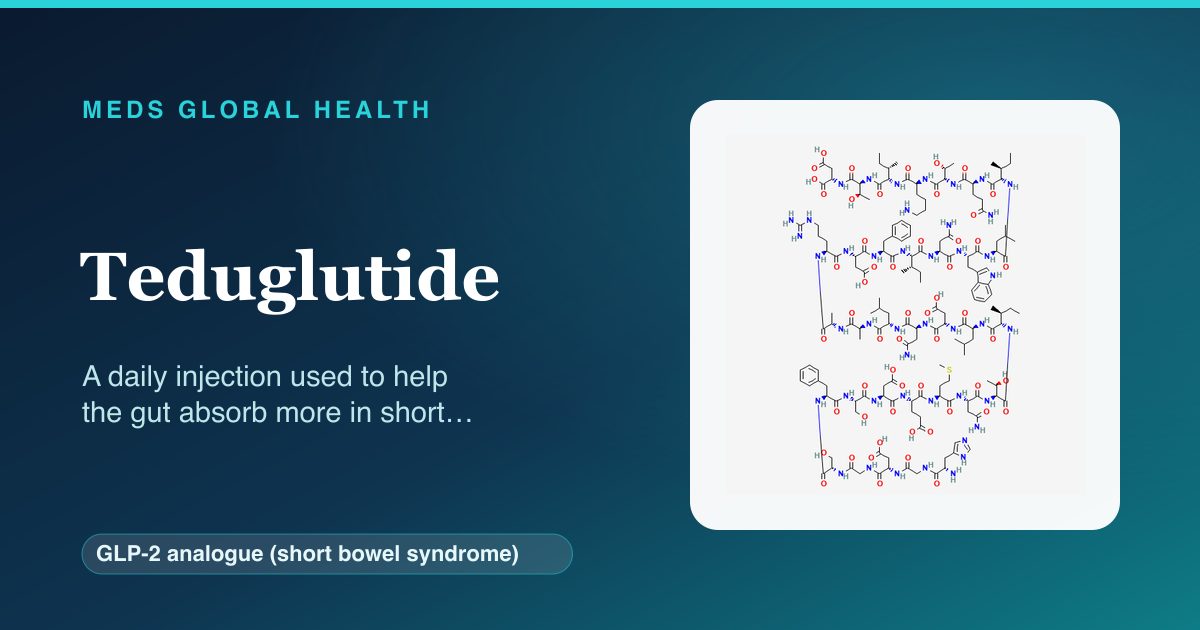
What it is
Teduglutide is a medicine used in short bowel syndrome, a condition in which a large part of the small bowel is missing or not working, often after surgery, so the gut cannot absorb enough nutrients and fluid. Many people with this condition depend on feeding through a vein (parenteral nutrition or intravenous fluids). Teduglutide helps the remaining bowel work better and absorb more, which can reduce how much intravenous support is needed. It is a man-made version of a natural gut hormone (GLP-2) and is given as an injection under the skin, supervised by a specialist team.
How it works
Teduglutide is similar to a natural hormone in the gut called GLP-2, which helps the bowel lining grow and work. By acting like this hormone, teduglutide encourages the lining of the remaining bowel to develop and become better at absorbing nutrients and fluid. Over time, this can mean the gut takes up more from food and drink, so the body relies less on feeding through a vein. Because it works by helping the bowel adapt gradually, it is given regularly and its benefit is judged over weeks and months rather than straight away.
Company & origin
A specialist injection used in the UK to help the gut absorb more nutrients in people with short bowel syndrome.
Practical use
How to take Teduglutide
General, dose-free guidance — always follow your prescriber's and the leaflet's specific instructions.
- Give it as an injection under the skin as your specialist team has trained you, usually each day.
- Report promptly any signs of bowel blockage, such as worsening tummy pain, swelling, vomiting or not passing stool.
- Attend the bowel checks the team arranges, including looking for polyps, before and during treatment.
- Work with the team to reduce intravenous feeding gradually and to keep your fluid balance right.
- Tell your team about other medicines, as the way some are absorbed may change as the gut works better.
Weighing it up
Advantages & disadvantages of Teduglutide
Advantages
- Can help the remaining bowel absorb more and reduce the need for feeding through a vein.
- Targets bowel adaptation by acting like a natural gut hormone.
- Can improve quality of life for people who rely heavily on intravenous support.
Disadvantages
- Given as a regular injection under the skin and needs ongoing specialist monitoring.
- Carries a risk of bowel blockage and requires bowel checks, including for polyps.
- Helps the gut work better but does not cure short bowel syndrome.
Practical use
Good to know
The aim of teduglutide is to help the remaining bowel absorb more so that the need for feeding through a vein can be reduced, rather than to cure short bowel syndrome. Because it makes bowel tissue grow, two important safety points follow: there is a risk of bowel blockage (obstruction), so symptoms such as worsening tummy pain, swelling, being sick or not passing stool should be reported promptly; and because it can also affect growths in the bowel, the team arranges checks of the bowel, including looking for polyps, before and during treatment. Fluid balance also needs watching, as absorption changes can lead to too much or too little fluid, and intravenous feeding is reduced gradually to match. It is given as an injection under the skin, usually daily, alongside the rest of the specialist nutrition care.
Who should not take it / use with caution
- People who have had a serious allergic reaction to teduglutide should not use it.
- It is used with great caution, or avoided, in people with certain cancers or recent bowel cancer, under specialist judgement.
- It should only be used under a specialist nutrition service that can monitor the bowel and fluid balance.
Monitoring
- Bowel checks, including looking for polyps, before and during treatment.
- Watching for signs of bowel blockage and reviewing tummy symptoms.
- Keeping an eye on fluid balance and gradually adjusting intravenous feeding.
Side effects
- Tummy pain, swelling, nausea or fluid build-up as the gut adapts.
- Bowel blockage, which can be serious and needs prompt attention.
- Problems around a stoma, such as swelling, in people who have one.
- Reactions where the injection is given, and changes in fluid balance.
Key interactions
- As the gut absorbs better, the levels of some other medicines taken by mouth may change, so these are reviewed.
- Intravenous feeding and fluids are adjusted alongside it to keep fluid balance right.
- Tell your team about everything you take so absorption and interactions can be checked.
Available as: A powder made up into a solution for injection under the skin.
Answers
Teduglutide: frequently asked questions
What is teduglutide used for?
It is used in short bowel syndrome to help the remaining bowel absorb more nutrients and fluid, which can reduce the need for feeding through a vein.
How does it work?
It acts like a natural gut hormone called GLP-2 that helps the bowel lining grow and absorb better, so the gut adapts over time.
What is the main safety concern?
Because it makes bowel tissue grow, there is a risk of bowel blockage and a need for bowel checks, including looking for polyps.
How is it given?
It is given as an injection under the skin, usually each day, after your specialist team has trained you.
Will it cure short bowel syndrome?
No. It helps the gut work better and can reduce reliance on intravenous feeding, but it does not cure the condition, so specialist care continues.
Authoritative sources
- BNF
- NICE CKS
Building a medicines information resource?
We create evidence-led, dose-free drug and formulary references for teams.