An mTOR-inhibitor cancer medicine given by drip
Temsirolimus
A targeted cancer medicine given by drip, an mTOR inhibitor, used mainly for advanced kidney cancer.
What is Temsirolimus?
Temsirolimus is a specialist targeted cancer medicine, an mTOR inhibitor, used mainly for an advanced form of kidney cancer. It works by blocking a protein called mTOR that helps cancer cells grow and get a blood supply. It is given as a drip into a vein in hospital, usually once a week, with an antihistamine given beforehand to lower the risk of a reaction. Important effects include raised blood sugar and blood fats, inflammation of the lungs, a higher risk of infection and slower wound healing, so regular checks are needed.
Education and reference only. This is a plain-language guide to Temsirolimus — it deliberately contains no doses. Doses depend on the person, the brand and the reason for treatment, and belong with your prescriber. Always check the BNF, the product labelling (SmPC) and follow medical advice.
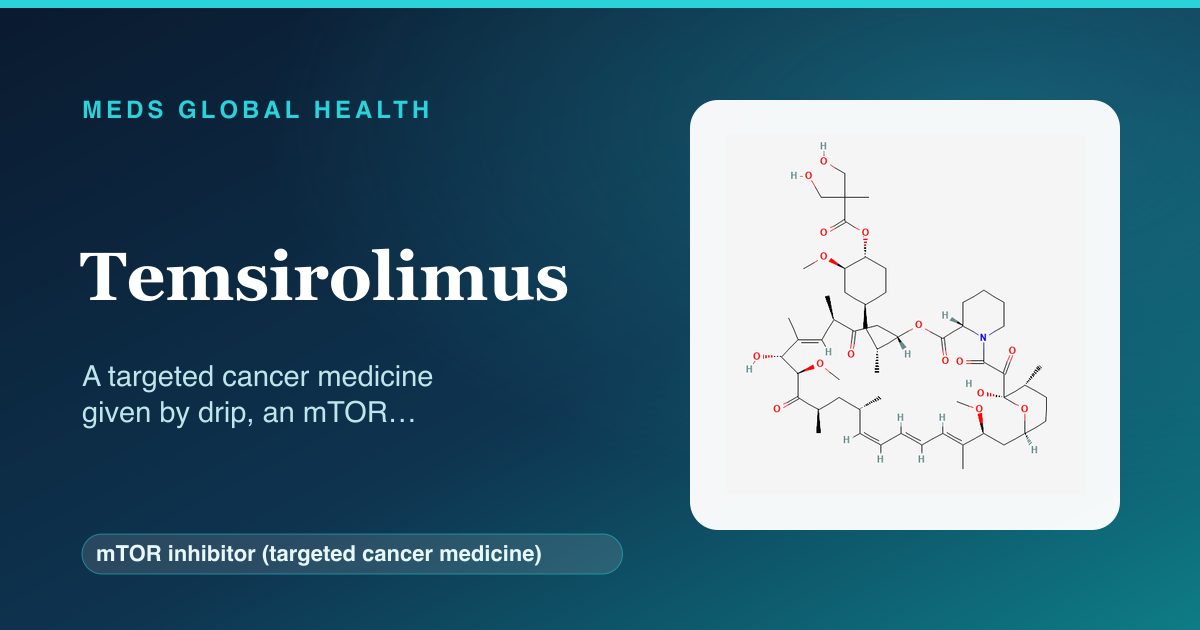
What it is
Temsirolimus is a targeted cancer medicine in a group called mTOR inhibitors. It is used mainly for an advanced form of kidney cancer (renal cell carcinoma). Unlike many newer targeted medicines that are taken as tablets, it is given as a drip (infusion) into a vein, usually once a week, in a hospital or cancer day unit. Because infusion reactions can occur, an antihistamine is normally given beforehand. It is prescribed and supervised by a specialist cancer team, who monitor for its effects on blood sugar, blood fats, the lungs and the immune system.
How it works
Cancers grow by switching on signals that drive cells to multiply and to build new blood vessels that feed the tumour. A protein called mTOR sits at the heart of several of these growth signals. Temsirolimus blocks mTOR, slowing the cancer's growth and its ability to develop a blood supply. Because mTOR is also involved in normal processes such as handling sugar and fats and in the immune response, blocking it can raise blood sugar and blood fats, increase the risk of infection and affect wound healing, which is why these are monitored during treatment.
Company & origin
A specialist cancer medicine given by drip in the UK, used mainly for an advanced form of kidney cancer.
Practical use
How to take Temsirolimus
General, dose-free guidance — always follow your prescriber's and the leaflet's specific instructions.
- It is given as a drip into a vein in hospital, usually once a week, with an antihistamine beforehand.
- Attend all appointments for blood tests, as blood sugar and blood fats are checked and may need treatment.
- Report any new or worsening breathlessness or cough, which could be a sign of lung inflammation.
- Report signs of infection, such as fever, promptly, as the medicine lowers the body's defences.
- Tell your team before any planned surgery, as it can slow wound healing and may be paused.
Weighing it up
Advantages & disadvantages of Temsirolimus
Advantages
- A targeted treatment option for advanced kidney cancer.
- Given on a regular weekly schedule by a specialist team who monitor closely.
- Works on a central growth signal (mTOR) used by the cancer.
Disadvantages
- Given by drip in hospital rather than as a tablet at home.
- Commonly raises blood sugar and blood fats and increases the risk of infection.
- Can cause infusion reactions, lung inflammation and slower wound healing.
Practical use
Good to know
A few practical points matter with temsirolimus. It is given by drip with an antihistamine beforehand to lower the chance of an infusion or allergic reaction, and the team watches closely during the infusion. It commonly raises blood sugar (which can unmask or worsen diabetes) and blood fats such as cholesterol and triglycerides, so these are checked and may need treatment. A less common but serious effect is inflammation of the lungs, so any new or worsening breathlessness or cough should be reported. Because it dampens the immune system, infections are more likely, and signs such as fever should be reported promptly. It can also slow wound healing, so it is usually paused around planned surgery. Like other cancer medicines, it can harm an unborn baby, so contraception is important.
Who should not take it / use with caution
- People who have had a serious allergic reaction to temsirolimus should not be given it.
- It is not suitable in pregnancy because it can harm an unborn baby.
- It is used with care in people with diabetes, high blood fats, lung problems or a high risk of infection, under specialist supervision.
Monitoring
- Regular blood tests for blood sugar and blood fats, with treatment if they rise.
- Watching for infusion reactions during the drip, and for signs of infection or lung inflammation.
- Reviewing wound healing around surgery and checking how the cancer is responding.
Side effects
- Raised blood sugar and raised blood fats such as cholesterol and triglycerides.
- Mouth sores, rash, tiredness, nausea or swelling.
- A higher risk of infection because the immune system is dampened.
- Less commonly but importantly, infusion or allergic reactions, inflammation of the lungs, or slower wound healing.
Key interactions
- Some medicines can raise or lower the levels of temsirolimus, so tell your team about everything you take.
- Live vaccines are generally avoided because the medicine dampens the immune system.
- Other medicines that affect blood sugar, blood fats or the immune system may need review.
Available as: A concentrate made up into a solution given as a drip into a vein.
Answers
Temsirolimus: frequently asked questions
What is temsirolimus used for?
It is used mainly for an advanced form of kidney cancer, working by blocking a growth protein called mTOR.
Why am I given an antihistamine first?
An antihistamine is given before the drip to lower the risk of an infusion or allergic reaction during treatment.
Why are my blood sugar and cholesterol checked?
Temsirolimus can raise blood sugar and blood fats, so these are monitored and may need treatment.
When should I worry about my breathing?
New or worsening breathlessness or cough could be a sign of lung inflammation, so report these promptly to your team.
Why does my team need to know about infections?
It dampens the immune system, making infections more likely, so signs such as fever should be reported promptly.
Authoritative sources
- BNF
- NICE CKS
Building a medicines information resource?
We create evidence-led, dose-free drug and formulary references for teams.